
Recipe Overview
| Metric | Details |
|---|---|
| Prep Time | 15 minutes |
| Cook Time | 10 minutes |
| Total Time | 25 minutes |
| Servings | 2 people |
| Difficulty | Easy |
| Cuisine | Thai-inspired |
Why This Recipe Works
The success of these wraps relies on the contrast between the tender, slow-cooked shredded chicken and the high-turgor pressure of iceberg or butter lettuce leaves. I prefer using dark meat chicken for its higher fat content, which prevents the protein from drying out when chilled or reheated. Scientific studies show that when protein is properly moist, it better absorbs the complex capsaicin and nut-based flavor compounds found in high-quality peanut sauces.
We achieve structural integrity by ensuring the chicken is tossed in the sauce prior to assembly. This causes the sauce to emulsify with the surface proteins, providing a better mouthfeel than simply drizzling liquid afterwards. The carrots are cut into thin matchsticks, or julienne, to maximize surface area contact with the tongue, which enhances the release of volatile flavor compounds during every bite.
Temperature management remains a core component of this dish’s appeal. I incorporate a quick chill time for the chicken after shredding to ensure it does not wilt the delicate lettuce leaves upon plating. This maintains the structural snap of the greens, ensuring the wraps remain functional rather than becoming soggy. The precise balance of acidity from lime juice and the creamy viscosity of the peanut butter creates a mouth-coating sensation that carries the flavor through the entire palate.
Ingredients
| Ingredient | Quantity | Notes |
|---|---|---|
| Shredded Chicken | 2 cups (475 ml) | Cooked, skinless breast or thigh meat |
| Butter Lettuce | 4 large leaves | Select firm, unblemished leaves |
| Peanut Sauce | 2 tbsp (30 ml) | Store-bought or house-made |
| Shredded Carrots | 1/4 cup (60 ml) | Freshly grated for best texture |
| Crushed Peanuts | 1 tbsp (15 ml) | Dry-roasted for maximum crunch |
Step-by-Step Instructions
Preparation and Assembly
-
Shred your pre-cooked chicken into bite-sized threads using two forks or a stand mixer with the paddle attachment.
-
Wash and pat the butter lettuce leaves thoroughly dry to ensure the sauce adheres to the chicken rather than sliding off the leaf surface.
-
Place the shredded chicken in a mixing bowl and toss with the peanut sauce until each strand is evenly coated.
-
Lay the four lettuce leaves flat on a clean cutting board or individual serving plates.
-
Spoon the chicken mixture equally into the center of each leaf.
-
Top each portion with an equal volume of shredded carrots to introduce a necessary structural and textural crunch.
-
Drizzle any remaining sauce over the top of the wraps for visual appeal.
-
Sprinkle the crushed peanuts over the chicken mixture just before serving to maximize the crunchy, toasted finish.
Chef Tips for Perfect Results
-
Always use room-temperature chicken when tossing with sauce to achieve optimal viscosity and flavor distribution.
-
Choose heavy-gauge lettuce like Romaine or Boston bibb if you require more structural support for your wraps.
-
Use a microplane for the carrot julienne if you prefer a subtle, fibrous texture that melts into the peanut sauce.
-
Toast your crushed peanuts in a dry skillet for 60 seconds to re-activate their essential oils before application.
-
Maintain a chilled environment for all ingredients until the final minute of assembly to prevent oxidation of the greens.
-
Verify the internal temperature of your chicken reached 165°F (74°C) during the initial cooking stage, as noted by the USDA.
Common Mistakes to Avoid
One major failure occurs when using warm chicken on fresh lettuce, which leads to immediate cellular breakdown of the leaves. This results in a limp, unappetizing wrap. Always chill your protein to 40°F (4°C) before combining to preserve the fresh, rigid integrity of the vegetable.
Adding too much sauce at once causes the ingredients to lose their grip on the leaf, leading to collapse upon lifting. Measure your liquids exactly; the sauce should act as a binder, not a broth. If the mixture looks runny, add an extra tablespoon of crushed nut powder to thicken the consistency naturally.
Variations and Substitutions
| Ingredient | Substitution | Impact |
|---|---|---|
| Shredded Chicken | Smoked turkey breast | Adds a deeper hardwood-smoked finish |
| Peanut Sauce | Sunflower seed butter | Ideal for nut-free dietary requirements |
| Crushed Peanuts | Toasted sesame seeds | Provides a lighter, nuttier aromatic profile |
Frequently Asked Questions
How do I make these ahead of time without the lettuce wilting?
Keep the chicken mixture and the lettuce leaves in separate airtight containers in the refrigerator. Assemble the wraps immediately before consumption to avoid water loss from the lettuce leaves.
Can I freeze the chicken mixture?
You can freeze the chicken and sauce mixture for up to three months. Thaw it in the refrigerator overnight and stir well to re-emulsify the sauce before using.
What is the best way to keep the wraps from falling apart?
Fold the sides of the lettuce leaf inward toward the center before rolling or simply use double lettuce leaves for extra thickness. This creates a stronger physical barrier against the heavier contents.
How do I know if the chicken is sufficiently tender?
Properly tenderized muscle fibers should offer zero resistance when pulled apart with a fork. If the meat feels rubbery, it was likely overcooked at an elevated heat level; ensure proper cooking techniques are used.
Can I use cooked shrimp instead of chicken?
Shrimp works as an excellent high-protein swap, but it requires a tighter mince to ensure it properly adheres to the peanut sauce. Avoid using large, whole shrimp, as they will cause the wrap to unroll.
Nutritional Information (Approximate)
| Calories | 210 |
| Protein | 22g |
| Fat | 12g |
| Carbohydrates | 6g |
| Fiber | 2g |
| Sugar | 3g |
| Sodium | 350mg |
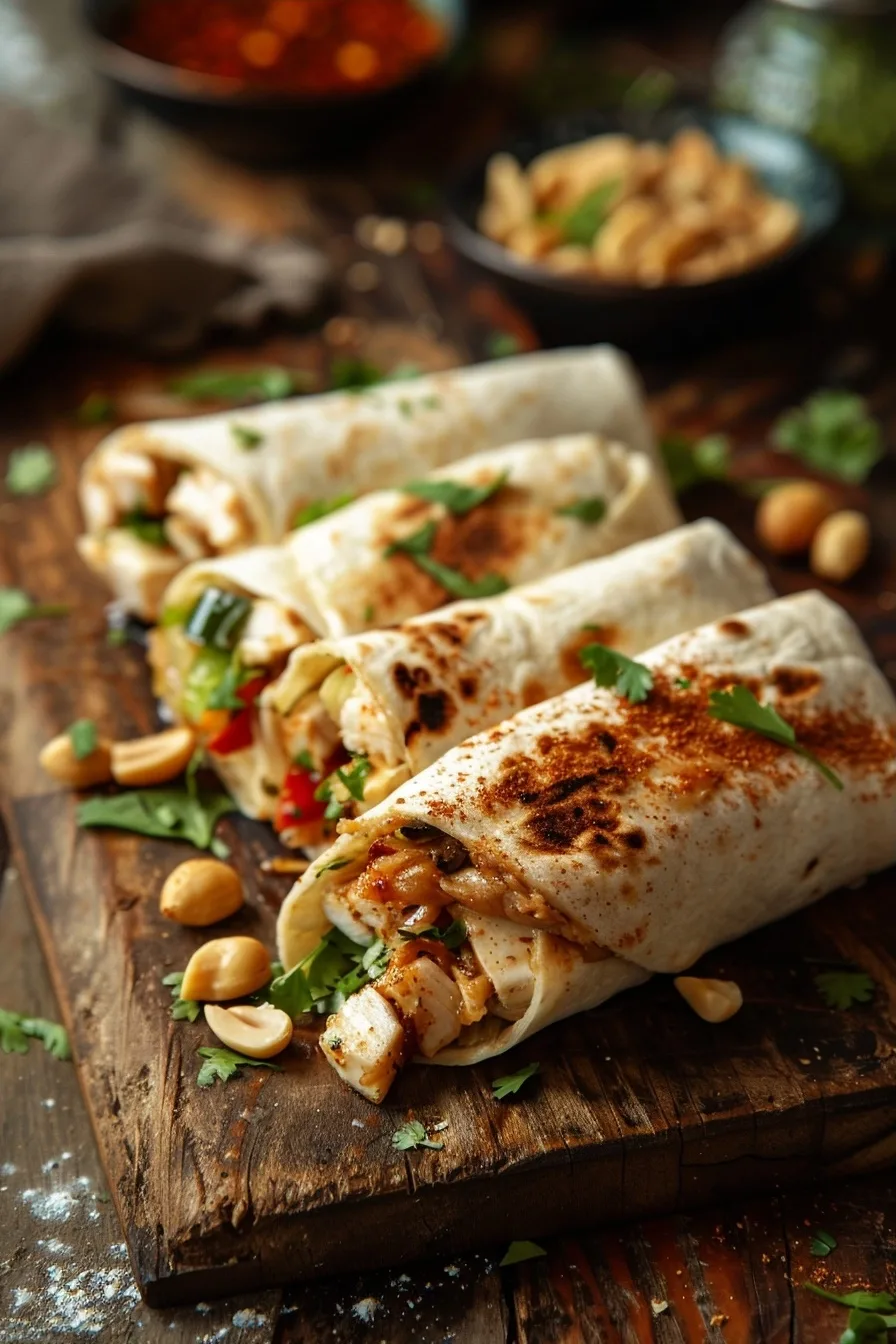
The synergy of the lean poultry and the healthy unsaturated fats in these Thai Peanut Chicken Wraps creates a high-satiety meal that feels indulgent yet remains physically light. The bright snap of the lettuce, combined with the creamy, savory intensity of the peanut-based seasoning, ensures that every bite provides a complex sensory experience. By mastering these simple assembly techniques, you secure a reliable, high-quality dish that elevates even the simplest weekday lunch into a refined culinary event.