
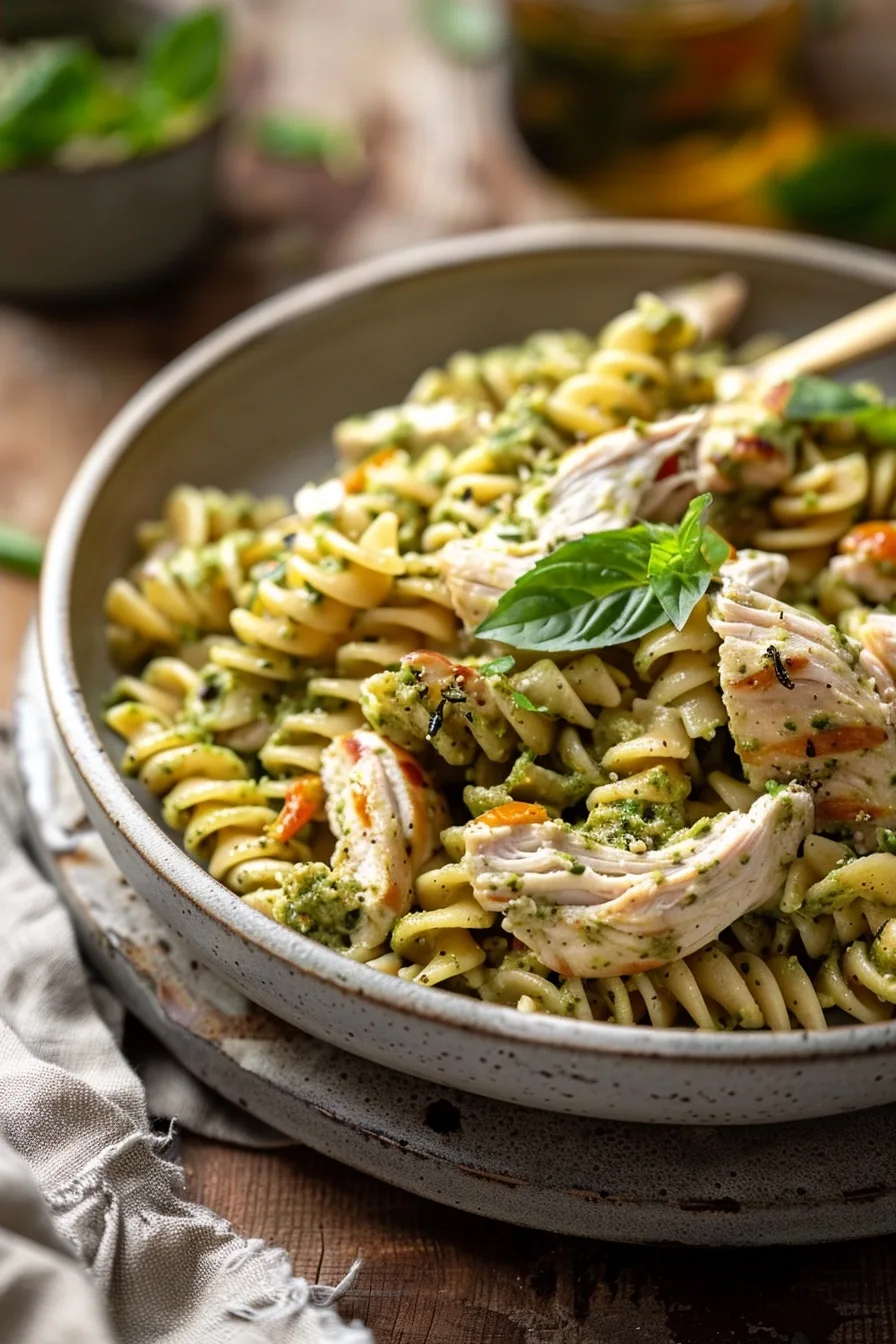
Rotisserie Chicken Pesto Pasta is a high-protein, nutritionally dense entree that combines succulent shredded poultry with aromatic basil sauce and al dente pasta. This dish represents the quintessential mid-week meal, leveraging pre-cooked ingredients to reduce active kitchen time while maximizing flavor density through fresh produce and high-quality fats. By prioritizing textural contrast and acidic balance, this recipe functions as a reliable anchor for any seasonal menu or busy evening schedule.
Recipe Overview
| Prep Time | 10 minutes |
| Cook Time | 10 minutes |
| Total Time | 20 minutes |
| Servings | 4 servings |
| Difficulty | Easy |
| Cuisine | Modern American |
Why This Recipe Works
The success of this dish relies on the residual heat of the pasta to lightly emulsify the pesto into a luxurious coating. When you toss hot bowtie pasta with the oil-based pesto, the starch on the exterior of the noodles helps pull the emulsion together. This creates a cohesive bite where the herbaceous notes of basil cling to every surface of the pasta, ensuring no flavor is lost in the bottom of the bowl.
Using rotisserie chicken provides a significant shortcut that does not sacrifice protein quality. Because the chicken is already cooked to a safe internal temperature of 165°F (74°C), it serves as a tender, flavor-absorbent vessel for the pesto oils. This prevents the drying that often occurs when cooking raw chicken breast in a skillet for short bursts.
Finally, the addition of fresh cherry tomatoes introduces a burst of acidity that cuts through the rich fats of the parmesan and pine nuts found in traditional pesto. The sugars in the tomatoes balance the savory profile of the chicken, resulting in a dish that feels vibrant and light rather than heavy. Proper temperature management during the tossing phase ensures the basil leaves remain bright and flavorful without wilting into an unappealing dark green sludge.
Ingredients
| Ingredient | Quantity | Notes |
| Rotisserie Chicken | 2 cups | Shredded, skin removed for health |
| Bowtie Pasta | 8 oz (226g) | Farfalle provides the best surface area |
| Basil Pesto | 1/4 cup | Ensure it is alcohol-free |
| Cherry Tomatoes | 1/2 cup | Halved for maximum juice release |
| Sea Salt | To taste | For pasta water seasoning |
Step-by-Step Instructions
Prep and Boil
- Bring a large pot of water to a rolling boil over high heat.
- Add two tablespoons of salt to the water to season the pasta internally during the boiling process (USDA food safety guidelines).
- Drop the bowtie pasta into the water and cook according to package directions, typically for 9 to 11 minutes.
Tossing and Plating
- Drain the pasta using a colander, but keep a small amount of starchy pasta water in the pot.
- Return the pasta to the pot and immediately add the shredded rotisserie chicken and pesto.
- Toss the mixture vigorously until the heat of the pasta warms the chicken and binds the sauce.
- Stir in the halved cherry tomatoes last to keep them firm and vibrant.
- Serve immediately while the dish is warm, or refrigerate for two hours if a cold pasta salad style is preferred.
Chef Tips for Perfect Results
- Always reserve 1/4 cup of the starchy pasta water; it is the secret to getting the pesto to stick to the noodles rather than sliding off.
- Shred the chicken while it is still warm, as the muscle fibers separate more cleanly, resulting in a better texture.
- Use a wide skillet to toss the mixture if the pasta pot feels crowded to avoid crushing the delicate bowtie edges.
- Season the pasta water until it tastes like the ocean to ensure the starch base is flavorful rather than bland.
- Perform the final toss away from direct heat to preserve the volatile aroma compounds in the fresh basil pesto.
- Cool rapidly if storing for later, keeping the tomatoes separate until serving to prevent them from softening the pasta.
Common Mistakes to Avoid
- Overcooking the pasta leads to a gummy texture; aim for true al dente where the pasta offers slight resistance to the tooth.
- Adding the pesto while the pan is over direct heat can cause the oils to break or the cheese to clump and lose its creamy consistency.
- Using cold chicken straight from the refrigerator can drop the temperature of the dish too quickly, causing the pesto fats to solidify rather than emulsify.
- Forgetting to salt the pasta water enough means the entire dish will lack depth, as there is no other opportunity to influence the noodle’s seasoning.
Variations and Substitutions
| Ingredient | Substitution | Impact |
| Basil Pesto | Sun-dried tomato pesto | Adds sweetness and earthy umami |
| Bowtie Pasta | Chickpea pasta | Significantly increases protein and fiber content |
| Rotisserie Chicken | Roasted turkey breast | Provides a similar texture with lower fat content |
| Cherry Tomatoes | Roasted bell peppers | Introduces a deeper, sweeter flavor profile |
Serving Suggestions and Pairings
Serve this dish alongside a light arugula and shaved parmesan salad dressed with a balsamic reduction. For a beverage pairing, a chilled sparkling lemonade or an iced botanical tea complements the herbal notes of the pesto. This meal is ideal for outdoor summer dining, family lunch gatherings, or a quick dinner on busy weeknights when quality is non-negotiable.
Storage and Reheating
| Method | Duration | Instructions |
| Refrigeration | 3 days | Store in an airtight container to prevent scent transfer. |
| Reheating | 1 minute | Microwave on low power with a splash of water to loosen the pesto. |
Nutritional Information
| Nutrient | Amount per Serving |
| Calories | 380 kcal |
| Protein | 28g |
| Fat | 14g |
| Carbohydrates | 42g |
Frequently Asked Questions
Can I make this in advance?
Yes, you can prepare the pasta and chicken in advance, but add the fresh pesto and tomatoes just before serving for the best texture. If storing, keep the pesto separate to prevent the basil from oxidizing and turning brown.
Is this dish better cold or warm?
This dish is highly versatile and works equally well in both formats depending on your preference. Warm preparation allows the fats in the pesto to coat the pasta more effectively, while cold preparation makes it a refreshing summer salad.
How do I prevent the pesto from clumping?
The trick is to use that reserved starchy pasta water to thin the pesto as you toss it with the chicken and noodles. A small amount of liquid converts the thick pesto into a cohesive, pourable sauce that coats every bowtie evenly.
Can I use other protein?
You can substitute the chicken with grilled shrimp or cubed firm tofu for varied flavor profiles. Ensure any new protein is fully cooked and drained of excess moisture before adding to the pesto mixture.
Will the pasta get mushy in the fridge?
Pasta stored in sauce will eventually absorb some moisture, so cook it to a firm al dente state to compensate. If you plan to store the leftovers for multiple days, keep the sauce and starch components separate until the final assembly.
This Rotisserie Chicken Pesto Pasta succeeds by balancing the savory depth of tender poultry with the bright, herbaceous punch of high-quality basil. It is a reliable, time-saving solution for anyone seeking a sophisticated yet accessible meal. Enjoy the contrast of the tender pasta and the crisp, acidic pop of the tomatoes in every bite. With minimal cleanup and maximum return on flavor, this dish is a staple worth adding to your weekly rotation for a satisfying, nutrient-rich dining experience.