
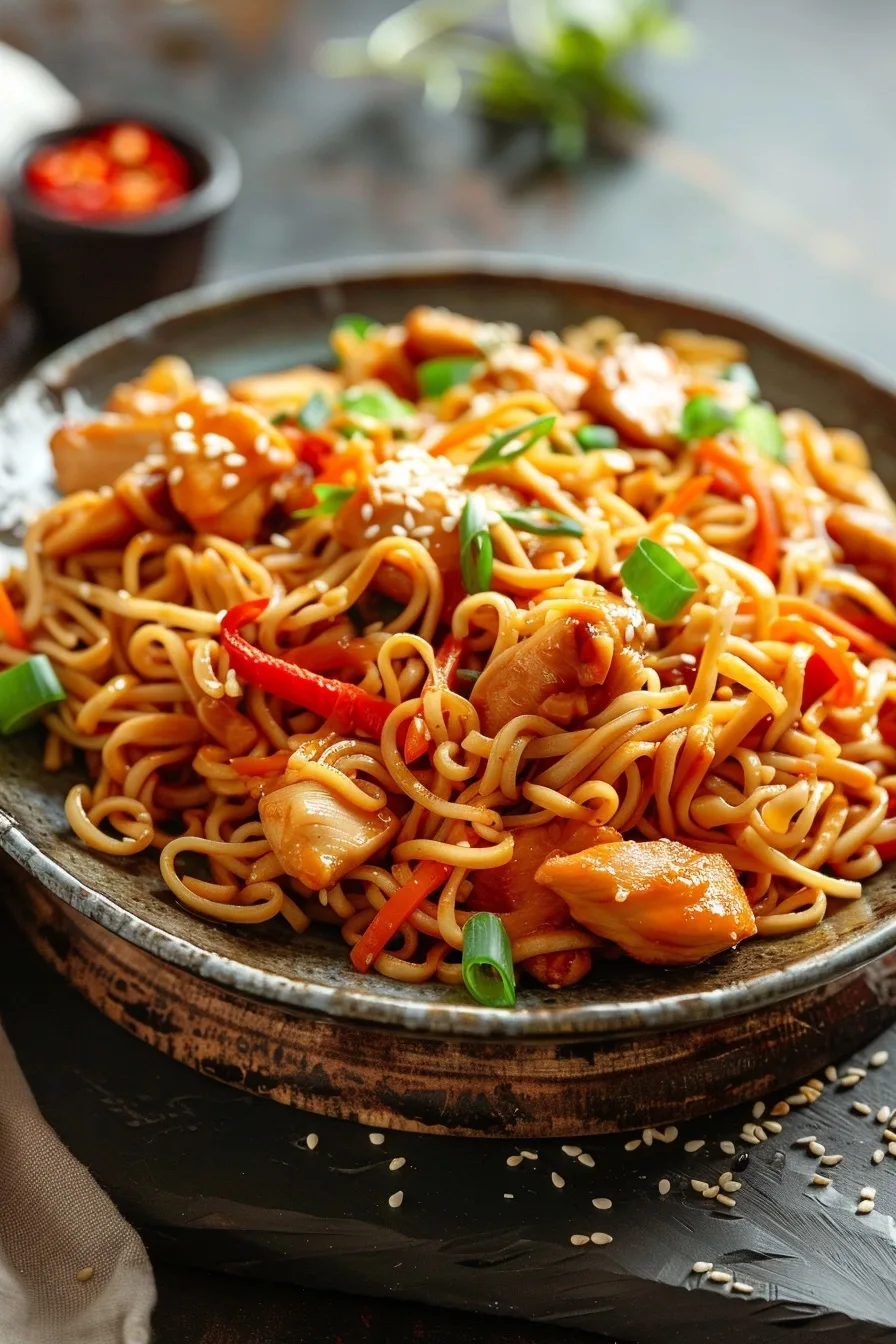
This dish offers a vibrant balance of savory, sweet, and umami flavors, featuring tender chicken and perfectly cooked noodles coated in a homemade teriyaki sauce. It is designed to capture the essence of classic teriyaki noodle bowls with an emphasis on fresh ingredients and precise execution for superior taste and texture.
Why This Recipe Works
As a chef and food scientist, I scrutinize every step to ensure optimal flavor development and structural integrity. The Maillard reaction, a complex browning process, is crucial for developing deep savoriness in the chicken. Achieving this requires high heat and proper pan temperature, allowing the natural sugars in the chicken to caramelize without steaming. This creates those irresistible crispy edges and a richer foundation for the sauce.
The teriyaki sauce itself is an exercise in controlled chemistry. Balancing soy sauce (for salt and umami), a touch of sweetness (from brown sugar and honey, which also aid in caramelization), and acidity (from rice vinegar or a citrus element) creates a dynamic flavor profile. The sauce is thickened carefully, usually with a cornstarch slurry, to a consistency that clings beautifully to the noodles and chicken without becoming gloopy or watery. This emulsification and viscosity are key to a successful sauce that coats, rather than pools.
Noodle selection and cooking are equally critical. Overcooked noodles turn mushy, overwhelming the dish with a starchy texture. I aim for noodles cooked just to al dente, maintaining a pleasant chewiness that stands up to the sauce and other ingredients. The method of combining ingredients also matters; a final toss in the heated sauce allows the flavors to meld and the noodles to absorb the deliciousness, ensuring every bite is a harmonious blend of savory, sweet, and tender components.
Ingredients
| Ingredient | Quantity | Notes |
|---|---|---|
| Boneless, Skinless Chicken Breast | 1 lb (approx. 450g) | Cut into bite-sized pieces. Ensure uniform size for even cooking. |
| Noodles | 8 oz (approx. 225g) | Spaghetti, linguine, ramen, or udon noodles work well. Cook according to package directions until al dente. |
| Soy Sauce (low sodium) | 1/2 cup (120ml) | Provides the salty, umami base. Low sodium helps control overall saltiness. |
| Brown Sugar | 1/4 cup (50g) | Adds sweetness and aids caramelization. Can use dark or light brown sugar. |
| Honey | 2 tablespoons (40g) | Contributes to sweetness and a glossy finish. Maple syrup is an alternative. |
| Toasted Sesame Oil | 1 tablespoon (15ml) | Adds a distinct nutty aroma and flavor. Essential for authentic teriyaki. |
| Fresh Ginger | 1 tablespoon, grated | Provides pungent, spicy notes. Use a microplane for fine texture. |
| Garlic | 2-3 cloves, minced | Adds aromatic depth. Adjust quantity to personal preference. |
| Rice Vinegar | 1 tablespoon (15ml) | Balances sweetness with a touch of acidity. Apple cider vinegar can substitute. |
| Cornstarch | 1 tablespoon (8g) | For thickening the sauce. Mix with 2 tablespoons water to create a slurry. |
| Water | 1/4 cup (60ml) | Used in the sauce and for the cornstarch slurry if needed. |
| Mixed Stir-fry Vegetables | 1 cup (approx. 150g) | Broccoli florets, bell pepper strips, snap peas, sliced carrots, or mushrooms. Use fresh or frozen. |
| Neutral Cooking Oil | 2 tablespoons (30ml) | Such as canola, vegetable, or grapeseed oil, for sautéing. |
| Salt and Black Pepper | To taste | Season chicken before cooking. |
| Sesame Seeds and Sliced Green Onions | For garnish | Adds visual appeal and fresh flavor notes. |
Step-by-Step Instructions
Phase 1: Preparation
-
Prepare your ingredients: Cut chicken breast into uniform, bite-sized pieces. Mince garlic and grate fresh ginger. Wash and chop vegetables if using fresh.
-
Season chicken generously with salt and freshly ground black pepper.
-
In a small bowl, whisk together the soy sauce, brown sugar, honey, toasted sesame oil, grated ginger, minced garlic, and rice vinegar. This forms your teriyaki sauce base.
-
In a separate small bowl, whisk the cornstarch with 2 tablespoons of cold water until smooth, creating a slurry. Set aside.
-
Cook noodles according to package directions. Drain thoroughly and set aside, tossing with a tiny bit of neutral oil to prevent sticking if necessary.
Phase 2: Sautéing and Cooking
-
Heat 1 tablespoon of neutral cooking oil in a large skillet or wok over medium-high heat until shimmering.
-
Add the seasoned chicken pieces in a single layer. Avoid overcrowding the pan; cook in batches if necessary to ensure proper searing, not steaming. Cook for 5-7 minutes, turning occasionally, until golden brown and cooked through. Remove chicken from the skillet and set aside.
-
Add the remaining 1 tablespoon of neutral oil to the same skillet. Add the mixed stir-fry vegetables. Sauté for 3-5 minutes, or until crisp-tender. If using frozen vegetables, cook according to package directions until heated through.
Phase 3: Sauce Reduction and Plating
-
Pour the prepared teriyaki sauce base into the skillet with the vegetables. Bring to a simmer, stirring constantly.
-
Gradually whisk the cornstarch slurry into the simmering sauce. Continue to stir until the sauce thickens to your desired consistency, usually within 1-2 minutes. The sauce should coat the back of a spoon.
-
Return the cooked chicken to the skillet. Add the cooked noodles to the skillet as well.
-
Toss everything gently to coat the chicken and noodles evenly with the thickened teriyaki sauce. Cook for another 1-2 minutes, allowing the flavors to meld and the noodles and chicken to heat through.
-
Serve immediately. Garnish with toasted sesame seeds and freshly sliced green onions for a burst of flavor and visual appeal.
Chef Tips for Perfect Results
-
Achieve the Maillard Reaction: Ensure your skillet is sufficiently hot before adding chicken. Don’t overcrowd the pan; this prevents proper searing, leading to steamed, pale chicken instead of beautifully browned, flavorful pieces.
-
Noodle Texture is Key: Cook noodles until they are al dente – tender but with a slight bite. Overcooking will result in mushy noodles that absorb too much sauce and lose their structure.
-
Sauce Viscosity Control: Whisk the cornstarch slurry into a simmering sauce. If it thickens too rapidly, lower the heat or add a tablespoon of water. Too thin? A touch more slurry mixed with water can fix it.
-
Fresh Aromatics Matter: Using fresh ginger and garlic grated or minced just before cooking releases volatile oils that provide superior aroma and flavor compared to dried or powdered versions.
-
Taste and Adjust: Before combining everything, taste the teriyaki sauce. Adjust sweetness, saltiness, or acidity by adding a little more honey, soy sauce, or rice vinegar, respectively.
Common Mistakes to Avoid
-
Steamed Chicken: Overcrowding the pan or using a skillet not hot enough results in chicken that is steamed rather than seared. This inhibits the Maillard browning reaction, leading to bland, pale meat. Sear chicken in batches over medium-high heat to ensure proper caramelization.
-
Mushy Noodles: Cooking noodles beyond the al dente stage will make them disintegrate in the sauce. Follow package directions precisely and shock them in cold water if you need to pause cooking, though fresh cooking is ideal.
-
Oversalted or Undersalted Sauce: Relying solely on soy sauce for salt can lead to an overly salty final dish. Using a low-sodium soy sauce and tasting the sauce before thickening allows for better salt control.
-
Gloopy or Watery Sauce: An improperly made cornstarch slurry or adding it to a cold/lukewarm sauce prevents proper thickening. Ensure the sauce is simmering when you add the slurry and whisk constantly until it reaches the desired consistency.
-
Impacted Flavor Without Sear: Skipping the searing step for the chicken removes complex flavor compounds generated by the Maillard reaction, significantly diminishing the dish’s overall richness and depth.
Variations and Substitutions
| Ingredient | Substitution | Impact on Flavor/Texture |
|---|---|---|
| Chicken Breast | Chicken thighs (boneless, skinless, cut), Tofu (extra-firm, pressed), Shrimp | Chicken thighs add richness and moisture due to higher fat content. Tofu absorbs sauce well but may require pre-browning for texture. Shrimp cooks quickly and adds a seafood note. |
| Noodles | Spaghetti, linguine, ramen, udon, soba, or even spiralized zucchini noodles | Different noodles will offer varying textures (chewy, slippery, firm). Zucchini noodles are a lighter, lower-carb option but don’t absorb sauce as well. |
| Mixed Stir-fry Vegetables | Broccoli, snap peas, bok choy, bell peppers, carrots, mushrooms, edamame, onions | Offers flexibility based on seasonal availability and preference. Ensure vegetables are cut to cook evenly with chicken. |
| Honey | Maple Syrup, Agave Nectar | These offer sweetness with slightly different flavor profiles. Maple syrup adds a subtle fruity note; agave is more neutral. |
| Rice Vinegar | Apple Cider Vinegar, Lime Juice | Both provide necessary acidity to balance sweetness, with subtle variations in fruitiness or tanginess. |
Serving Suggestions and Pairings
These delightful chicken teriyaki noodles are a complete meal on their own, but can be enhanced with complementary sides. Consider a crisp, refreshing Asian-inspired slaw featuring thinly sliced cabbage, carrots, and a light rice vinegar dressing. For a heartier meal, serve alongside steamed edamame or a simple cucumber salad. Perfectly chilled sparkling pear cider or a fragrant jasmine green tea are excellent non-alcoholic beverage pairings that won’t overpower the dish’s delicate flavors.
Storage and Reheating
| Method | Duration | Exact Technical Instructions |
|---|---|---|
| Refrigeration | 3-4 days | Allow cooled dish to rest for 30 minutes before transferring to an airtight container. Store in the refrigerator. Avoid storing in direct contact with raw ingredients. |
| Reheating (Stovetop) | 1-2 minutes | Add a tablespoon of water or broth to a skillet over medium heat. Add noodles and chicken, stirring gently until heated through. This prevents drying out and helps re-emulsify the sauce. |
| Reheating (Microwave) | 1-2 minutes | Place in a microwave-safe dish, cover loosely with a damp paper towel. Heat in 30-second intervals, stirring in between, until hot. The damp towel helps retain moisture. |
| Freezing | 1-2 months | Cool completely. Portion into freezer-safe containers with tight-fitting lids. It is best to freeze components separately (noodles, chicken, sauce) if possible to maintain best texture upon reheating. If freezing combined, expect a slightly softer noodle texture. |
Nutritional Information
Approximate values per serving (based on 4 servings):
| Nutrient | Amount per Serving |
|---|---|
| Calories | ~ 550-650 kcal |
| Protein | ~ 30-40g |
| Fat | ~ 15-25g |
| Carbohydrates | ~ 60-80g |
| Fiber | ~ 3-5g |
| Sugar | ~ 15-25g |
| Sodium | ~ 800-1200mg (can vary greatly with soy sauce) |
Frequently Asked Questions
Can I substitute the chicken with another protein?
Absolutely. Thinly sliced beef, pork tenderloin, shrimp, or firm tofu are excellent substitutes. Adjust cooking times accordingly, ensuring each protein is cooked to a safe internal temperature and tender. Tofu should be pressed and seared for superior texture.
How do I know when the chicken is cooked through?
The chicken is cooked when it is no longer pink inside and its internal temperature reaches 165°F (74°C). Visual cues include a firm texture and pale white flesh. For even cooking, ensure pieces are uniformly sized. [USDA Temperature Guidelines](https://www.foodsafety.gov/food-safety-charts/cold-food-temperature-danger-zone) recommend safe temperatures for all meats.
My noodles came out clumpy, how can I prevent this?
To prevent clumping, cook noodles in plenty of boiling, salted water and stir them occasionally. Drain them thoroughly immediately after cooking. Toss them with a teaspoon of neutral oil or a small amount of the teriyaki sauce right after draining to keep them separated.
Can I make this dish ahead and freeze it?
Yes, but with considerations for texture. It’s best to store cooked components (sauce, chicken, vegetables) separately and assemble and reheat just before serving. If freezing the entire dish, the noodles may become softer upon reheating. Ensure it’s cooled completely before freezing in airtight containers.
What if the sauce is too thick or too thin?
If the sauce is too thick, thin it by whisking in a tablespoon of water or broth at a time until the desired consistency is reached. If too thin, prepare an additional slurry of 1 teaspoon cornstarch mixed with 1 tablespoon cold water and whisk it into the simmering sauce until thickened. Keep temperatures regulated during this process.
Crafting this Tasty Chicken Teriyaki Noodles at home provides a profoundly satisfying culinary experience, surpassing the convenience and flavor of takeout. The interplay of tender chicken, perfectly sauced noodles, and crisp vegetables creates a vibrant dish. Each bite offers a delightful harmony of savory soy, sweet honey and brown sugar, and aromatic ginger, finishing with a subtle tang that invigorates the palate. This dish is a testament to simple ingredients transformed through precise technique into something truly special.