
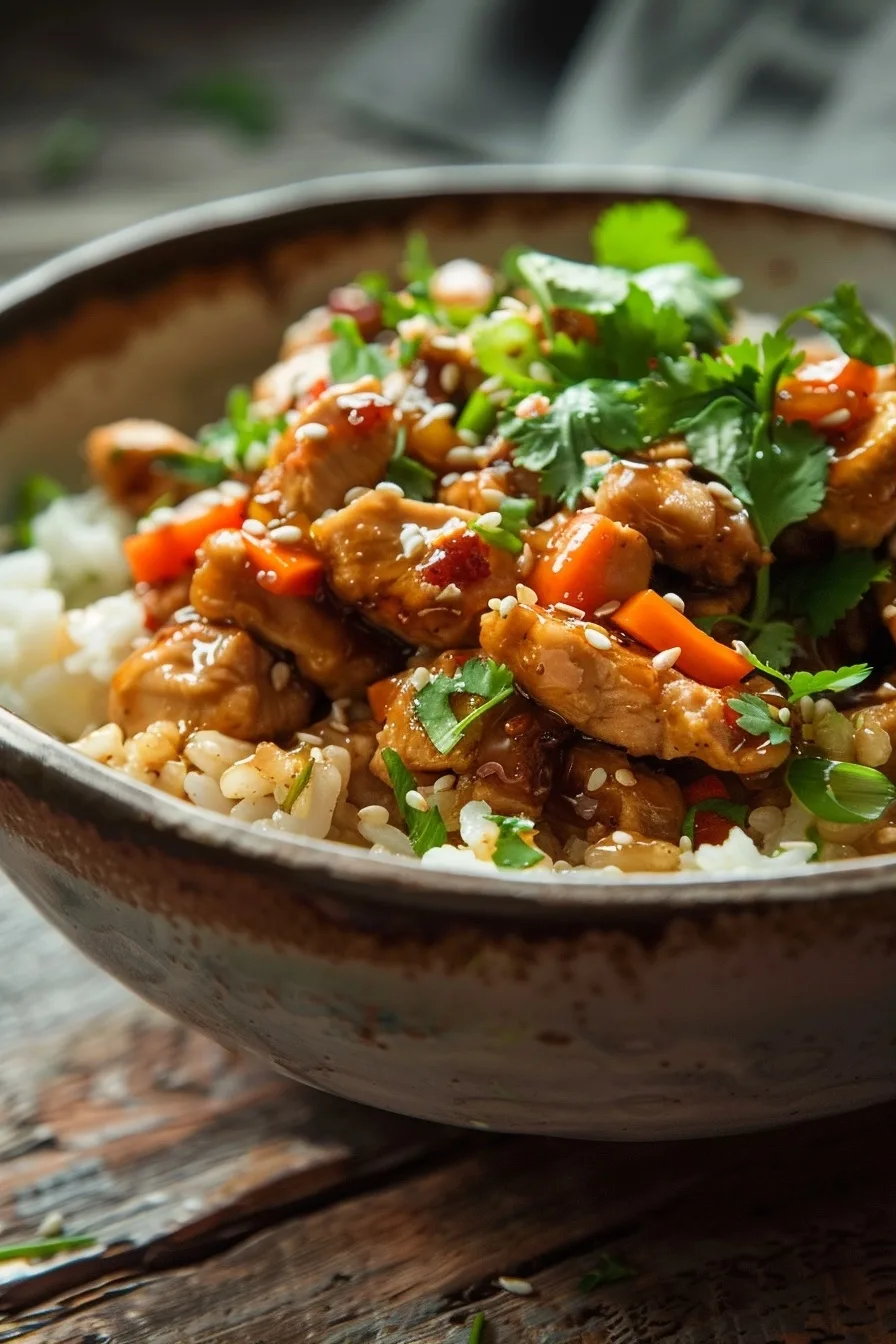
Sticky chicken rice bowls offer a swift, satisfying, and flavorful meal, transforming everyday ingredients into a crowd-pleasing dinner. This dish features tender chicken coated in a glistening, sweet-savory glaze, served atop fluffy rice for a complete, balanced plate.
Recipe Overview
| Prep Time | 15 minutes |
|---|---|
| Cook Time | 25 minutes |
| Total Time | 40 minutes |
| Servings | 4 |
| Difficulty | Easy |
| Cuisine | American Fusion |
Why This Recipe Works
The magic of this sticky chicken rice bowl lies in a few fundamental culinary principles I’ve honed over years in professional kitchens and countless family meals. First, we achieve that irresistible stickiness through a controlled synergy of sugar and soy. Honey, being a complex sugar, caramelizes beautifully, creating a glossy finish and deepening sweetness. Soy sauce provides the essential umami backbone and saltiness, while ginger introduces a bright, pungent counterpoint that cuts through richness. When these components simmer together with the chicken, they form a cohesive, thickened glaze that clings perfectly to every piece of protein.
Secondly, the method of cooking the chicken is crucial for both texture and flavor absorption. Searing the chicken pieces first initiates the Maillard reaction, a complex series of chemical reactions between amino acids and reducing sugars that generates hundreds of new aroma and flavor compounds. This browning creates a richer, nuttier base flavor and a more appealing visual appeal. By then simmering the chicken in the prepared sauce, we allow the flavors to meld, and the chicken to become incredibly tender as it braises gently, absorbing all those sticky glaze nuances. This dual approach ensures maximum flavor infusion without drying out the chicken.
Finally, the balance of flavors and textures is key to a successful family dinner. The sweet and savory sticky chicken is perfectly complemented by the neutral, absorbent bed of white rice, acting as a canvas for the intense glaze. The simple addition of fresh ginger in the sauce not only adds aromatic complexity but also provides a subtle warmth and a touch of acidity that prevents the dish from becoming cloying. This deliberate interplay of sweet, salty, aromatic, and tender elements, all unified by the adhesive glaze, makes every bite deeply satisfying and encourages repeat servings.
Ingredients
| Ingredient | Quantity | Notes |
|---|---|---|
| Boneless, skinless chicken breast | 1 lb (454g) | Cut into 1-inch cubes. Alternatively, use chicken thighs for a richer flavor and more forgiving texture. |
| Cooked white rice | 2 cups (approx. 360g cooked) | Jasmine or basmati rice recommended for their aromatic qualities and texture. Ensure it’s cooked and ready. |
| Soy sauce | 1/4 cup (60ml) | Low-sodium variety is preferred to control saltiness. Look for good quality, additive-free brands. |
| Honey | 1/4 cup (85g) | Combines with soy to create the signature sticky glaze. Agave nectar can be used as a vegan substitute, but flavor will differ. |
| Fresh ginger | 1 tbsp (approx. 15g) | Finely minced or grated. Essential for brightness and warmth. Use a microplane for best results. |
| Garlic | 2 cloves | Minced. Adds aromatic depth. |
| Sesame oil | 1 tsp (5ml) | Toasted sesame oil is preferred for its nutty aroma. Use sparingly as it’s potent. |
| Cornstarch | 1 tbsp (8g) | For thickening the sauce to a sticky consistency. Separated for dredging chicken. See Chef Tips for alternatives. |
| Salt | 1/2 tsp (3g) | For seasoning chicken. Adjust based on soy sauce sodium content. |
| Black pepper | 1/4 tsp (1g) | Freshly ground, for seasoning chicken. |
| Neutral cooking oil | 1 tbsp (15ml) | Such as canola, vegetable, or avocado oil for searing. |
| Water | 2 tbsp (30ml) | To help dissolve cornstarch and achieve desired sauce consistency. |
| Optional Garnish: Sesame seeds, sliced green onions | As desired | For visual appeal and fresh flavor contrast. |
Step-by-Step Instructions
Prep Phase
-
Pour 1/2 tbsp of cornstarch onto a plate. Season chicken cubes with 1/2 tsp salt and 1/4 tsp black pepper.
-
Toss chicken cubes in the cornstarch until lightly and evenly coated. This promotes browning and helps the sauce adhere.
-
Finely mince or grate the fresh ginger. Mince the garlic cloves.
-
Measure out soy sauce, honey, and water for the sauce. Prepare your cooking oil.
Cooking the Chicken and Sauce
-
Heat 1 tbsp of neutral cooking oil in a large skillet or wok over medium-high heat until shimmering. Add the cornstarch-coated chicken in a single layer, working in batches if necessary to avoid crowding the pan.
-
Sear chicken for 2-3 minutes per side until golden brown and mostly cooked through. This Maillard reaction builds foundational flavor. Remove chicken from skillet and set aside.
-
Reduce heat to medium. Add minced garlic and ginger to the skillet. Sauté for about 30-60 seconds until fragrant, being careful not to burn the garlic.
-
In a small bowl, whisk together 1/4 cup soy sauce, 1/4 cup honey, 1 tsp sesame oil, and 2 tbsp water.
-
Pour the soy-honey mixture into the skillet with the aromatics. Bring to a gentle simmer, stirring constantly.
-
In a separate tiny bowl, mix the remaining 1/2 tbsp cornstarch with 1 tbsp of water to create a slurry.
-
Gradually whisk the cornstarch slurry into the simmering sauce. Continue whisking until the sauce thickens to a glossy, syrupy consistency, coating the back of a spoon. This thickening process is crucial for that signature ‘sticky’ texture.
-
Return the seared chicken to the skillet with the thickened sauce. Toss gently to ensure every piece is thoroughly coated. Let it simmer for 1-2 minutes, allowing the glaze to adhere and the chicken to finish cooking.
Assembly and Plating
-
Spoon the cooked white rice into individual serving bowls.
-
Carefully arrange the sticky chicken pieces over the rice in each bowl.
-
Drizzle any remaining sticky glaze from the skillet over the chicken and rice.
-
Garnish with toasted sesame seeds and thinly sliced green onions, if desired, for added visual appeal and fresh flavor. Serve immediately.
Chef Tips for Perfect Results
-
Achieve the Sear: Ensure your skillet is properly heated before adding chicken. A hot pan is critical for initiating the Maillard reaction, which develops complex browning and flavor. Avoid overcrowding the pan, as this steams the chicken instead of searing it, leading to pale, unappetizing pieces.
-
Control Your Heat: When adding the sauce ingredients and thickening, maintain a medium simmer. Boiling too vigorously can cause the sugars to burn, resulting in a bitter flavor. Gentle simmering allows the glaze to thicken properly without scorching.
-
Glaze Consistency is Key: The « sticky » quality comes from a properly thickened glaze. The cornstarch slurry activates when heated, increasing the viscosity of the sauce. If it’s too thin, simmer longer or add a touch more cornstarch slurry. If too thick, a splash of water will thin it.
-
Uniform Chicken Pieces: Cutting chicken into uniform 1-inch cubes ensures even cooking. This prevents some pieces from becoming dry while others remain undercooked, guaranteeing consistent tenderness and texture throughout the dish.
-
Fresh Aromatics Matter: Using fresh ginger and garlic, rather than powders, provides a vibrant, nuanced flavor profile. Grating or mincing them finely releases their essential oils more readily, infusing the sauce with their distinct aromas and tastes.
Common Mistakes to Avoid
-
Overcooking the Chicken: Chicken breast is lean and can dry out quickly. Searing at high heat followed by a brief simmer in the sauce is usually sufficient. Over-simmering will result in tough, rubbery chicken. The internal temperature should reach 165°F (74°C).
-
Burnt Sugar Flavors: Honey and other sugars caramelize rapidly. If the heat is too high during sauce reduction, the sugars will burn, imparting a bitter, acrid taste that is difficult to correct. Always use medium heat for simmering the glaze.
-
Sauce Too Thin or Too Thick: An improperly thickened sauce won’t coat the chicken correctly. Too thin, and it runs off the chicken. Too thick, and it becomes pasty. The cornstarch slurry method, combined with proper simmering, yields the ideal consistency. The food science of starch gelatinization is key here.
-
Crowding the Pan: When searing the chicken, adding too many pieces at once lowers the pan’s temperature. This inhibits browning (Maillard reaction) and causes the chicken to steam, resulting in a less flavorful and visually unappealing dish. Sear in batches.
-
Impatience with Glaze Reduction: Rushing the thickening process by using excessive cornstarch or high heat can lead to a gummy or burnt sauce. Allow the sauce to simmer gently, letting the cornstarch particles swell and bind with the liquid molecules for a smooth, glossy finish.
Variations and Substitutions
| Ingredient | Substitution | Impact on Flavor/Texture |
|---|---|---|
| Chicken breast | Chicken thighs (boneless, skinless) | Thighs offer a deeper, richer flavor and are more forgiving, remaining moist even if slightly overcooked. |
| Honey | Maple syrup or agave nectar | Maple syrup adds a distinct autumnal flavor. Agave is neutral and vegan-friendly but may require slightly less as it’s sweeter. |
| Soy sauce | Tamari (gluten-free) or coconut aminos | Tamari provides a similar umami profile and is suitable for those avoiding gluten. Coconut aminos offer a slightly sweeter, milder flavor. |
| Ginger | Ginger powder (1 tsp) | Less potent and vibrant than fresh ginger; the flavor will be milder and less aromatic. |
| Cornstarch | Arrowroot powder or tapioca starch | These starches act as thickeners similarly. Arrowroot can provide a slightly glossier finish. Ensure they are fully dissolved before adding. |
Serving Suggestions and Pairings
These sticky chicken rice bowls are wonderfully versatile. For a complete meal, pair them with simple steamed or roasted vegetables like broccoli, snap peas, or bell peppers. A side of quick-pickled red onions or radishes adds a delightful crunch and acidic counterpoint. Consider a simple slaw with a creamy, non-alcoholic dressing. For beverages, sparkling water infused with cucumber and mint offers a refreshing, palate-cleansing option. A freshly brewed iced green tea is also an excellent companion, complementing the savory glaze without overpowering it. This dish is perfect for busy weeknights, casual family gatherings, or even a satisfying lunch.
Storage and Reheating
| Method | Duration | Exact Technical Instructions |
|---|---|---|
| Refrigeration | 3-4 days | Allow the cooked chicken and rice to cool completely before storing in an airtight container. Store sauce-separated food in its own container if possible to prevent sogginess. |
| Reheating (Stovetop) | Approx. 5-7 minutes | Combine chicken, any leftover glaze, and a tablespoon of water or broth in a skillet over medium-low heat. Warm gently, stirring, until heated through. Reheat rice separately in a microwave or steamer. |
| Reheating (Microwave) | Approx. 1-2 minutes | Place chicken and a splash of water/broth in a microwave-safe dish. Heat on medium power, stirring halfway through, until warm. Reheat rice separately. Avoid overheating, which can toughen chicken. |
Nutritional Information
Approximate values per serving (1/4 of recipe, without optional garnishes):
| Nutrient | Amount per Serving |
|---|---|
| Calories | Approx. 450-550 kcal |
| Protein | Approx. 30-35g |
| Fat | Approx. 10-15g |
| Carbohydrates | Approx. 60-70g |
| Fiber | Approx. 2-3g |
| Sugar | Approx. 20-25g |
| Sodium | Approx. 800-1200mg (varies greatly with soy sauce) |
Frequently Asked Questions
What if I don’t have honey?
You can substitute honey with maple syrup or agave nectar. Maple syrup will impart a distinct flavor unique to its origin. Agave nectar is a neutral, slightly sweeter option that works well, but be mindful of its sweetness level.
How do I know when the chicken is cooked through?
Chicken should reach an internal temperature of 165°F (74°C) when checked with a food thermometer. Visually, the juices should run clear when pierced, and the chicken should be opaque throughout, with no pinkness remaining.
My sauce isn’t thickening. What could be wrong?
Ensure your cornstarch slurry is fully dissolved in water before adding it to the hot sauce. The sauce needs to simmer gently for a minute or two after adding the slurry for the starch molecules to gelatinize and thicken. Make sure the cornstarch-to-liquid ratio is correct.
Can I freeze the cooked sticky chicken and rice?
While the rice freezes reasonably well, the texture of the cooked chicken and the sticky glaze can change significantly upon thawing. It’s best enjoyed fresh. If freezing is necessary, store components separately and expect a softer texture upon reheating.
Can I adjust the sweetness or saltiness of the glaze?
Yes, you can. For a less sweet glaze, reduce the honey slightly and add a touch more soy sauce or a splash of rice vinegar for acidity. For less salt, use a low-sodium soy sauce or coconut aminos and adjust salt to taste.
This sticky chicken rice bowl is a testament to how simple ingredients and smart techniques can create an incredibly satisfying meal. The glossy, intensely flavorful chicken, perfectly balanced by the comforting rice, makes every spoonful a delight. You’ll find yourself returning to this recipe again and again for its speed, ease, and the sheer happiness it brings to the dinner table. The aroma of ginger and caramelized soy fills the kitchen, promising a delicious end to any day.