
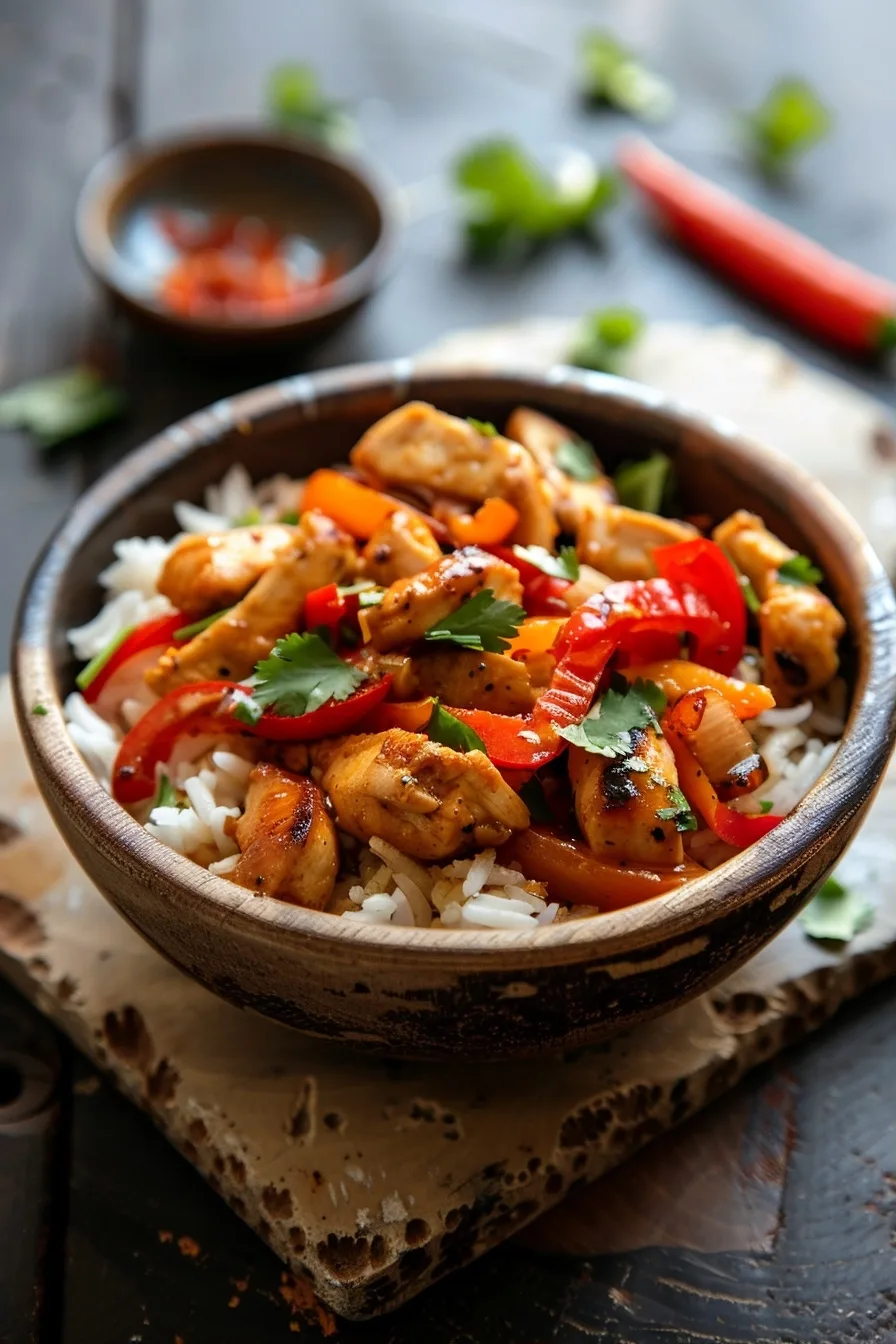
The Loaded Chicken Fajita Rice Bowl – Quick & Healthy is a protein-dense, nutrient-balanced meal combining seasoned aromatics with perfectly cooked poultry and fluffy grains. This dish utilizes high-heat searing techniques to draw moisture from vegetables while maintaining a crisp, vibrant texture. It provides an efficient method for assembling a complete dinner using pre-cooked components without sacrificing quality or culinary integrity.
| Prep Time | Cook Time | Total Time | Servings | Difficulty | Cuisine |
|---|---|---|---|---|---|
| 10 minutes | 10 minutes | 20 minutes | 2 | Easy | Tex-Mex Fusion |
Why This Recipe Works
This recipe relies on the Maillard reaction, a chemical process that occurs when proteins and sugars brown under high heat. By searing the bell peppers and onions in a hot pan with aromatics, we convert raw enzymes into sweet, savory flavor compounds. This foundational step ensures the vegetables provide a structural contrast to the tenderness of the rotisserie chicken.
Temperature control is essential when incorporating pre-cooked proteins into a heated dish. Adding the chicken only after the vegetables have softened prevents the meat from overcooking and becoming stringy. This timing ensures the chicken absorbs the fajita seasoning effectively without losing its intrinsic moisture or succulence during the short reheating phase.
The integration of rice serves as a neutral starch that acts as a canvas for the bold spices. Using a ratio of two cups of protein to two cups of rice ensures a balanced satiation factor. This pairing allows the acidity from the lime juice added at the finish to cut through the density of the starch, creating a clean, professional flavor profile.
Ingredients
| Ingredient | Quantity | Notes |
|---|---|---|
| Shredded Rotisserie Chicken | 2 cups | Remove skin for lower fat content |
| Cooked Long-Grain Rice | 2 cups | Jasmine or basmati works best |
| Bell Peppers | 1 large | Slice into strips for uniform cooking |
| Yellow Onion | 1/2 medium | Sliced into thin half-moons |
| Fajita Seasoning | 1 tbsp | Check labels for no-added-sugar blends |
| Olive Oil | 1 tbsp | Higher smoke point than butter |
Step-by-Step Instructions
Prep
- Slice the bell peppers and onions into equal-width strips to ensure consistent cooking times.
- Measure the shredded chicken to ensure you have exactly two cups of packed meat.
Searing
- Heat one tablespoon of olive oil in a heavy-bottomed skillet over medium-high heat.
- Add sliced onions and peppers to the skillet once the oil begins to shimmer.
- Sauté the vegetables for five to seven minutes until they reach a tender-crisp consistency.
- Sprinkle the fajita seasoning evenly over the vegetables during the last minute of heating to bloom the spices.
- Fold the shredded chicken into the skillet, tossing gently to coat the meat in the spice-infused oil.
- Heat the mixture for two additional minutes until the chicken reaches an internal temperature of at least 165°F (74°C).
Plating
- Divide the cooked rice into two deep serving bowls.
- Layer the hot chicken and vegetable mixture atop the rice base.
Chef Tips for Perfect Results
- Use a cast-iron skillet to achieve a superior heat distribution and better sear on the peppers.
- Avoid overcrowding the pan, which leads to steaming rather than browning the vegetables.
- Freshly squeezed lime juice added post-cook increases the perception of salt and freshness.
- Ensure the rice is hot before plating to maintain the overall temperature of the bowl.
- Rest the vegetable mixture for thirty seconds before plating to allow the surface moisture to evaporate.
- For additional depth, toast the fajita spices in a dry pan for thirty seconds before adding oil.
Common Mistakes to Avoid
One major error is adding the chicken too early, which leads to protein denaturation and tough, dry texture. Another common issue is using cold rice, which necessitates a longer heating time and leads to mushy, overcooked vegetable textures. Always blanch your rice or reheat it separately so it is steaming hot before it hits the bowl. Neglecting to salt the vegetables appropriately can leave the dish tasting flat even with spice mixes.
Variations and Substitutions
| Ingredient | Substitution | Impact |
|---|---|---|
| Olive Oil | Avocado Oil | Higher smoke point for intense searing |
| Chicken | Turkey Breast | Leaner profile with less fat |
| Bell Peppers | Poblano Peppers | Increased heat and deeper earthy flavor |
Serving Suggestions and Pairings
Serve this dish with a side of chilled cucumber salad or sliced radishes to provide a cooling crunch. Pairing it with a sparkling mineral water infused with fresh cilantro and lime mimics the brightness of a traditional margarita without the use of alcohol. Consider serving on a warm autumn evening for a comforting yet light dinner option.
Storage and Reheating
| Method | Duration | Technical Instructions |
|---|---|---|
| Refrigerator | 3 Days | Store in airtight glass containers to prevent odors |
| Reheating | N/A | Heat in a pan with a splash of broth to retain moisture |
Nutritional Information
| Nutrient | Amount per Serving |
|---|---|
| Calories | 410 kcal |
| Protein | 32g |
| Fat | 12g |
| Carbohydrates | 45g |
| Fiber | 4g |
Approximate values.
Frequently Asked Questions
Can I freeze this fajita bowl for later?
Yes, you can freeze individual portions of the chicken and vegetable mixture for up to one month. I recommend storing the rice separately, as rice tends to turn gummy when frozen and thawed.
What is the best way to tell if the chicken is safe?
Use a digital meat thermometer to ensure the center of the chicken mixture has reached 165°F (74°C). This is the only reliable method for verifying food safety standards.
My vegetables are too soggy, what happened?
You likely crowded the pan or added them to oil that was not hot enough. Ensure the pan is preheated until the oil flows easily across the surface before adding vegetables.
Can I add more liquid for a sauce?
You can deglaze the pan with two tablespoons of chicken broth after sautéing the vegetables. This adds flavor and prevents the seasoning from burning.
How do I adjust the spice level?
Add a pinch of cayenne or dried chili flakes alongside the fajita seasoning. Adjust the quantity downward if you prefer a milder profile.
This dish demonstrates that clean, high-quality cooking requires minimal time when utilizing sound culinary fundamentals. By focusing on heat management and fresh ingredients, you transform simple staples into a restaurant-grade dinner experience. The combination of savory spices, tender protein, and hearty grains provides a satisfying, balanced profile that holds up to any scrutiny. Enjoy the clean, vibrant finish that makes this meal a reliable staple in any high-functioning kitchen during the busy work week.