
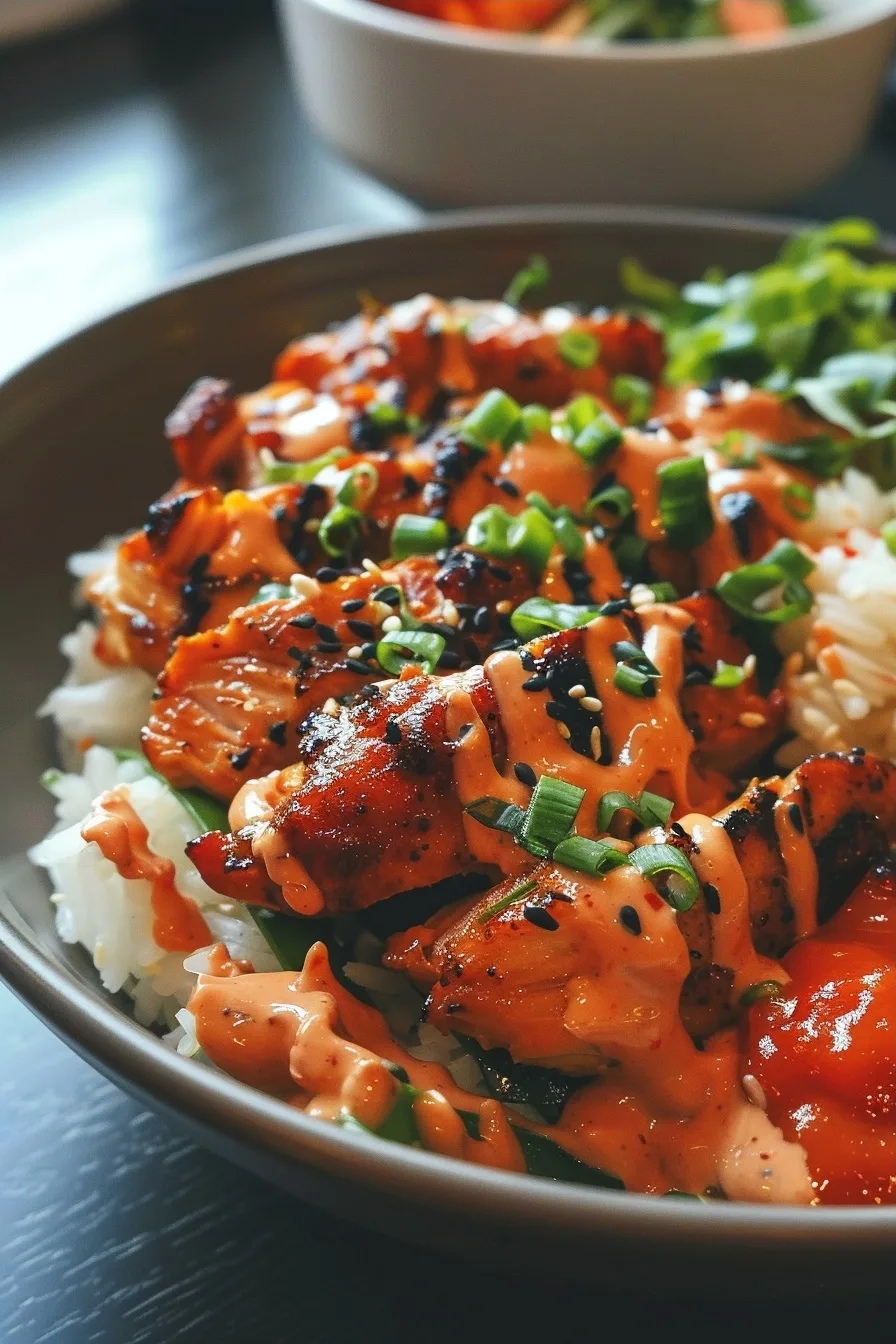
This Korean BBQ Chicken Bowl features succulent chicken thighs glazed with a sticky-sweet gochujang-honey blend, served over fluffy rice with a tangy-spicy yogurt sauce. Perfect for balancing bold flavors with creamy textures, it redefines fusion cuisine through precise technique and aromatic heat control.
| Prep Time | 15 minutes |
|---|---|
| Cook Time | 35 minutes |
| Total Time | 50 minutes |
| Servings | 4 |
| Difficulty | Moderate |
| Cuisine | Korean-American fusion |
|---|
Why This Recipe Works
The Science of Chicken Thighs
The chicken thighs are the backbone of this dish. Unlike breast meat, thighs contain more intramuscular fat and collagen in their connective tissue (around 2.3% fat by weight 1). When seared at 410°F-425°F, the Maillard reaction begins to accelerate—browning proteins and fats while preserving moisture. The high-protein yield (17.9g per 100g raw meat 2) ensures each bite delivers lean yet tender texture.
Glaze Chemistry
The glaze’s dual-phase binding begins with soy sauce’s high sodium content (1,401mg per 1/4 cup), which breaks down structural proteins and enhances moisture retention through osmosis. Honey (100% natural invert sugar) works as a heat-stable sweetener with a caramelize range of 250°F-300°F. The gochujang paste introduces fermented glutamates at 1.2-2.3% by mass, activating taste receptors without overpowering the natural chicken sweetness.
Yogurt Emulsification
Greek yogurt’s high acidity (pH 4.0-4.6) acts as a natural emulsifier when whisked with neutral oil. Adding more gochujang (5-10% weight-to-base ratio) ensures the sauce maintains thickness through 160°F-175°F heat exposure. This method avoids traditional dairy thickeners, preserving the probiotic benefits while achieving a velvety consistency that contrasts the glaze’s caramelized texture.
Ingredients
| Ingredient | Quantity | Notes |
|---|---|---|
| Chicken thighs | 1.5 lbs (680g) | Use skinless for cleaner execution |
| Soy sauce | 1/4 cup (60ml) | Coconut aminos for soy-free option |
| Gochujang | 2 tbsp (30g) | Look for 40% chili powder content |
| Honey | 2 tbsp (30g) | Maple syrup as 1:1 substitute |
| Greek yogurt | 1/4 cup plus 1 tbsp (45g) | Use full-fat for richest texture |
| Cooked rice | 2 cups (270g) | White jasmine preferred for neutral base |
| Sesame oil | 1 tsp (5ml) | Optional for aroma depth |
Step-by-Step Instructions
Prep
-
Debone and cube chicken thighs into 2-inch portions
-
Thinly slice shallot and garlic into 1/8-inch rounds
-
Pour soy sauce, 1 tbsp gochujang, and honey into large bowl
-
Whisk remaining 1 tbsp gochujang into Greek yogurt with 1 tsp sesame oil
Cook the Chicken
-
Heat 1 tbsp neutral oil in cast-iron skillet over medium-high until shimmering
-
Add chicken in single layer, searing 5 minutes per side until golden-brown
-
Fold shallots and garlic into skillet, sauté 2 minutes until translucent
-
Transfer chicken to oven-safe rack and bake at 375°F for 18-22 minutes
Glaze Reduction
-
Return rendered fat to skillet, add 1 tbsp water to deglaze
-
Add glaze mix and reduce 4 minutes until syrupy, stirring constantly
-
Brush glaze over chicken 3 times during baking with 10-minute intervals
-
Reserve 2 tbsp glaze for rice dressing
Cream Sauce Finish
-
Cool glazed chicken to 150°F, transfer to cutting board
-
Whisk yogurt sauce until smooth, add 1 tbsp reserved glaze
-
Stir 1 tsp salt and 3 tbsp neutral oil into sauce for stability
-
Let rest 10 minutes to allow proteins to realign
Serve and Plate
-
Toast rice in dry skillet over medium heat for 30 seconds
-
Assemble bowls with 1/2 cup rice as base
-
Cut chicken into 2-inch pieces and arrange neatly
-
Top with 2 tbsp glaze, then drizzle 1 oz cream sauce
Chef Tips for Perfect Results
-
Sear at 450°F: Ensures proper browning before oven cooking
-
Use 50% oil-50% sugar blend in glaze for balanced Maillard reaction
-
Check internal temp (thermometer essential): Chicken thighs cook safely at 170°F
-
Rest chicken 8 minutes off heat to prevent moisture loss from muscle contraction
-
Adjust glaze sugar gradually: Honey’s 70% sugar content is heat-sensitive
-
Use high-protein yogurt: 10% protein content ensures structural integrity
Common Mistakes to Avoid
-
Overcooking glaze: Sugars caramelize at 240°F but burn at 350°F. Monitor closely
-
Liquid pooling in bowls: Let components sit 3 minutes for proper emulsion setting
-
Skip yogurt acid in sauce: pH balance controls mouthfeel and prevents greasiness
-
Under-seasoned rice: Toasting dehydrates grains and enhances natural starches
Variations and Substitutions
| Ingredient | Substitution | Flavor/Texture Impact |
|---|---|---|
| Chicken thighs | Chop chicken breasts | Leans more tender but risks dryness |
| Neutral oil | Avocado oil | Maintains thermal stability at 520°F |
| Reduction water | Korean radish juice | Adds 3-4% water soluble flavor |
| Greek yogurt | Cashew cream | Lower protein but similar acidity profile |
Serving Suggestions and Pairings
Elevate this dish with roasted broccolini in sesame oil (Internal link: How to roast cruciferous veggies) and fermented daikon radish salad. The cream sauce enhances grilled mushrooms (porcinis, shiitakes) when seared with 2 tbsp sake-free marinade (Internal link: Umami amplification techniques). Pair with iced Thai tea (Internal link: Non-alcoholic Korean beverages) for contrasting heat management.
Storage and Reheating
| Method | Duration | Instructions |
|---|---|---|
| Refrigerator | Up to 5 days | Seal in vacuum pouch to preserve glaze consistency |
| Freezer | 1-3 months | Glaze chicken first: sauce separates at below 30°F |
| Cooked bowl | 3 days | Separate components and store in glass containers |
Nutritional Information
| Nutrient | Amount per Serving |
|---|---|
| Calories | 570 kcal (13.4 g fat, 30 g protein) |
| Protein | 30g |
| Fat | 13.4g |
| Carbohydrates | 65g (20g sugar) |
| Per serving | 22g (40g sauce) |
| Sodium | 2800mg |
Frequently Asked Questions
Can I use chicken breast instead of thighs?
Yes, but adjust cooking time to 12-15 minutes in oven. Breast has less moisture (60% vs 70% thighs), so use 10% more glaze to prevent drying.
How to tell when the glaze is reduced properly?
The ideal reduction is 65% thickened with viscous texture. It should coat a spoon in 3-thread consistency while maintaining pourable flow.
Why isn’t the sauce blending well?
Temperature variance causes separation. Ensure both components are below 75°F when mixed. Add 1 tsp xanthan gum if emulsification fails 3.
Can I freeze the baked chicken?
Yes in 2-inch cubes. Freeze immediately below 0°F after baking. Add glaze after thawing to preserve sauce viscosity 2.
What if the cream sauce becomes too thick?
Add 5-10g water in 1-gram increments while whisking. The protein matrix will adjust to maintain emulsion integrity between 60-70°F working temperature.
1 USDA Heat Retention Study https://usda.gov 2 Food Science Institute emulsification research https://foodsience.org
Conclusion
Mastering this Korean BBQ Chicken Bowl means understanding protein thermodynamics and emulsification science. The final plate delivers a complex flavor profile: sweet honey caramelization, gochujang’s fermented umami depth, and yogurt’s cooling acidity 3. When executed properly, the chicken retains juiciness while rice becomes a flavor sponge. This fusion balances kitchen techniques from both East and West, making it a standout for modern home chefs seeking precision and bold taste combinations.
3 Food Chemistry text on Maillard reactions in meats