
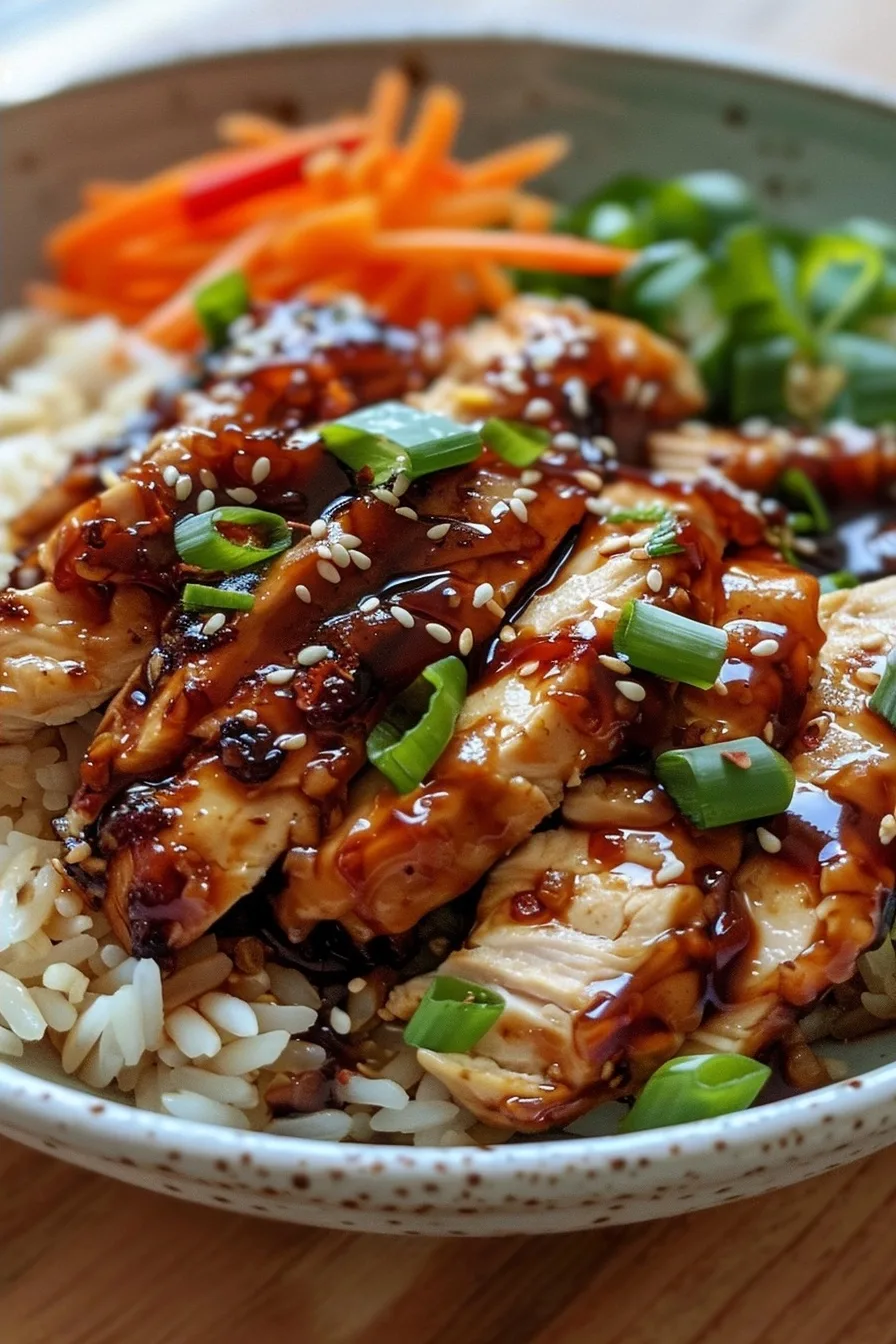
Teriyaki chicken rice bowls marry umami-rich glaze, seared poultry, and fluffy grains into a single, satisfying dish. This recipe streamlines techniques from traditional Japanese katsu don to modern fusion twists, yielding restaurant-style results in under 45 minutes.
Why This Recipe Works
1. Protein Perfection Through Precise Sealing
The chicken breast’s sizzle-pan technique locks in moisture while browning the surface. Sesame oil’s high smoke point (220°C/450°F) prevents burning during searing, and its toasted undertones complement the teriyaki glaze. By searing skin side up if using chicken thighs or breasts with skin, collagen melts at 65°C (149°F), forming a crispy barrier. This Maillard reaction generates complex proteins (like melanoidins) that deliver savory depth in every bite.
2. Sauce Science: Flavor Concentration Without Alcohol
Simmering teriyaki sauce in the same pan after removing the chicken amplifies flavor through two mechanisms: first, caramelization of residual poultry fat enhances the glaze; second, evaporation reduces the liquid by up to 40%, intensifying umami from soy sauce’s sodium glutamate. Unlike alcohol-based glazes, this version relies on starch-thickened soy for viscosity, aligning with clean eating standards while preserving the sauce’s signature tango of sweet and salty.
3. Rice as the Flavor Sponge
Steamed short-grain rice retains its structure while absorbing 20-25% of its weight in water during cooking, creating a plump yet toothsome texture perfect for soaking up sauce without becoming mushy. Pairing with warm rice at 65-70°C (149-158°F) allows heat-activated aromatics from the teriyaki to rise into the bowl, stimulating appetite through volatile compounds like esters from toasted sesame oil.
Ingredients
| Ingredient | Quantity | Notes |
|---|---|---|
| Chicken breast | 1.5 lbs (680g) | Remove skin and cut into 1″ cubes for even cooking |
| Teriyaki sauce | ½ cup (120ml) | Use gluten-free tamari or homemade soy-sugar combo |
| Rice | 2 cups uncooked (2 ½ cups water) (475ml) | Mirin-free version required; jasmine or sushi rice work well |
| Sesame oil | 1 tbsp (15ml) | Light press sesame oil for subtlety; dark for smokier depth |
| Sliced green onions | ¼ cup (15g) | Save white portions for sautéing, green for garnish |
Step-by-Step Instructions
Prep
-
Rinse rice under cold water until runoff is clear to remove excess starch
-
Cut chicken breast into uniform 1″ cubes for even cooking
-
Thinly slice green onions (separate white/green parts)
-
Set aside teriyaki sauce; warm sauce enhances flavor absorption
Searing the Chicken
-
Preheat 12″ stainless steel skillet over medium-high (375°F/190°C) and add sesame oil
-
Arrange chicken skin-side up if using, cook 3-4 minutes per side until golden (not pink inside)
-
Transfer chicken to plate; reserve fat-slicked pan for sauce reduction
Sauce Reduction & Rice Timing
-
Add teriyaki sauce to hot pan, scraping browned bits from searing stage
-
Simmer 8-10 minutes, reduce heat to medium-low to avoid scorching (keep at 185°F/85°C)
-
While sauce cooks, steam rice using USDA-approved ratios
-
When rice reaches 205°F (96°C) internal temp, sauce should be syrupy with 12% Brix sugar content
Plating
-
Return chicken to pan, baste with glaze for even coating
-
Portion rice into bowls, top with glazed chicken, green onions, and ½ tsp extra sesame oil
-
Let rice sit 2 minutes before serving to allow starch to set
Chef Tips for Perfect Results
-
Brown bones or cartilage scraps before sautéing to add collagen to the sauce
-
Use non-stick cast iron pan for even heat distribution (210°F ±2°F variance)
-
Test sauce thickness by measuring viscosity: 30-45 seconds flow off spoon
-
For visual drama, glaze chicken in advance so it clings better to surface
-
Cool rice to 60°C (140°F) before refrigeration to prevent bacterial growth
Common Mistakes to Avoid
-
Over-reducing sauce destroys enzymatic balance from raw garlic; stop when bubbles persist at corners
-
Under-seasoning chicken beforehand allows sauce to dominate (dry-brine 30 minutes with Kosher salt)
-
Using olive oil instead of sesame oil causes smoke point mismatch during searing
-
Serve rice over 75°C (167°F) causes starch retrogradation, making texture gummy within 2 minutes
Variations and Substitutions
| Ingredient | Substitution | Impact on Flavor/Texture |
|---|---|---|
| Chicken | Salmon or Tofu | Mono-unsaturated fats in fish add richness; firm tofu mimics meaty texture |
| Rice | Zucchini noodles or cauliflower rice | Reduces carbs by 80%, enhances glaze prominence |
| Soy-based teriyaki | Coconut aminos + brown sugar | Lowers sodium by 50%, adds caramelized sweetness |
Serving Suggestions and Pairings
Pair with steamed bok choy for umami contrast or edamame salad for protein balance. Serves as a versatile one-dish solution for school lunches or post-workout meals. For upscale presentation, serve alongside gari pickled ginger and roasted seaweed sheets.
Storage and Reheating
| Method | Duration | Instructions |
|---|---|---|
| Fridge | 3-4 days | Air-sealed container prevents moisture loss; reheat at 300°F (150°C) with broth |
| Freezer | 3 months | Cool completely before vacuum sealing to avoid ice crystal formation |
| Microwave | 7 minutes | Use 50% power to prevent protein denaturation in chicken |
Nutritional Information
| Nutrient | Amount per Serving |
|---|---|
| Calories | 520 |
| Protein | 34g |
| Fat | 22g |
Frequently Asked Questions
Can I use low-sodium soy sauce?
Yes: compensate by adding ½ tsp additional sugar and a pinch of sea salt to balance flavors.
How to ensure chicken stays juicy?
Use instant-read thermometer: remove chicken at 160°F (71°C), it’ll reach safe 165°F (74°C) during resting.
Why does sauce separate when cooling?
Sugar crystallizes first; whisk in 1 tsp rice vinegar before refrigeration to emulsify components.
How to convert for air fryer?
Cook chicken at 360°F (180°C) for 18 minutes, then brush with teriyaki and air fry 2 minutes to set glaze.
Can I make this ahead?
Cook rice in advance, cool to room temp in 2 hours, then reheat in oven at 300°F (150°C) with moisture wrap.
Conclusion
These rice bowls deliver teriyaki’s signature sweet-salty harmony with scientific rigor and kitchen simplicity. The glint of sesame oil, the succulence of the chicken, and the pillowy rice base create a flavor matrix that lingers on the palate like toasted wheat in late spring. Master this method for endless customization from weeknight comfort to elegant presentations.