
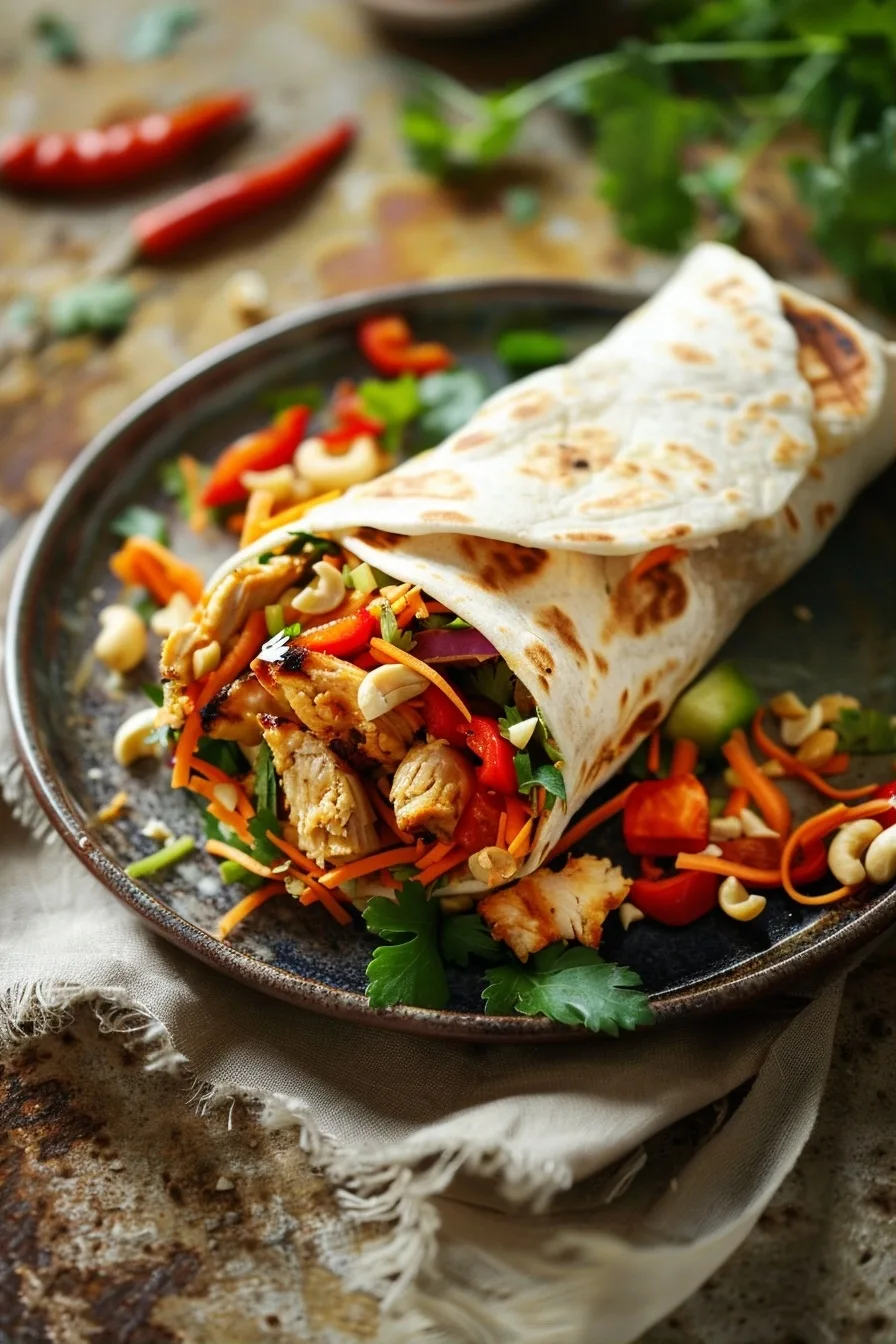
Thai peanut chicken wraps with fresh vegetables combine succulent rotisserie chicken and crunchy garden produce with a rich, savory peanut-based sauce. This efficient, nutrient-dense recipe balances lean protein with vibrant textures to create a satisfying meal. By utilizing pre-cooked chicken and raw, crisp vegetables, this dish provides a rapid, high-quality dining experience suitable for any busy weekday lunch or light dinner.
| Prep Time | Cook Time | Total Time | Servings | Difficulty | Cuisine |
|---|---|---|---|---|---|
| 15 minutes | 0 minutes | 15 minutes | 2 | Easy | Thai-Inspired |
Why This Recipe Works
The culinary logic behind this dish focuses on the intersection of temperature and mechanical texture. By cooling the rotisserie chicken to room temperature before tossing it in the peanut sauce, the sauce emulsifies evenly, coating every fiber of the meat. This ensures that the proteins are seasoned throughout rather than having patches of dry, unseasoned flesh.
We rely on the hydration levels of the fresh vegetables to provide a sharp contrast to the dense, nutty sauce. When crisp carrots and cucumber strips are combined with the fat-rich peanut sauce, the palate experiences a sensory shift that keeps each bite engaging. Controlling the moisture content of these vegetables is vital; keeping them dry maintains the integrity of the lettuce wrap structure.
The science of flavor balance in this recipe hinges on the ratio of acidity to fat. Authentic Thai flavor profiles prioritize the interplay of savory, sweet, and tangy elements. By using a robust peanut base, we gain density, which requires the acidic component in the sauce to cut through the oil, preventing the palate from becoming fatigued during the meal.
Ingredients
| Ingredient | Quantity | Notes |
|---|---|---|
| Shredded Rotisserie Chicken | 2 cups | Ensure the chicken is deboned and shredded while warm for better absorption. |
| Peanut Sauce | 1/4 cup | Use a premium, alcohol-free, and pork-free store brand or homemade version. |
| Shredded Carrots | 1 cup | Use thick, julienned cuts for structural integrity. |
| Cucumber Strips | 1/2 cup | Remove the seeds to prevent excess moisture from compromising the lettuce. |
| Large Lettuce Leaves | 4 leaves | Butter or Romaine lettuce works best for folding. |
Step-by-Step Instructions
Preparation and Sauce Integration
- Shred the rotisserie chicken into bite-sized pieces using two forks, ensuring no cartilage or skin remains.
- Place the shredded chicken in a large mixing bowl and drizzle the peanut sauce directly over the meat.
- Toss the chicken thoroughly until every strand is coated, allowing the residual heat of the chicken to help the sauce distribute evenly.
Assembly and Plating
- Lay four large, clean, and dry lettuce leaves on a flat workspace to prepare for assembly.
- Distribute the peanut-coated chicken evenly across the center of each lettuce leaf.
- Layer the julienned carrots and cucumber strips over the chicken for optimal crunch.
- Roll each leaf tightly, beginning at the stem end, and secure if necessary with a toothpick or a gentle fold.
Chef Tips for Perfect Results
- Always select Romaine or Butter lettuce for these wraps because their leaf structure is durable enough to hold the weight of the chicken.
- Dry your lettuce leaves thoroughly after washing; excess water will dilute the viscosity of the peanut sauce.
- If your peanut sauce is too thick, thin it out with a teaspoon of warm water or lime juice to ensure a luxurious, pourable consistency.
- For extra texture, add crushed roasted peanuts or toasted sesame seeds to the chicken mixture before rolling.
- Keep the chicken at room temperature during the tossing phase to ensure the fats in the sauce do not seize or clump.
Common Mistakes to Avoid
Many home cooks fail to slice the vegetables uniformly, which results in an uneven distribution of flavor and difficulty when rolling the leaves. Precision in knife work is essential for structural symmetry. Another common error involves using cold chicken directly from the refrigerator; cold proteins are less effective at absorbing sauces compared to room-temperature proteins.
Ignoring the moisture content of the cucumbers often leads to soggy wraps within minutes. Always deseed cucumbers to remove the highest concentration of water. Lastly, over-stuffing the lettuce leaves compromises the structural integrity, causing the wraps to split during service. Aim for a balanced weight-to-leaf ratio.
Variations and Substitutions
| Ingredient | Substitution | Impact |
|---|---|---|
| Chicken | Smoked turkey breast | Provides a similar smoke profile without pork. |
| Carrots | Daikon radish | Adds a peppery, crisp bite. |
| Peanut Sauce | Almond butter sauce | Creates a nuttier, slightly earthy profile. |
Serving Suggestions and Pairings
Serve these wraps alongside a side of chilled cucumber salad lightly dressed with rice vinegar and chili flakes. For a sophisticated beverage, pair this with a sparkling lime-infused water or a cold, non-alcoholic ginger and yuzu mocktail to complement the rich peanut notes and provide brightness.
Storage and Reheating
| Method | Duration | Technical Instructions |
|---|---|---|
| Refrigerator | 24 hours | Store ingredients separately in airtight containers to prevent wilting. |
Nutritional Information
Approximate values per serving (2 wraps):
| Nutrient | Amount |
| Calories | 320 |
| Protein | 28g |
| Fat | 14g |
| Carbohydrates | 12g |
| Fiber | 3g |
Frequently Asked Questions
Can I substitute the chicken with firm tofu?
Yes, pressed and cubed firm tofu works as an excellent high-protein alternative. Ensure you pan-sear the tofu first to develop the Maillard reaction, which adds necessary savory depth.
How do I stop the wraps from tearing?
Use two leaves double-up for each wrap if the lettuce variety is thinner. Selecting larger, outer leaves also provides more structural resilience.
Can I freeze these wraps for later use?
Freezing is not recommended because the fresh vegetables, specifically the lettuce and cucumbers, lose their turgidity upon thawing. Assemble the fresh components just before serving.
What is the secret to a perfectly uniform dice on the veggies?
Utilize a sharp chef’s knife and maintain a consistent width for every cut. Match-sticking or julienning the vegetables ensures each bite has a uniform textural experience.
Are there any substitutions for the peanut sauce?
Sun-butter or cashew butter are excellent alternatives if a peanut-free option is required. Adjust the quantity of lime juice accordingly to match the acidity levels.
Mastering these Thai peanut chicken wraps offers a masterclass in the balance of temperature and texture. By maintaining high culinary standards with fresh ingredients, you transform a simple lunch into an intentional, nourishing meal. The crispness of the garden vegetables against the creamy, savory peanut coating leaves a lasting impression on the palate.