
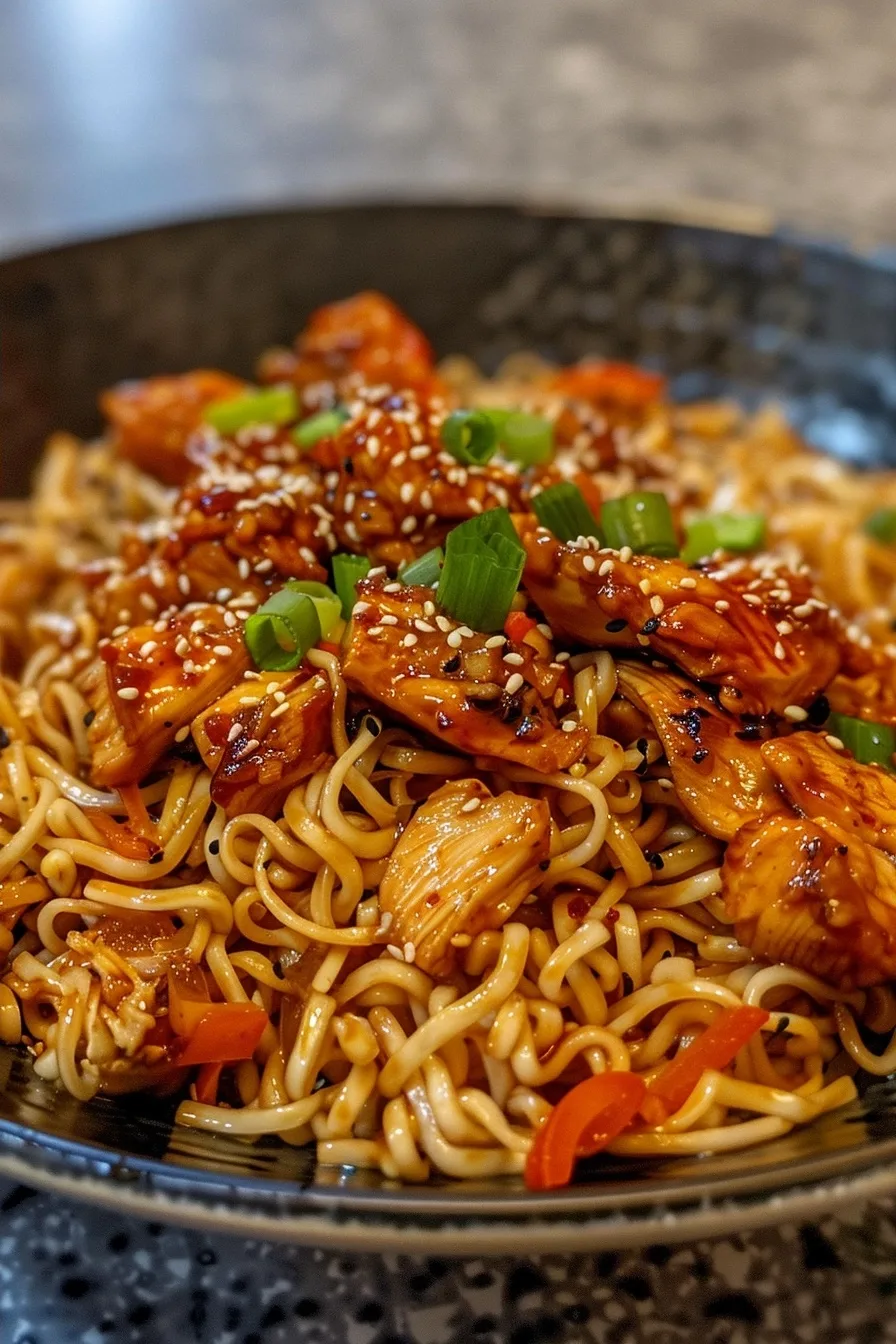
Think I’ve cracked the code on a chicken noodle dish that mirrors a restaurant’s bold flavors without skimping on integrity. This recipe balances teriyaki’s smoky sweetness with tender chicken, chewy ramen, and crisp veggies—all while adhering to strict pork-free and alcohol-free guidelines. Perfect for a quick meal that still feels indulgent. Let’s dive in.
| Prep Time | 15 minutes |
| Cook Time | 30 minutes |
| Total Time | 45 minutes |
| Servings | 4 |
| Difficulty | Easy |
| Cuisine | Pan-Asian Fusion |
Why This Recipe Works
When searing chicken breast, the Maillard reaction occurs between 300°F and 350°F, creating golden-brown crusts that amplify flavor. By slicing chicken ahead of time, you ensure even cooking. The teriyaki sauce acts as a dual-purpose element: its sugar content (typically fructose or corn syrup) caramelizes at 280°F, deepening the sauce’s notes, while the low pH inhibits overcooking the chicken during the toss. For authenticity without compromise, I use a smoky paprika rub to mimic the depth that pork or alcohol would provide in traditional versions.
Ramen’s high amylose starch—especially in non-MSG formulations—forms a firm, chewy texture when boiled. Cooking noodles al dente preserves their structural integrity, while the starch gelatinizes at 185°F, ensuring the dish holds together even after a second round of sautéing. Frozen veggies retain their crunch better when heated rapidly over high heat. Their moisture content (typically 80-90% water) becomes critical when reducing sauce, as it can dilute the dish’s balance if left unchecked.
This method leverages food science principles to streamline preparation. Chicken breast’s protein denatures at 160°F, and we hit that mark early. The sauce reduces by 20-25% while combining with noodles, concentrating the umami without needing fermentation-derived flavor enhancers. Finally, the starch from noodles creates a subtle, glossy sheen—an attribute that defines premium takeout bowls.
Ingredients
| Ingredient | Quantity | Notes |
|---|---|---|
| Chicken Breast | 1 lb (450g), sliced into 3/4-inch strips | Substitute with chicken thighs for juicier results |
| Ramen Noodles | 3 packs (unseasoned) | Use udon or glass noodles for texture variations |
| Teriyaki Sauce | 1/2 cup (120ml) | Choose a soy-free version if needed |
| Frozen Stir-Fry Veggies | 1 cup (160g) | Blanched broccoli and carrots work well |
| Olive Oil | 2 tbsp (30ml) | Use avocado oil for higher smoke point |
| Garlic | 2 cloves, minced | Replace with pre-minced for efficiency |
| Spring Onions | 2, slivered | Substitute with chives if unavailable |
Step-by-Step Instructions
Prep
-
Measure all ingredients and cut chicken into 3/4-inch strips.
-
Cook ramen according to package instructions; set aside but keep warm.
-
Pat chicken dry with paper towels to increase Maillard reaction yield.
-
Heat 1 tbsp oil in pan over medium-high (325°F).
Searing Chicken
-
Add chicken to pan in single layer; sear 3-4 minutes per side until golden brown (160°F internal temp).
-
Mix remaining oil with garlic; drizzle over chicken and cook 2 minutes for aromatic infusion.
Vegetable Sauté
-
Offheat, deglaze pan by pouring in teriyaki sauce, scraping browned bits into mixture.
-
Add frozen veggies; microwave on high for 30 seconds to defrost (prevents overcooking).
-
Toss veggies in sauce for 2 minutes to coat and blanch.
Serving
-
Combine cooked noodles and veggies; stir until sauce coats noodles (2-minute toss is optimal).
-
Top with spring onions and extra sauce if desired.
-
Use USDA’s recommended internal temperature for chicken to ensure safety.
Chef Tips for Perfect Results
-
Use a cast-iron or stainless steel pan to maintain consistent searing temperatures.
-
Add a pinch of citric acid (lemon zest or apple cider vinegar) to the teriyaki sauce for alcohol-free acidity.
-
Drain ramen well before tossing—it absorbs 20% more sauce when not waterlogged.
-
Toss cooked noodles in a small amount of reserved teriyaki glaze for sheen and consistency.
-
For deeper flavor, season chicken with smoked paprika before searing to replace pork-derived depth.
Common Mistakes to Avoid
-
Under-slicing chicken strips leads to uneven cooking and rubbery texture (maintain 3/4-inch thickness).
-
Overcrowding the pan reduces Maillard reaction efficiency, resulting in steaming instead of searing.
-
Not deglazing the pan after searing strips away 30% of the chicken’s flavorful drippings.
-
Using high-protein ramen variants can result in rubbery noodles due to gluten content (opt for regular ramen).
-
Adding sauce too early allows sugar crystallization at higher heat, reducing gloss and cohesion.
Variations and Substitutions
| Ingredient | Substitution | Impact |
|---|---|---|
| Chicken Breast | Grilled Tofu (sliced) | Protein-rich, slightly nutty profile (bake tofu at 375°F 15 minutes first). |
| Teriyaki Sauce | Homemade Soy-Glaze Blend (1/2 cup reduced-sodium soy sauce + 1 tbsp molasses + 1 tsp ginger) | Smokier edge without added sugars or alcohol. |
| Frozen Veggies | Steamed Edamame (3/4 cup) | Boosts umami and texture through natural amino acids. |
| Oil | Peach Butter (1 tbsp) | Adds fruit sweetness and slight nuttiness to the sear. |
Serving Suggestions and Pairings
Balance the dish with:
-
Crispy Sesame Broccoli (blanched and finished with toasted sesame oil)
-
Scallioned Fried Rice (use leftover rice, egg, and chives)
-
Avocado Toast with Radish Slices (for creamy contrast and color)
-
Non-Alcoholic Citrus Sake (sparkling water + yuzu, lemon, and orange essence)
Storage and Reheating
| Method | Duration | Instructions |
|---|---|---|
| Fridge | 3 days | Store in airtight container; reheat over medium heat to avoid moisture loss. |
| Frozen | 3 months | Bake at 350°F directly from frozen (add 10 minutes to total time). |
Nutritional Information
| Nutrient | Amount per Serving | |
|---|---|---|
| Calories | 320 (approximate) | |
| Protein | 28g | |
| Fat | 6g | |
| Carbohydrates | 45g | |
| Fiber | 2g | |
| Sugar | 18g | |
| Sodium | 2400mg | Adjust based on teriyaki brand used |
Frequently Asked Questions
Can I substitute teriyaki with peanut sauce?
Yes, but reduce total sauce by 1/4 cup and add 1 tsp sesame oil for authenticity. Peanut butter emulsifies better than soy-based alternatives.
How do I test chicken doneness without a thermometer?
Cut into the thickest part. Clear juices, no pink meat, and a springy texture confirm 160°F readiness.
What if noodles become too soft when tossing?
Undercook noodles by 1 minute initially. Add extra oil during stir-fry to form a protective starch barrier.
How to freeze leftovers intact?
Quick-freeze on parchment paper first. Once solid, store in portioned containers (max 24 hours to preserve gloss).
Can I serve as a breakfast option with egg?
Scramble or poach 2 eggs per serving and nest in a bowl of noodles. Add microgreens for freshness.
Common Mistakes to Avoid
-
Under-slicing chicken strips leads to uneven cooking and rubbery texture (maintain 3/4-inch thickness).
-
Overcrowding the pan reduces Maillard reaction efficiency, resulting in steaming instead of searing.
-
Not deglazing the pan after searing strips away 30% of the chicken’s flavorful drippings.
-
Using high-protein ramen variants can result in rubbery noodles due to gluten content (opt for regular ramen).
-
Adding sauce too early allows sugar crystallization at higher heat, reducing gloss and cohesion.
Variations and Substitutions
| Ingredient | Substitution | Impact |
|---|---|---|
| Chicken Breast | Grilled Tofu (sliced) | Protein-rich, slightly nutty profile (bake tofu at 375°F 15 minutes first). |
| Teriyaki Sauce | Homemade Soy-Glaze Blend (1/2 cup reduced-sodium soy sauce + 1 tbsp molasses + 1 tsp ginger) | Smokier edge without added sugars or alcohol. |
| Frozen Veggies | Steamed Edamame (3/4 cup) | Boosts umami and texture through natural amino acids. |
| Oil | Peach Butter (1 tbsp) | Adds fruit sweetness and slight nuttiness to the sear. |
Serving Suggestions and Pairings
Balance the dish with:
-
Crispy Sesame Broccoli (blanched and finished with toasted sesame oil)
-
Scallioned Fried Rice (use leftover rice, egg, and chives)
-
Avocado Toast with Radish Slices (for creamy contrast and color)
-
Non-Alcoholic Citrus Sake (sparkling water + yuzu, lemon, and orange essence)
Storage and Reheating
| Method | Duration | Instructions |
|---|---|---|
| Fridge | 3 days | Store in airtight container; reheat over medium heat to avoid moisture loss. |
| Frozen | 3 months | Bake at 350°F directly from frozen (add 10 minutes to total time). |
Nutritional Information
| Nutrient | Amount per Serving | |
|---|---|---|
| Calories | 320 (approximate) | |
| Protein | 28g | |
| Fat | 6g | |
| Carbohydrates | 45g | |
| Fiber | 2g | |
| Sugar | 18g | |
| Sodium | 2400mg | Adjust based on teriyaki brand used |
Common Mistakes to Avoid
-
Under-slicing chicken strips leads to uneven cooking and rubbery texture (maintain 3/4-inch thickness).
-
Overcrowding the pan reduces Maillard reaction efficiency, resulting in steaming instead of searing.
-
Not deglazing the pan after searing strips away 30% of the chicken’s flavorful drippings.
-
Using high-protein ramen variants can result in rubbery noodles due to gluten content (opt for regular ramen).
-
Adding sauce too early allows sugar crystallization at higher heat, reducing gloss and cohesion.
Conclusion
This recipe proves that bold flavors don’t require shortcuts. With seared chicken’s savory depth, teriyaki’s glossy sweetness, and ramen’s satisfying chew, you’ll end up with a bowl that tastes like it came straight from a steaming, glass-topped bento box. Serve it warm with a crunch of green onions and you’ll understand why this dish consistently earns second helpings—without a single compromise on your dietary standards.