
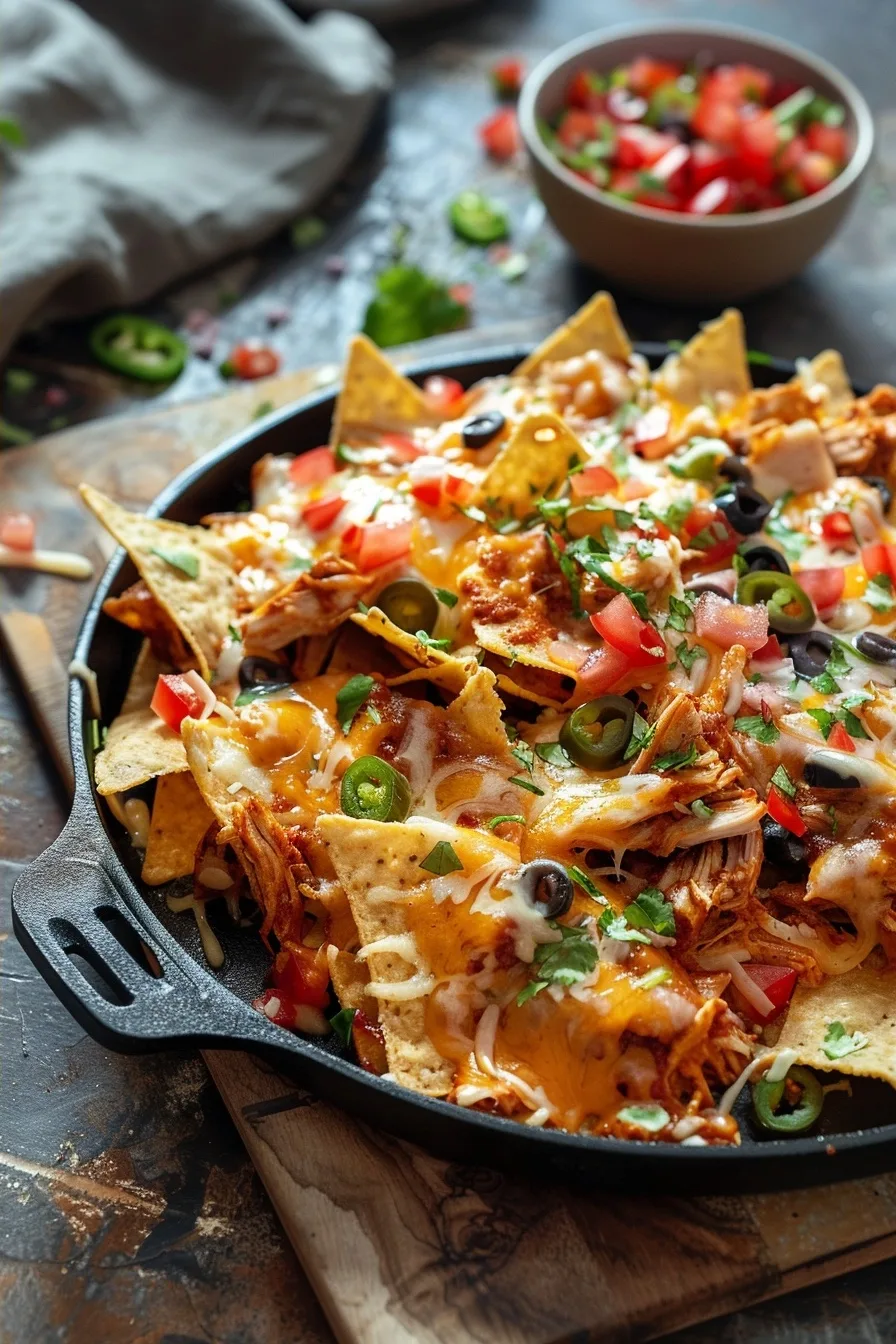
Sheet pan rotisserie chicken nachos with melted cheddar represent the perfect high-protein quick meal strategy for busy weeknights. By layering pre-cooked poultry with aged dairy and sturdy corn tortillas, you create a balanced dish that delivers complex textures and savory depth in less than ten minutes. This method prioritizes ingredient efficiency while ensuring every bite retains its crunch and flavor integrity through controlled short-burst heat application.
| Prep Time | Cook Time | Total Time | Servings | Difficulty | Cuisine |
|---|---|---|---|---|---|
| 5 mins | 5 mins | 10 mins | 4 | Easy | American |
Why This Recipe Works
I rely on the structured density of rotisserie chicken as the primary protein because the initial roasting process infuses the meat with concentrated savory notes. By shredding the chicken, you create increased surface area that grips the melted dairy, ensuring that the cheese stays anchored to the chips rather than sliding off during service. This structural integrity is vital for maintaining the crunch of the tortilla throughout the eating experience.
Regarding the science of melting, cheddar is the choice here because of its predictable protein-to-fat ratio. When placed under a direct broiler, the fats in the cheese liquefy and saturate the porous surface of the corn chips without causing excessive sogginess. Lower-moisture cheeses like cheddar have a lower probability of releasing excess water, which protects the structural rigidity of the corn base during the rapid heating phase.
The sequence of operations is intentional. By placing the protein and cheese in direct contact with the base, you regulate the intensity of the heat, shielding the chips from direct charring while allowing the cheese to blister slightly. This technique balances the Maillard reaction in the chicken with the uniform melting of the cheddar to achieve a sophisticated, golden-brown finish.
Ingredients
| Ingredient | Quantity | Notes |
|---|---|---|
| Rotisserie Chicken | 2 cups | Shredded evenly, skin removed |
| Corn Tortilla Chips | 1 bag (approx 12 oz) | Choose a sturdy, thick-cut variety |
| Sharp Cheddar | 1.5 cups | Freshly shredded for better melt |
| Pickled Jalapeños | 1/4 cup | Drain liquids thoroughly |
| Smoked Paprika | 1 tsp | Adds depth to the protein |
Step-by-Step Instructions
Prep
- Preheat your oven’s broiler to high heat or a temperature setting of 500°F (260°C).
- Line a heavy-gauge sheet pan with parchment paper to prevent sticking and simplify final cleanup.
- Shred the rotisserie chicken into bite-sized pieces and toss with the smoked paprika in a small mixing bowl to coat evenly.
Assembly
- Scatter the tortilla chips across your prepared sheet pan in a single layer to ensure even heat distribution.
- Distribute the seasoned chicken shreds over the chips to cover as much surface area as possible.
- Sprinkle the shredded cheddar over the chicken layer, ensuring that some cheese touches the chips for maximum adhesion.
- Dot the tops with the drained pickled jalapeños, ensuring they are distributed evenly across the sheet pan.
Baking
- Slide the sheet pan onto the center rack of your preheated oven.
- Broil for 3 to 5 minutes, keeping a close visual watch on the cheese to prevent burning.
- Remove the pan from the oven once the cheese is fully melted and bubbling at the edges of the chips.
Chef Tips for Perfect Results
- Always grate your cheese from a block; pre-shredded varieties often contain cellulose which inhibits a smooth, creamy melt.
- Use a heavy-duty baking sheet to ensure even thermal conductivity, preventing hot spots that might burn some chips before others finish cooking.
- Drain the pickled jalapeños thoroughly on a paper towel before adding them; excess vinegar moisture can turn chips soggy rapidly.
- Position the rack in the middle of your oven rather than the top to allow for a gentler, more uniform melt rather than scorched edges.
- Allow the nachos to rest for 60 seconds after pulling them from the heat; this lets the cheese set slightly so it doesn’t run off the chips.
- If you require extra protein, consider adding canned black beans, ensuring you rinse and dry them thoroughly to remove excess starch and liquid.
Common Mistakes to Avoid
Overcrowding the sheet pan remains the most frequent error, resulting in uneven cooking and cold centers. Ensure the chips have at least minimal breathing room to allow the hot air to circulate. Another mistake is using thin, restaurant-style chips that lack the structural integrity to hold heavy toppings. Always opt for thick, « cantina-style » maize chips which possess higher tensile strength. Failing to remove the chicken skin before shredding adds unwanted, slippery textures that cause the toppings to slide off during the transition to the serving plate. Finally, leaving the nachos under the broiler for too long results in the breakdown of the dairy proteins, leaving a greasier finish that lacks the desired pull and mouthfeel.
Variations and Substitutions
| Ingredient | Substitution | Impact |
|---|---|---|
| Cheddar | Monterey Jack | Increased melt, milder flavor profile |
| Rotisserie Chicken | Roasted Turkey Breast | Leaner, lighter end-product |
| Jalapeños | Pickled Sweet Peppers | Adds crunch without the sharp acidity |
Serving Suggestions and Pairings
Serve these nachos immediately while the cheddar retains its elasticity. Consider accompanying this dish with a side of freshly mashed avocado or a bright, cilantro-heavy tomato salsa to add enzymatic acidity and freshness. A refreshing beverage, such as sparkling water with fresh lime juice and a hint of agave, balances the richness of the melted cheese and the savory, salt-heavy profile of the chicken without overcomplicating the palate.
Storage and Reheating
| Method | Duration | Technical Note |
|---|---|---|
| Refrigeration | 24 Hours | Wrap tightly, though texture will degrade |
| Oven Reheating | 5 mins at 350°F | Best method to restore structural crispness |
| Microwave | Not Recommended | Will cause significant sogginess |
Nutritional Information (Approximate values)
| Calories | 420 kcal |
| Protein | 28g |
| Fat | 22g |
| Carbohydrates | 34g |
| Sodium | 680mg |
Frequently Asked Questions
Can I prepare this dish ahead of time?
You can shred the chicken and grate the cheese hours in advance, but do not assemble until the moment before baking. Moisture from the chicken will affect the tortilla chemistry if left sitting, leading to inferior texture.
Why did my cheese break or separate?
Separation occurs when the cheese is subjected to excessive heat for too long, causing the fats to leak out from the proteins. Maintain a vigilant eye during the broiling process and remove the sheet as soon as the cheese is fully liquid.
Can I add extra vegetables?
Vegetables such as diced tomatoes or onions can be added, but only after baking to preserve their structural crunch. Cooking vegetables like tomatoes during the broil phase releases high water content which creates a soggy mess on the chips.
How do I ensure even melting?
Use freshly grated cheese from a block, as this contains no anti-caking agents that hinder the smooth flow of the dairy fats. Distributing the cheese in a thin, uniform layer across all the chicken pieces also prevents clumps that leave some areas dry.
What is the best way to reheat leftovers?
Return the nachos to a clean sheet pan and place them into a 350°F (175°C) oven for five minutes. Avoid the microwave, which turns chips into a chewy, moisture-laden product by heating through water-vapor vibration rather than crisping external surfaces.
This sheet pan method provides a robust and reliable way to prepare high-quality nachos at home. The marriage of seasoned, tender chicken with perfectly melted cheddar creates a satisfying, savory experience that satisfies the palate without excess complexity. By respecting the simple science of thermal application and ingredient preparation, you achieve a professional-grade snack every time. Serve this promptly to enjoy the contrast between the still-snapping corn tortillas and the velvety, rich finish of the cheese. Learn more about food preparation standards at USDA.gov and explore advanced thermal cooking techniques at academic resources such as Cornell Food Science.