
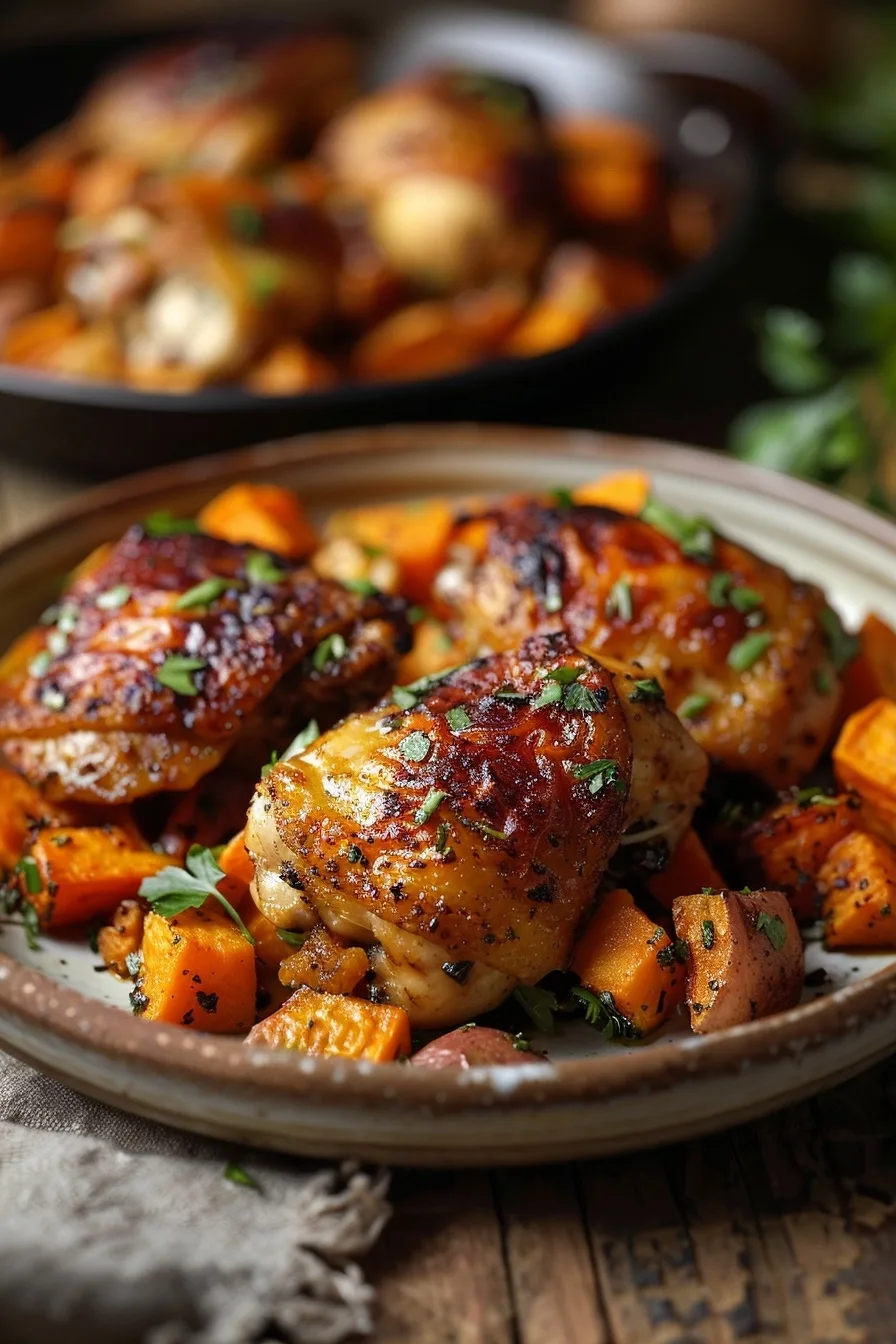
Sheet pan rotisserie chicken and sweet potato hash is a streamlined, nutritionally dense meal that maximizes flavor while minimizing cleanup. By combining pre-cooked savory protein with the natural starchiness of oven-roasted root vegetables, this technique utilizes radiant heat to caramelize sugars and crisp the aromatics. It serves as an efficient solution for busy weeknights when quality, texture, and convenience must converge in a single, well-composed pan-roasted dish.
| Category | Details |
|---|---|
| Prep Time | 10 minutes |
| Cook Time | 25 minutes |
| Total Time | 35 minutes |
| Servings | 4 servings |
| Difficulty | Easy |
| Cuisine | Modern American |
Why This Recipe Works
The success of this hash relies on the control of water activity and sugar caramelization during the roasting process. Sweet potatoes are high in complex carbohydrates; when cubed uniformly, they provide a large surface area for the Maillard reaction to occur once they reach a temperature threshold of approximately 300°F (150°C). Tossing them with olive oil ensures consistent heat conduction, preventing the potatoes from sticking and allowing the exteriors to turn golden-brown while the interiors soften into a creamy, tender texture.
Integrating rotisserie chicken during the final development phase capitalizes on the fact that the protein is already cooked. By adding it only in the last few minutes, I ensure the delicate muscle fibers do not desiccate or become gummy under the prolonged exposure to direct broiler or radiant oven heat. The chicken absorbs the localized rendered fats and aromatic steam from the peppers and potatoes, rehydrating the meat and creating a cohesive, unified flavor profile that feels freshly prepared rather than reheated.
Finally, the selection of bell peppers introduces a necessary acidic bright note and structural diversity. As the peppers roast, they undergo cell wall breakdown, releasing natural sugars and moisture that deglaze the surface of the pan. This interaction creates an informal pan sauce which coats the chicken and potatoes. This biochemical process ensures that the finished dish possesses a depth of flavor typically reserved for much longer cooking methods, relying on precise timing rather than complex layering of ingredients.
Ingredients
| Ingredient | Quantity | Notes |
|---|---|---|
| Rotisserie Chicken | 2 cups (shredded) | Remove all skin and excess fatty connective tissue. |
| Sweet Potatoes | 2 large (diced) | Peel and cut into 1/2-inch uniform cubes. |
| Bell Pepper | 1 medium (diced) | Remove seeds and internal white pith. |
| Olive Oil | 2 tablespoons | High-quality extra virgin preserves aromatics. |
| Smoked Paprika | 1 teaspoon | Provides deep wood-fired notes without meat. |
| Sea Salt | 1/2 teaspoon | Adjust according to the sodium levels of chicken. |
| Black Pepper | 1/4 teaspoon | Freshly cracked for maximum essential oil potency. |
Step-by-Step Instructions
Preparation and Seasoning
- Preheat your oven to 400°F (200°C) to ensure a steady, high-temperature environment.
- Uniformly dice the sweet potatoes into 1/2-inch cubes using a sharp chef’s knife to guarantee even cooking times.
- Arrange the sweet potatoes and diced bell peppers onto a heavy-gauge rimmed metal baking sheet.
- Drizzle the vegetables with olive oil and sprinkle the smoked paprika, sea salt, and black pepper evenly over the mixture.
- Toss thoroughly with a spatula until every surface is coated in a thin, glistening film of oil and spice.
Roasting and Finishing
- Place the baking sheet on the center rack and roast for 20 minutes, stirring halfway through the duration.
- Remove the pan from the oven once the potatoes reach a fork-tender consistency and a golden-brown exterior.
- Add the shredded rotisserie chicken to the pan and gently fold it into the vegetable hash.
- Return the sheet pan to the oven for an additional 5 minutes until the chicken is heated through and slightly crisp at the edges.
- Serve immediately to maintain the textural integrity of the crisp potato skin.
Chef Tips for Perfect Results
- Ensure absolute uniformity when dicing root vegetables; varying sizes lead to uneven doneness, where some cubes remain raw while others burn.
- Spread the ingredients in a single layer; overcrowding the pan creates steam rather than dry heat, leading to mushy textures instead of crispy ones.
- Always utilize metal pans for roasting; they possess higher thermal conductivity than glass or ceramic dishes, which is vital for the desired crust development.
- Check the interior temperature of the thickest potato piece; it should reach 205°F (96°C) for a perfect blend of fluffy starch and firm structure.
- For added complexity, consider adding a squeeze of fresh lemon juice immediately after removing the pan from the oven to provide a bright acid finish.
Common Mistakes to Avoid
One frequent mistake is neglecting to preheat the pan. A cold pan slows down the initial searing of the potato surface, which allows excess moisture to leach out and soak the vegetable rather than frying it. Always place the metal sheet in the oven while it preheats to ensure the roasting begins at the optimal temperature.
Using too little oil often results in ingredients adhering stubbornly to the pan surface. The oil acts as a heat transfer medium; without it, you are effectively baking the vegetables in dry air rather than roasting them. If you prefer a lower fat version, consider using a fine spray of oil, though a complete removal will sacrifice the desired Maillard-related crust.
Variations and Substitutions
| Ingredient | Substitution | Impact on Flavor/Texture |
|---|---|---|
| Sweet Potatoes | Butternut Squash | Lower glycemic index, slightly more fibrous texture. |
| Smoked Paprika | Ground Cumin | Shifts profile from smoky-savory to earthy and warm. |
| Bell Pepper | Diced Zucchini | Adds moisture, reduces crunch; add in the final 5 minutes. |
Serving Suggestions and Pairings
This hash translates well into a standalone main dish when served alongside a crisp arugula salad tossed in a sharp lemon-tahini vinaigrette. The bitterness of the greens serves as a palate cleanser against the sweetness of the potatoes. For a beverage pairing, a chilled sparkling apple cider with a sprig of fresh rosemary provides a refreshing, non-alcoholic bite that mirrors the autumnal notes in the hash while cutting through the richness of the chicken.
Storage and Reheating
| Method | Duration | Technical Instructions |
|---|---|---|
| Refrigeration | 3-4 Days | Store in an airtight glass container to prevent moisture absorption. |
| Reheating | 5-7 Minutes | Use a skillet over medium heat to regain original crispness. |
Nutritional Information
Approximate values per serving (based on 4 servings):
| Nutrient | Amount per Serving |
|---|---|
| Calories | 340 kcal |
| Protein | 28g |
| Fat | 12g |
| Carbohydrates | 32g |
| Fiber | 5g |
| Sodium | 420mg |
Frequently Asked Questions
Can I use raw chicken breast instead of rotisserie chicken?
Yes, but you must increase the total roasting time to approximately 30-35 minutes to ensure the chicken reaches an internal temperature of 165°F (74°C). Cut the raw chicken into 1-inch strips to ensure it finishes cooking at the same rate as the diced sweet potatoes.
How do I know when the sweet potatoes are perfectly done?
The sweet potatoes should be deep amber on the outside and offer zero resistance when pierced with a paring knife. If the centers feel firm or mealy, the starch grains have not fully gelatinized, and the roasting time must be extended by 5-minute increments.
Can this dish be frozen for later?
Freezing this hash is not recommended as the moisture content in the roast vegetables will lead to a watery, mushy texture upon thawing. The structural matrix of the sweet potato breaks down during the freeze-thaw cycle, resulting in an undesirable consistency.
Is there a way to make it crispier without extra oil?
You can achieve a crispier finish by utilizing the broiler setting during the final 2 minutes of the cooking process. Maintain constant visual contact with the pan to prevent the sugars in the vegetables from burning due to the high intensity of the infrared radiation.
What is the best way to prevent the chicken from drying out during reheating?
The most effective method is to add a tablespoon of unsalted chicken stock to the skillet before reheating over medium heat. Covering the pan with a lid for the first 2 minutes traps the steam, which rehydrates the fibers before removing the lid to crisp the exterior.
References for further study include the USDA nutrition database and core principles of heat transfer and food chemistry detailed by the Institute of Food Science and Technology.
Conclusion
Mastering this sheet pan rotisserie chicken and sweet potato hash highlights the elegance of simple, high-heat cooking. By respecting the nuances of starch gelatinization and carefully timed protein integration, you achieve a meal that balances sweet, smoky, and salty notes in every bite. Whether you are managing a busy schedule or seeking a reliable, nutrient-dense dinner, this method provides consistent, professional-grade results. Embrace the crisp edges of the potatoes and the warm, aromatic depth of the paprika to transform humble store-bought staples into a satisfying, chef-inspired dining experience.