
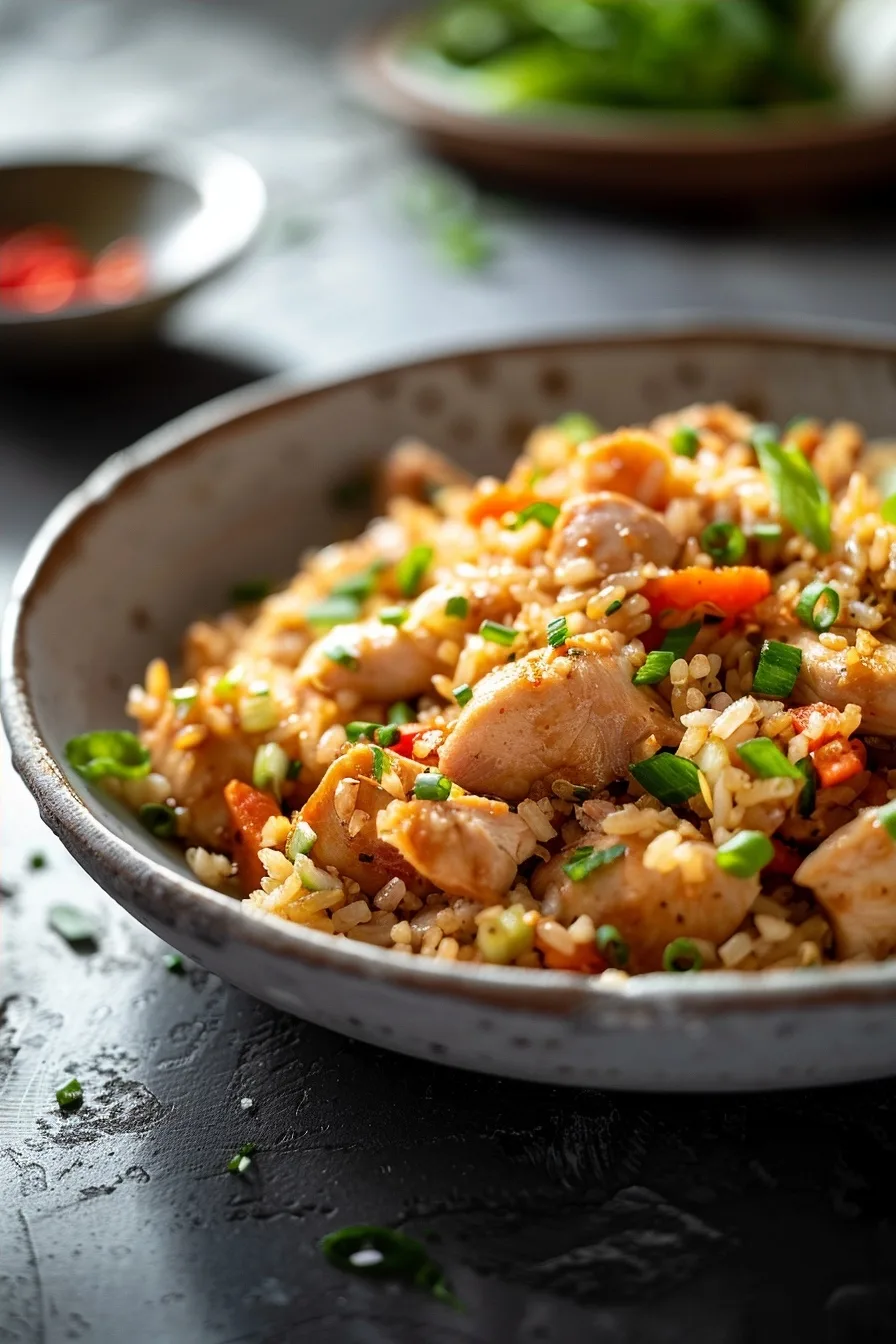
This Savory Japanese BBQ Chicken Fried Rice Extravaganza is a deeply flavorful and satisfying one-pan meal, marrying tender chicken, perfectly cooked rice, and the sweet-salty umami of Yakiniku sauce.
Recipe Overview
| Prep Time | 15 minutes |
|---|---|
| Cook Time | 20 minutes |
| Total Time | 35 minutes |
| Servings | 4 |
| Difficulty | Easy |
| Cuisine | Japanese-inspired American |
Why This Recipe Works
From a culinary science perspective, developing this fried rice revolved around several key principles. First, the use of cold, day-old rice is paramount. Starch molecules in freshly cooked rice are still gelatinized and pliable, leading to a mushy fried rice. Cold rice allows the individual grains to firm up, providing the perfect texture for stir-frying, ensuring each grain remains distinct and absorbs flavor without breaking down. This textural foundation is what transforms a simple dish into something truly exceptional.
Secondly, the Maillard reaction, that complex process responsible for browning and developing a vast array of savory flavors, is intentionally encouraged here. We achieve this by cooking the chicken and aromatics first at a relatively high heat, creating those desirable seared edges and caramelized notes. This builds a flavor base deep within the pan before the rice is even introduced, ensuring the entire dish is infused with roasted complexities rather than just boiled or steamed flavors.
Finally, the incorporation of Yakiniku sauce at the right stage is crucial for flavor emulsification. Adding it towards the end, once the rice and other ingredients are hot, allows the sauce’s sugars to caramelize slightly without burning, while its savory components coat every grain. This balance of sweet, salty, and umami is meticulously achieved, creating a cohesive and profoundly satisfying flavor profile that defines this dish’s unique character.
Ingredients
| Ingredient | Quantity | Notes |
|---|---|---|
| Cooked Chicken Breast | 1 cup (approx. 6 oz / 170g) | Diced small. Can use rotisserie chicken for convenience. Ensure it’s cooled. |
| Cold Cooked Rice | 2 cups (approx. 15 oz / 425g) | Day-old, chilled white or brown rice works best. Refrigerate after cooking to dry it out. |
| Japanese BBQ Sauce (Yakiniku) | 1/4 cup (2 oz / 60ml) | Look for brands specifically labeled « Yakiniku no Tare ». |
| Large Egg | 1 | For binding and richness. |
| Frozen Peas and Carrots (mixed) | 1/4 cup (1.5 oz / 45g) | Thawed slightly or added directly from frozen. |
| Sesame Oil | 1 tablespoon (0.5 oz / 15ml) | For flavor and to prevent sticking. |
| Neutral Cooking Oil | 2 tablespoons (1 oz / 30ml) | Such as canola, vegetable, or grapeseed oil. |
| Garlic | 2 cloves | Minced finely. |
| Ginger | 1 teaspoon | Freshly grated or minced finely. |
| Scallions (Green Onions) | 2 stalks | White and green parts separated, thinly sliced. |
| Soy Sauce (Low Sodium) | 1 teaspoon (0.17 oz / 5ml) | Optional, for an extra savory boost. |
| Black Pepper | 1/4 teaspoon | Freshly ground. |
Step-by-Step Instructions
Prep Work
-
Dice the cooked chicken into small, bite-sized pieces, ensuring consistency for even cooking.
-
Mince the garlic and ginger very finely.
-
Thinly slice the scallions, separating the white and light green parts from the dark green tops.
-
Ensure your cooked rice is cold and ideally slightly loosened with a fork or your fingers to separate the grains.
Searing and Aromatics
-
Heat 1 tablespoon of neutral cooking oil in a large skillet or wok over medium-high heat until shimmering.
-
Add the diced chicken and cook, stirring occasionally, for 3-4 minutes until lightly browned and heated through. Transfer chicken to a clean bowl.
-
Add the remaining 1 tablespoon of neutral cooking oil to the skillet. Add the white and light green parts of the scallions, minced garlic, and grated ginger.
-
Sauté the aromatics for about 30-60 seconds until fragrant, being careful not to burn the garlic.
-
Add the thawed or frozen peas and carrots to the skillet and stir-fry for 1-2 minutes until tender-crisp.
Combining and Frying
-
Push the vegetables and aromatics to one side of the skillet. Pour the egg into the empty side.
-
Scramble the egg quickly with a spatula until just set, then gently break it up and incorporate it with the vegetables.
-
Add the cold cooked rice to the skillet. Increase the heat slightly to medium-high.
-
Break up any clumps of rice with your spatula and stir-fry for 3-5 minutes, allowing some grains to crisp up slightly against the hot pan.
-
Add the cooked chicken back into the skillet with the rice and vegetables.
Sauce Integration and Finishing
-
Pour the Japanese BBQ sauce (Yakiniku) evenly over the rice mixture.
-
Add the optional teaspoon of low-sodium soy sauce and the black pepper.
-
Stir everything together vigorously, ensuring the sauce coats all the ingredients. Continue to cook for another 3-5 minutes, allowing the sauce to caramelize slightly and the rice to heat through completely.
-
Stir in the toasted sesame oil and half of the sliced green scallion tops.
-
Taste and adjust seasoning if necessary, adding a pinch more salt or a splash more Yakiniku sauce if desired.
-
Serve immediately, garnished with the remaining sliced green scallion tops.
Chef Tips for Perfect Results
-
Rice is King: Always use cold, day-old rice. This structural integrity prevents mushiness and allows for proper grain separation and crisping. If you must cook rice fresh, spread it on a baking sheet and refrigerate for at least 4 hours, or freeze for 30 minutes.
-
Hot Pan, Quick Cook: Utilize a wok or large, heavy-bottomed skillet. Ensure the pan is properly preheated over medium-high heat before adding ingredients to promote searing and prevent sticking. High heat cooks quickly, preserving the texture of vegetables.
-
Don’t Overcrowd: Cook ingredients in batches if necessary, especially when adding the chicken and vegetables initially. Overcrowding the pan lowers the temperature, leading to steamed rather than seared results, diminishing flavor development.
-
Sauce Timing: Add sauces like the Yakiniku towards the end of cooking. This allows the sugars to caramelize without burning and thickens the sauce slightly, coating the rice beautifully.
-
Aromatic Foundation: Sautéing fresh garlic, ginger, and scallion whites before adding other ingredients builds a foundational aromatic complexity that permeates the entire dish.
Common Mistakes to Avoid
-
Using Freshly Cooked Rice: The high moisture content and soft starch structure cause the rice to break down and become gummy. Always use chilled, preferably day-old, rice for optimal texture.
-
Overcooking the Egg: If scrambled too early or too vigorously, the egg can become rubbery and dry. Add it after the aromatics and vegetables, and cook it just until set before breaking it up.
-
Low Cooking Temperature: Fried rice needs high heat to develop those desirable charred notes and prevent sogginess. If your pan isn’t hot enough, ingredients will steam rather than fry, resulting in a lackluster dish.
-
Burning Aromatics: Garlic and ginger can burn very quickly when sautéed. Cook them only until fragrant (about 30-60 seconds) over medium-high heat, then proceed to the next step. Burnt aromatics impart a bitter, unpleasant flavor.
Variations and Substitutions
| Ingredient | Substitution | Impact on Flavor/Texture |
|---|---|---|
| Cooked Chicken Breast | Diced Turkey or Firm Tofu | Turkey is similar, slightly leaner. Tofu adds a plant-based protein, offering a chewier texture and absorbing sauce well. Ensure tofu is pressed to remove excess water. |
| Japanese BBQ Sauce (Yakiniku) | Teriyaki Sauce with a dash of Worcestershire sauce and a pinch of sugar | Teriyaki is sweeter and less complex. Worcestershire adds a hint of umami/tang that mimics some traditional Yakiniku elements. Adjust tangiveness. |
| Frozen Peas and Carrots | Diced Bell Peppers, Corn, or Edamame | Adds different vegetable profiles and textures. Bell peppers offer crunch, corn sweetness, and edamame a slightly firmer bite. |
| Sesame Oil | Scallion oil or a neutral oil | Sesame oil is specifically for flavor. Scallion oil offers a milder oniony note. A neutral oil will omit the sesame flavor entirely. |
Serving Suggestions and Pairings
This Savory Japanese BBQ Chicken Fried Rice Extravaganza is robust enough to stand alone as a meal, but it pairs wonderfully with a crisp, refreshing side. Consider a simple Miso Soup made with savory white miso paste and a sprinkle of seaweed. A side of steamed edamame sprinkled with sea salt offers a pleasant textural contrast and a burst of green goodness. For beverages, a chilled, sparkling Japanese Ramune soda provides a fun, fruity effervescence that cuts through the richness of the fried rice.
Alternatively, serve it as a substantial component of a larger meal. It complements dishes like pan-seared salmon or grilled teriyaki-glazed tofu skewers. For a more casual gathering, present it in individual bowls as a main event, perhaps alongside a simple cucumber salad with a rice vinegar dressing for a cooling element.
Storage and Reheating
| Method | Duration | Exact Technical Instructions |
|---|---|---|
| Refrigeration | 3-4 days | Allow rice to cool completely before transferring to an airtight container. Store in the refrigerator. Avoid leaving at room temperature for more than 2 hours to prevent bacterial growth. |
| Reheating (Stovetop) | 5-8 minutes | Heat 1-2 teaspoons of neutral oil or sesame oil in a skillet over medium heat. Add the cold fried rice, breaking up any clumps. Stir-fry until heated through, adding a tablespoon of water or broth if it seems dry to restore moisture. |
| Reheating (Microwave) | 1-2 minutes | Transfer fried rice to a microwave-safe dish. Cover loosely with a damp paper towel to retain moisture. Microwave on high for 1-2 minutes, stirring halfway through, until heated thoroughly. |
Nutritional Information
| Nutrient | Amount per Serving (Approximate values.) |
|---|---|
| Calories | 450-550 kcal |
| Protein | 25-30 g |
| Fat | 15-20 g |
| Carbohydrates | 50-60 g |
| Fiber | 3-5 g |
| Sugar | 8-12 g |
| Sodium | 800-1200 mg (Varies greatly by Yakiniku sauce) |
Frequently Asked Questions
Can I use freshly cooked rice?
While not ideal, you can use freshly cooked rice if you spread it thinly on a baking sheet and refrigerate it for at least 4 hours, or freeze it for about 30 minutes until firm. This process mimics the drying effect of day-old rice, preventing a gummy texture and allowing grains to separate.
How do I know if the chicken is cooked?
Ensure the chicken pieces are opaque throughout and reach an internal temperature of 165°F (74°C) if you are cooking raw chicken first. If using pre-cooked chicken, heat it through until it is no longer pink and has a slightly seared exterior.
My fried rice is sticky, what went wrong?
Stickiness usually results from using freshly cooked rice, which is too moist and has pliable starch. Overcrowding the pan also reduces cooking temperature, leading to steaming rather than frying and causing a gluey consistency. Ensure your rice is cold and dry, and maintain high heat.
Can I freeze this fried rice?
Yes, this fried rice freezes well. Cool it completely, then store it in airtight freezer-safe containers or heavy-duty freezer bags for up to 2-3 months. Thaw in the refrigerator overnight before reheating.
I don’t have Yakiniku sauce, what else can I use?
A good substitute is a combination of soy sauce, a touch of honey or brown sugar, garlic powder, and a teaspoon of rice vinegar for acidity. While it won’t be identical, it will capture a similar sweet-savory profile. Adjust sweetness and saltiness to your preference.
Conclusion
This Savory Japanese BBQ Chicken Fried Rice Extravaganza represents a triumph of accessible flavor and satisfying textures. It’s a culinary creation designed to impress with its depth of taste and ease of preparation, proving that vibrant, complex meals can emerge from simple ingredients and thoughtful technique. Each forkful offers a delightful interplay of tender chicken, perfectly separated rice grains, and the irresistible umami-rich gloss of Yakiniku sauce, leaving a lingering warmth and profound satisfaction.