
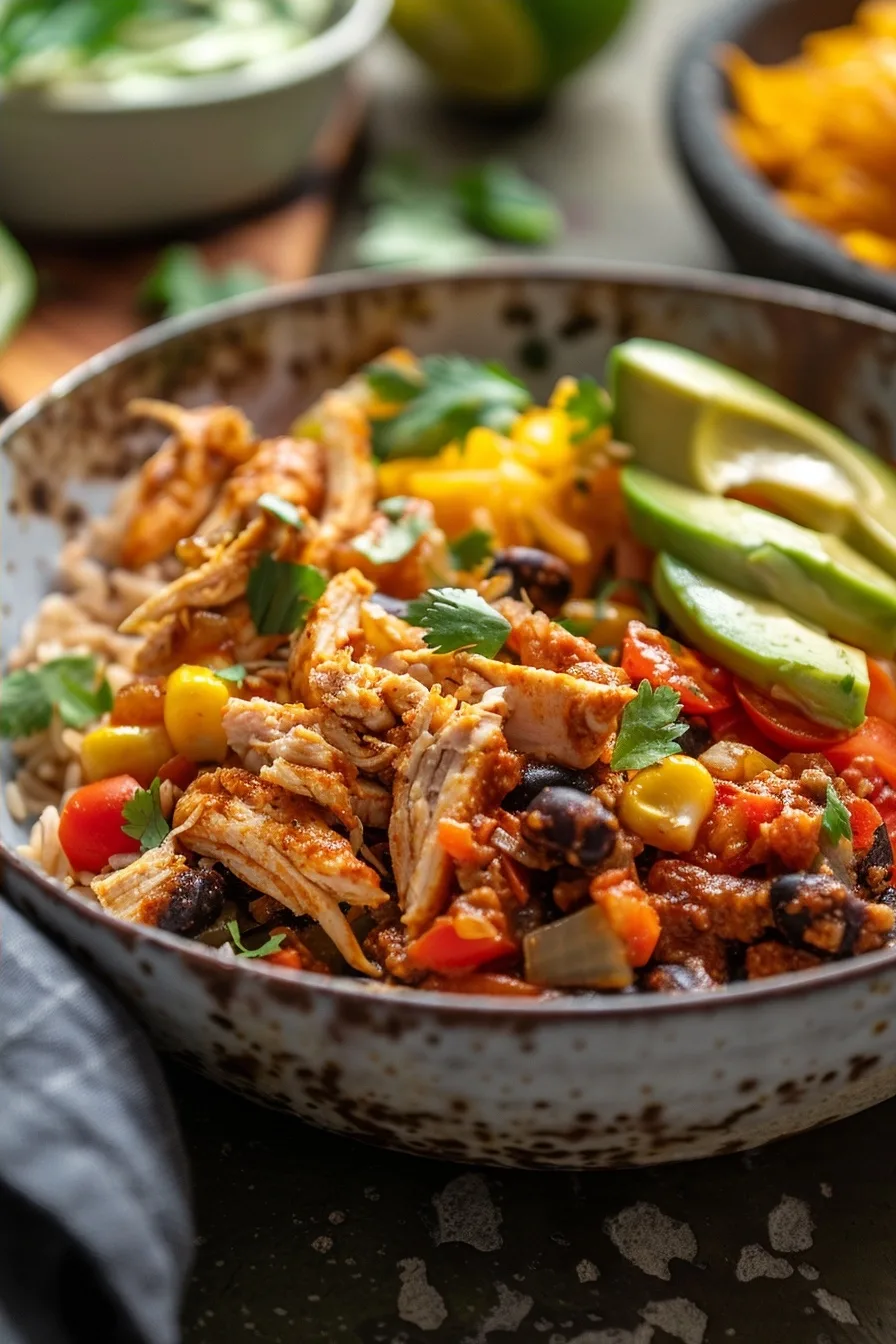
The One-Pan Chicken Burrito Bowl (Easy 30-Minute Dinner) is a streamlined, high-protein meal that utilizes efficient sautéing for optimal flavor development. By combining perfectly seared chicken, seasoned rice, and fiber-rich beans in a single skillet, this method minimizes cleanup while maximizing the intensity of aromatics. This dish serves as an ideal baseline for balanced weekly nutrition, providing complex carbohydrates and lean proteins in one cohesive, savory presentation.
| Prep Time | Cook Time | Total Time | Servings | Difficulty | Cuisine |
|---|---|---|---|---|---|
| 10 minutes | 20 minutes | 30 minutes | 2 | Easy | Mexican-Inspired American |
Why This Recipe Works
The culinary logic behind this one-pan approach relies on the Maillard reaction. When chicken breast undergoes high-heat contact with the skillet, the amino acids and reducing sugars create a crust that provides depth and umami. I prefer to sear the chicken first, removing it briefly to prevent it from overcooking while the rice and beans integrate with the pan drippings.
By utilizing the salsa as the primary liquid medium, the rice kernels undergo a hydration process known as starch gelatinization. Instead of using plain water, the moisture from the salsa introduces acetic acid and capsaicin directly to the grain. This ensures the rice absorbs the tomato base and spices, resulting in a consistent profile that far exceeds simple boiled grains.
Finally, the addition of cheddar cheese and avocado provides a necessary fat-to-acid balance. The creamy, monounsaturated fats in the avocado neutralize the acidity of the salsa, while the fat from the melted cheddar binds the starch and proteins together. This creates a balanced mouthfeel that is both satiating and complex.
Ingredients
| Ingredient | Quantity | Notes & Alternatives |
|---|---|---|
| Chicken Breast | 1 lb (450g) | Uniformly cubed for even cooking. |
| Cooked Rice | 2 cups (400g) | Day-old white or brown rice works best. |
| Black Beans | 1/2 cup (125g) | Rinsed and drained thoroughly. |
| Salsa | 1/2 cup (120ml) | Mild or medium based on preference. |
| Shredded Cheddar | 1/4 cup (30g) | Sharp cheddar for maximum flavor profile. |
| Avocado | 1/2 unit | Sliced or diced just before serving. |
Step-by-Step Instructions
-
Searing the Chicken (Prep and Cooking)
-
Heat one tablespoon of neutral oil, such as avocado or grapeseed, in a large, heavy-bottomed stainless steel or cast-iron skillet over medium-high heat until shimmer appears.
-
Pat the chicken breast cubes dry with paper towels to ensure optimal searing contact; moisture is the enemy of the Maillard reaction.
-
Add chicken to the pan in a single layer, ensuring pieces do not touch to prevent steam release, and sear until golden brown and an internal temperature of 165°F (74°C) is reached.
-
Remove the chicken from the pan and set aside on a plate to retain juices.
-
-
Integrating the Base
-
Lower the heat to medium and pour in the salsa to deglaze the skillet, using a wooden spatula to scrape up the fond from the bottom of the pan.
-
Incorporate the cooked rice and black beans carefully into the salsa reduction, folding repeatedly until the rice is heated through and uniformly coated in the tomato base.
-
Return the seared chicken to the skillet, folding it gently into the mixture to distribute evenly without breaking the rice kernels.
-
-
Plating and Finishing
-
Sprinkle the shredded cheddar over the top of the mixture and cover the pan for thirty seconds to facilitate melting.
-
Remove from heat immediately to prevent residual heat from making the avocado turn brown or mushy.
-
Distribute into bowls and top with fresh avocado slices just prior to serving to maintain color vibrancy.
-
Chef Tips for Perfect Results
-
Use a cast-iron skillet to leverage superior heat retention and distribution, which ensures the chicken crust does not tear.
-
Always use cold cooked rice for the best grain separation; freshly cooked, steaming rice contains too much free moisture and can become gummy when added to the salsa.
-
Deglaze the pan with a small splash of lime juice if the bottom crust becomes too dark before you add the rice.
-
Monitor internal chicken temperature using a digital probe thermometer; pull it at 165°F (74°C) to prevent the muscle fibers from contracting and turning rubbery.
-
Assemble the avocado at the very last second to prevent premature enzymatic browning caused by oxidation.
Common Mistakes to Avoid
Avoid crowding the pan during the searing phase. When chicken is placed too close together, it releases water faster than it can evaporate, resulting in boiled rather than seared meat. This prevents the formation of the complex, savory crust that provides the base flavor for the entire dish.
Do not stir the rice too vigorously after adding it to the skillet. Starch granules near the surface of the rice can become damaged, releasing amylopectin and creating a glue-like texture rather than distinct, individual grains. Gentle folding with a silicone spatula is the correct technique for even coating.
Ignoring the resting period for the skillet after heat is removed can cause the salsa to separate. Allow the mixture to sit for two minutes; this resting time allows the starches to reabsorb some of the salsa liquid, improving the final mouthfeel of the bowl.
Variations and Substitutions
| Ingredient | Substitution | Impact |
|---|---|---|
| Cheddar | Monterey Jack | Increased meltability and milder flavor. |
| Black Beans | Pinto Beans | Earthier profile with a softer, thinner skin. |
| Chicken Breast | Turkey Breast | Drier texture, requires slightly less cooking time. |
Serving Suggestions and Pairings
This dish is robust enough to serve as a standalone, but it benefits from bright, crunchy sides. Consider serving this with a simple lime-cilantro slaw to provide a sensory contrast to the warm, savory grains. For a drink pairing, a sparkling limeade or infused cucumber water keeps the meal refreshing and light.
Storage and Reheating
| Method | Duration | Technical Instructions |
|---|---|---|
| Refrigerator | 3 days | Store in an airtight glass container to prevent flavor cross-contamination. |
| Reheating | N/A | Reheat on the stovetop with a tablespoon of water to rehydrate the rice. |
Nutritional Information (Approximate values)
| Nutrient | Amount per Serving |
|---|---|
| Protein | 32g |
| Calories | 480 kcal |
| Fat | 14g |
| Carbohydrates | 55g |
Frequently Asked Questions
Can I substitute chicken breast with thighs?
Yes, chicken thighs possess a higher lipid content and will remain juicier during the sautéing process. Adjust the cooking time by an additional two minutes total to account for the denser fat content in the darker meat.
Why did my rice become mushy?
The most common cause is using rice that was still hot or had excessive moisture remaining from the initial cooking process. Always use chilled, dry rice that has been refrigerated for at least four hours prior to cooking in the skillet.
Can I freeze this bowl for later?
Freezing is not recommended because the rice will undergo texture degradation due to the formation of ice crystals within the starch. If you must store it, focus on the refrigerator method to maintain the integrity of the sauce and the firmness of the grain.
How do I stop my avocado from browning?
Minimize oxidation by ensuring the avocado is added immediately before consumption or by lightly tossing the slices in fresh citrus juice. The citric acid acts as a natural antioxidant that slows down the enzyme response responsible for discoloration.
What should I do if the sauce is too acidic?
If the salsa acidity is overwhelming, add a small pinch of granulated sugar or a tablespoon of heavy cream to neutralize the pH. Balancing acidity is a fundamental food science technique that rounds out the sharp bite of tomatoes.
Conclusion
The One-Pan Chicken Burrito Bowl proves that speed in the kitchen does not require sacrificing depth of flavor. By mastering the sear, managing your starches, and balancing ingredients, you achieve a dish that is both nutritious and deeply satisfying. Enjoy the combination of the savory charred protein against the bright, tangy notes of the salsa integration. This meal is designed to be a reliable, high-yield solution for consistent weeknight cooking, leaving your palate refreshed and your hunger fully addressed.