
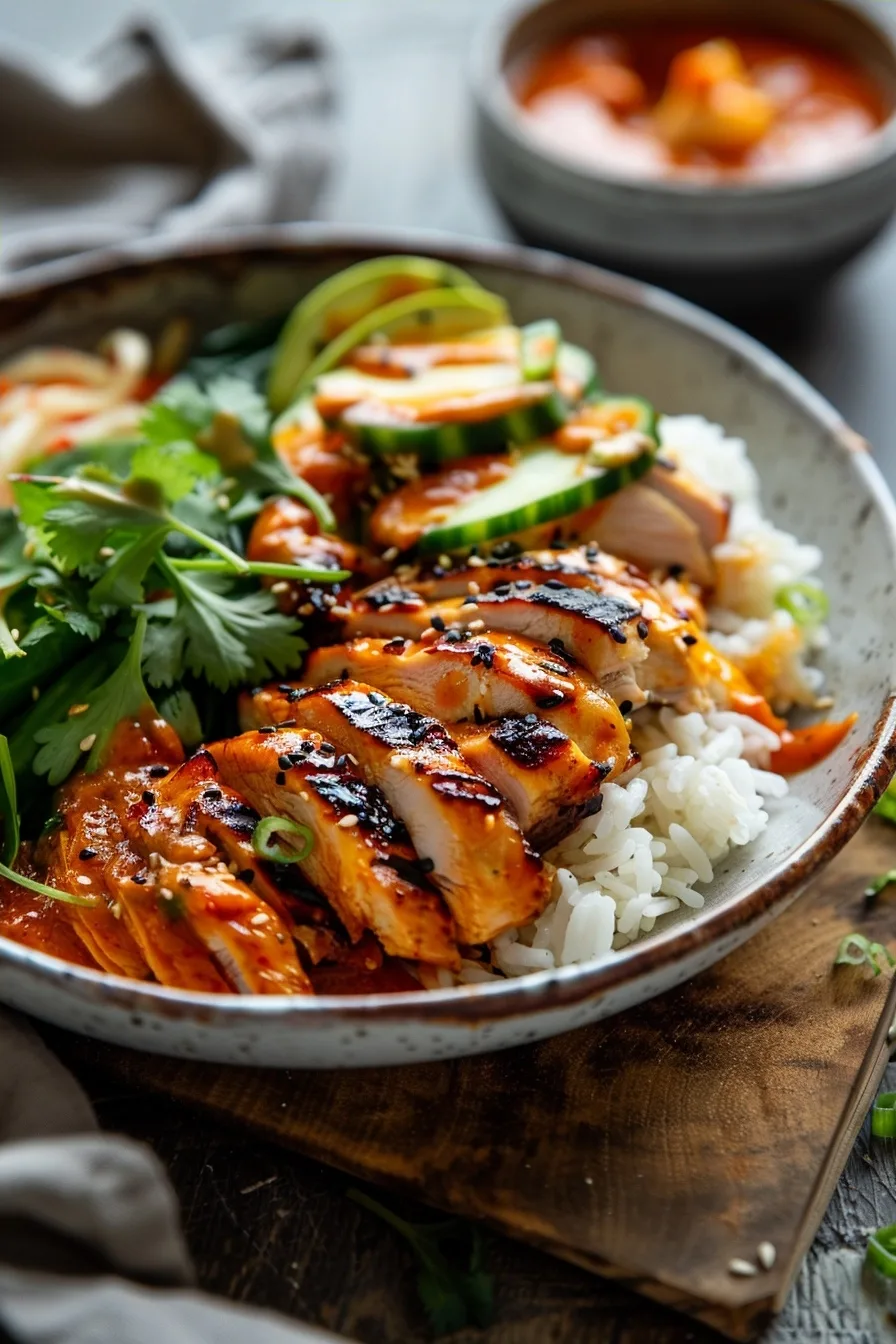
Korean BBQ Chicken Bowls with Spicy Gochujang Cream Sauce combine shredded savory chicken with a bold, fermented chili base and rich dairy to create a balanced, satisfying meal. This dish delivers high-impact umami flavor by balancing the sharp heat of Korean chili paste with the velvet texture of heavy cream, served alongside cooling crisp vegetables and steamed rice for a complete dining experience.
Recipe Overview
| Prep Time | 10 minutes |
|---|---|
| Cook Time | 5 minutes |
| Total Time | 15 minutes |
| Servings | 2 people |
| Difficulty | Easy |
| Cuisine | Modern Fusion |
Why This Recipe Works
This recipe succeeds because it masters the chemistry of fat-encapsulated capsaicin. Gochujang is a fermented paste with significant pungency; by folding it into heavy cream, we prevent the harsh chili notes from overwhelming the palate. The proteins in the cream act as a buffer, allowing the complex sweetness of the fermented rice base in the paste to shine through without stinging the tongue.
I utilize shredded rotisserie chicken for this method because its muscle fibers are already tender and porous. When tossed in the sauce, these fibers act as capillary tubes, soaking up the spicy cream mixture instantly. This short-cuts the traditional braising process while achieving identical moisture levels in the protein, which is essential for a high-quality bowl.
The integration of raw, sliced cucumbers provides a necessary textural contrast at the point of consumption. In culinary terms, we contrast the warm, soft, and rich chicken mixture with a cold, crunchy, and aqueous vegetable component. This balance ensures that the palate remains stimulated throughout the meal, preventing the flavor fatigue often associated with overly rich dishes.
Ingredients
| Ingredient | Quantity | Notes |
|---|---|---|
| Rotisserie Chicken | 2 cups | Shredded manually for even sauce coating |
| Cooked Rice | 2 cups | Short-grain white rice provides the best sticky texture |
| Gochujang Paste | 1/2 cup | Ensure it is free from alcohol-based preservatives |
| Heavy Cream | 1/4 cup | High fat content is essential for emulsification |
| Sliced Cucumbers | 1/2 cup | English cucumbers are preferred for lower water content |
| Sesame Seeds | 1 tsp | Toasted for aroma |
Step-by-Step Instructions
Sauce Preparation
- Whisk the gochujang paste and heavy cream in a small stainless steel bowl until the mixture reaches a uniform, vibrant orange hue.
- Verify that no streaks remain, as an uneven emulsion can lead to broken sauces during the warming phase.
Assembly and Finishing
- Warm the shredded chicken in a large skillet over medium-low heat for three minutes to reach an internal temperature of 165°F (74°C).
- Reduce the heat to the lowest setting before pouring the gochujang cream sauce directly over the chicken.
- Fold the chicken gently until every strand is coated, ensuring the sauce does not boil or separate.
- Divide the steamed rice into two wide-rimmed bowls.
- Heap the sauced chicken atop the rice beds.
- Arrange the cucumber slices on the side of the bowl to maintain their chilled, crisp integrity.
Chef Tips for Perfect Results
- Always use high-quality, full-fat heavy cream to ensure the sauce holds its structure when in contact with the warm proteins.
- If your gochujang is exceptionally thick, thin it with a teaspoon of warm chicken broth to improve spreadability.
- Shred the chicken while it is still slightly warm to ensure the fibers absorb the maximum amount of sauce.
- Toast your sesame seeds in a dry pan for 60 seconds until they turn golden brown to release natural oils.
- Use a silicone spatula to fold the sauce; it prevents the shredded chicken from breaking into smaller, unappealing pieces.
- For food safety, check the chicken temperature standards via the USDA website.
Common Mistakes to Avoid
- Boiling the sauce: High heat causes the cream to separate and curd, ruining the consistency. Keep flames low.
- Using cold chicken: If you add room-temperature chicken to the sauce, the final bowl temperature will drop significantly, affecting mouthfeel.
- Improper rice cooling: Serve the chicken over steaming rice, not rice that has been refrigerated, to maintain the comfort food aspect.
- Adding water instead of broth: If you need to thin the sauce, water will dilute the flavor, while chicken-based stock maintains the profile.
Variations and Substitutions
| Original Ingredient | Substitution | Resulting Impact |
|---|---|---|
| Heavy Cream | Full-fat coconut milk | Adds a tropical aroma and light sweetness |
| Rotisserie Chicken | Grilled Turkey Breast | Leaner, lighter protein profile |
| White Rice | Quinoa or Cauliflower Rice | Lower glycemic index alternative |
Serving Suggestions and Pairings
Serve this dish with a side of cold, pickled daikon radish to mimic traditional Korean side dishes, or pair it with a crisp green tea. The food science of pairing suggests that refreshing, non-acidic beverages help cleanse the palate between bites of rich cream sauce. This meal works perfectly for a quick weeknight dinner or as an efficient meal-prep option.
Storage and Reheating
| Method | Duration | Technical Instructions |
|---|---|---|
| Refrigeration | 3 days | Store in an airtight glass container to prevent moisture absorption |
| Reheating | Stovetop | Warm on low heat with a splash of cream to refresh the sauce consistency |
Nutritional Information
Approximate values per serving:
| Nutrient | Amount |
|---|---|
| Calories | 480 |
| Protein | 32g |
| Fat | 18g |
| Carbohydrates | 45g |
Frequently Asked Questions
Can I make the sauce ahead of time?
You can prepare the sauce up to 24 hours in advance and store it in a sealed jar in the refrigerator. Stir the mixture vigorously before re-incorporating it with the chicken to ensure the emulsion is stable.
What if the sauce is too spicy?
Adjust the intensity by adding a tablespoon of plain Greek yogurt or honey to the mixture. These ingredients provide further buffering against the chili heat without sacrificing the creamy texture.
How do I ensure the cucumber stays crunchy?
Place the cucumbers on the plate last, positioned away from the direct heat of the chicken. Avoiding contact between the fresh vegetable and the hot proteins prevents wilting.
Should I wash the rice before cooking?
Rinsing the rice under cold water until the water runs clear removes excess surface starch. This ensures the rice grains remain distinct rather than clumping into a paste.
Can this dish be frozen for later?
Freezing is not recommended because the dairy content in the sauce and the texture of cucumbers do not survive the thawing process well. This dish is best enjoyed fresh or from the refrigerator within three days.
Creating these chicken bowls allows for a quick yet deeply flavorful meal that balances heat and comfort. The combination of succulent poultry and the velvety gochujang sauce creates a memorable depth that is hard to match with basic seasonings. By following the precise temperature controls and ingredient ratios provided, you can achieve a professional-grade result in your own kitchen. Enjoy the heat, the creaminess, and the vibrant crunch of this satisfying bowl.