
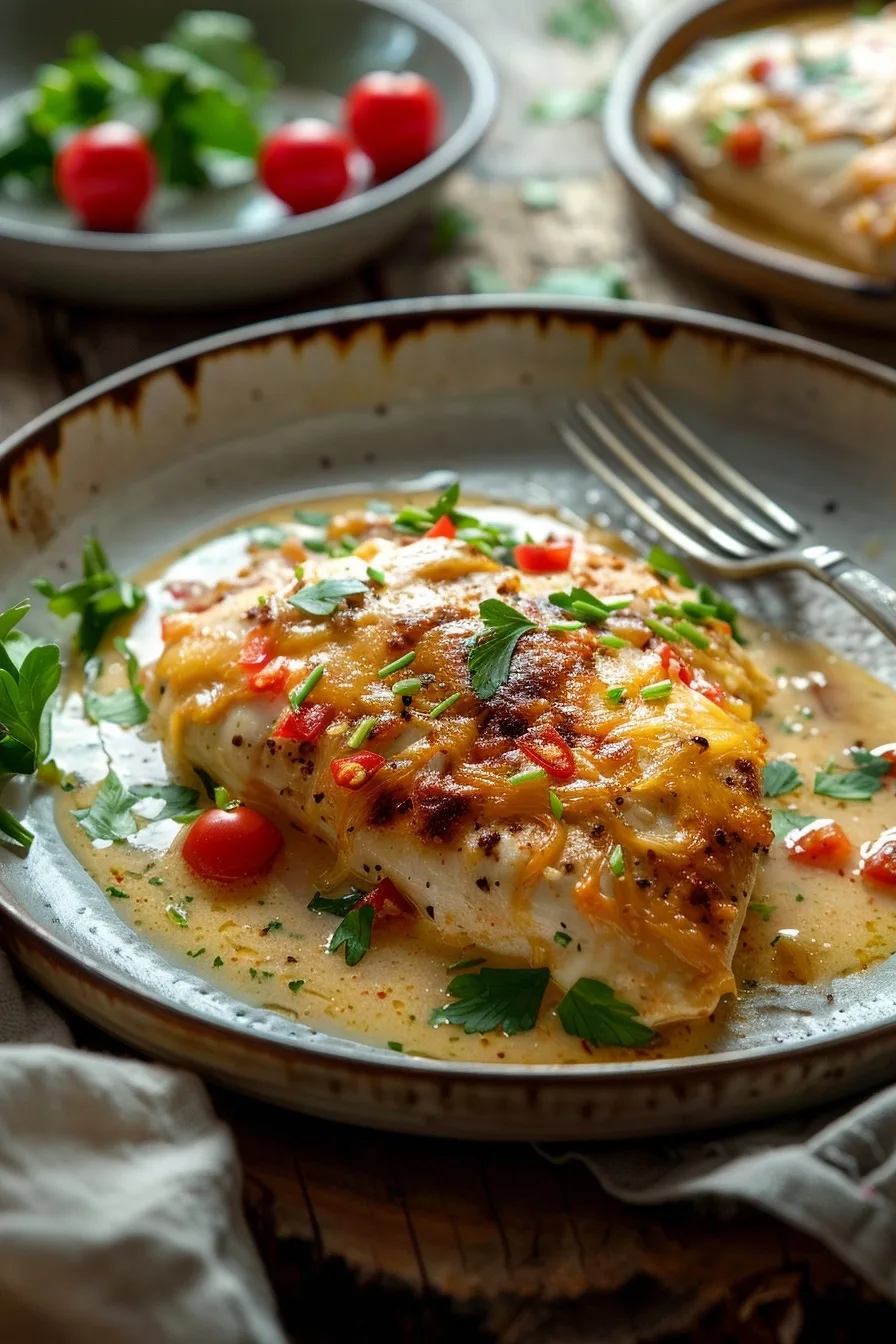
Flavorful baked queso chicken recipe provides an efficient way to prepare a protein-rich entree using creamy cheese sauce. This dish combines seasoned chicken breasts with a savory monterey jack topping for a consistent, moist result every time. By utilizing high-quality ingredients and precise thermal management, one can achieve a restaurant-grade dinner within thirty minutes. It is a reliable solution for busy households seeking comfort-focused meals without sacrificing structural integrity or depth of flavor.
Recipe Overview
| Metric | Details |
|---|---|
| Prep Time | 5 minutes |
| Cook Time | 30 minutes |
| Total Time | 35 minutes |
| Servings | 4 servings |
| Difficulty | Easy |
| Cuisine | Contemporary American |
Why This Recipe Works
I rely on the synergy between heat-stable dairy and lean protein to pull this dish together. When baking chicken breasts, the risk of moisture loss is significant, which is why the queso serves as both a flavor enhancer and a liquid barrier. By coating the chicken in a creamy emulsion, I create a seal that minimizes evaporation during the convection process, keeping the muscle fibers tender throughout the bake.
The choice of temperature is intentional: 375°F (190°C) provides enough ambient energy to denature the protein successfully without causing toughening typical of higher heat. Adding an extra layer of shredded monterey jack cheese encourages a Maillard-lite browning effect through the milk solids in the cheese. This adds a texture contrast that lifts the dish beyond a simple boiled-style preparation.
Finally, the spice profile functions as a foundation. By using a taco seasoning blend, I incorporate dehydrated aromatics that reconstitute in the dairy fats as the dish heats. This method ensures that the herbs do not burn, as they remain insulated within the layers of molten cheese. The result is a balanced, cohesive meal that requires minimal intervention.
Ingredients
| Ingredient | Quantity | Notes |
|---|---|---|
| Chicken Breasts | 4 pieces | Boneless, skinless; ~6oz each |
| Queso Dip | 1 cup | High-quality creamy store-bought queso |
| Monterey Jack | 1/2 cup | Shredded; for extra crust |
| Taco Seasoning | 1 tsp | Look for reduced sodium options |
Step-by-Step Instructions
Prep Phase
- Preheat the oven to 375°F (190°C) to ensure a stable roasting environment.
- Pat the chicken breasts dry with a paper towel to remove excessive surface moisture, which allows seasonings to adhere better.
- Rub the taco seasoning evenly across both sides of each breast.
Baking Phase
- Place the seasoned chicken in a 9×13 inch glass or ceramic baking dish.
- Pour the queso dip directly over each breast, spreading it gently to cover the top portion of the meat.
- Sprinkle the shredded monterey jack over the queso layer to create the final topping.
- Bake the dish for 25-30 minutes, or until the internal temperature of the chicken reaches 165°F (74°C) measured at the thickest part.
Chef Tips for Perfect Results
- Monitor internal temperature using a USDA approved digital thermometer to ensure safety and prevent overcooking.
- Allow the chicken to rest for five minutes after removing it from the oven to let the juices redistribute.
- Avoid overloading the baking dish; providing space between breasts allows for even air circulation.
- Select a queso dip with a high cheese content to prevent the sauce from thinning out too much during heating.
- Use a glass baking dish to observe the browning of the cheese edges through the side of the pan.
Common Mistakes to Avoid
One frequent error involves failing to calibrate the oven, which leads to uneven cooking. If your oven trends hot, the cheese may burn before the internal protein reaches the desired temperature. Additionally, rinsing chicken under running water is a safety hazard that promotes cross-contamination in the kitchen environment. Another common oversight is using frozen chicken; always ensure the protein is fully thawed to avoid a watery, diluted sauce consistency. Finally, resist the urge to over-season, as commercial queso already contains high levels of sodium.
Variations and Substitutions
| Ingredient | Substitution | Impact |
|---|---|---|
| Monterey Jack | Sharp Cheddar | Increased depth and color |
| Taco Seasoning | Cumin & Chili Powder | Increased earthy, raw spice notes |
| Queso | Cream Cheese Mix | Thicker, more stable sauce profile |
Serving Suggestions and Pairings
Serve this dish alongside roasted cauliflower or cilantro-lime cauliflower rice to keep the meal balanced. A crisp, acidic green salad helps cut through the richness of the dairy. For a beverage pairing, a sparkling lime-infused mineral water provides a refreshing clean finish that supports the savory nature of the taco spices.
Storage and Reheating
| Method | Duration | Instructions |
|---|---|---|
| Refrigeration | 3 days | Store in an airtight container |
| Reheating | 10 mins | Warm in a 300°F oven with a splash of broth |
Nutritional Information
| Nutrient | Amount per Serving |
|---|---|
| Calories | 320 kcal |
| Protein | 35g |
| Fat | 12g |
| Carbs | 8g |
Frequently Asked Questions
Can I use chicken thighs instead of breasts?
You can certainly use skinless, boneless chicken thighs, which offer more intramuscular fat for a juicier final product. Increase the cooking time by approximately five minutes to account for the higher density of thigh tissue.
How do I know when the chicken is fully cooked?
The chicken is safe to consume once an instant-read thermometer registers exactly 165°F (74°C) in the thickest section. Relying on visual cues like white center color is not precise enough for food safety protocols.
Can I prepare this dish ahead of time?
You may season the chicken and store it in the refrigerator for two hours before baking. For best quality results, apply the queso and cheese topping immediately before placing the dish into the oven to avoid moisture buildup.
Why is my sauce watery?
Watery sauce usually results from using frozen chicken that was not properly dried after thawing. Always pat the protein dry with paper towels to ensure the cheese adheres properly to the surface without slippage.
Is it possible to freeze the leftover portion?
Freezing is not recommended due to how dairy-based emulsions break down during the thawing process. The texture of the queso often becomes grainy and separates upon reheating, compromising the mouthfeel.
The successful execution of this dish relies on the balance between professional technique and reliable pantry staples. By controlling the heat and monitoring the internal development, you have produced a meal that satisfies both hunger and the craving for a refined, homestyle comfort food. Enjoy the interplay of the seasoned chicken and the velvet-smooth cheese topping. This dish remains a reliable benchmark for how simple ingredients can yield sophisticated, consistent outcomes in any home kitchen.