
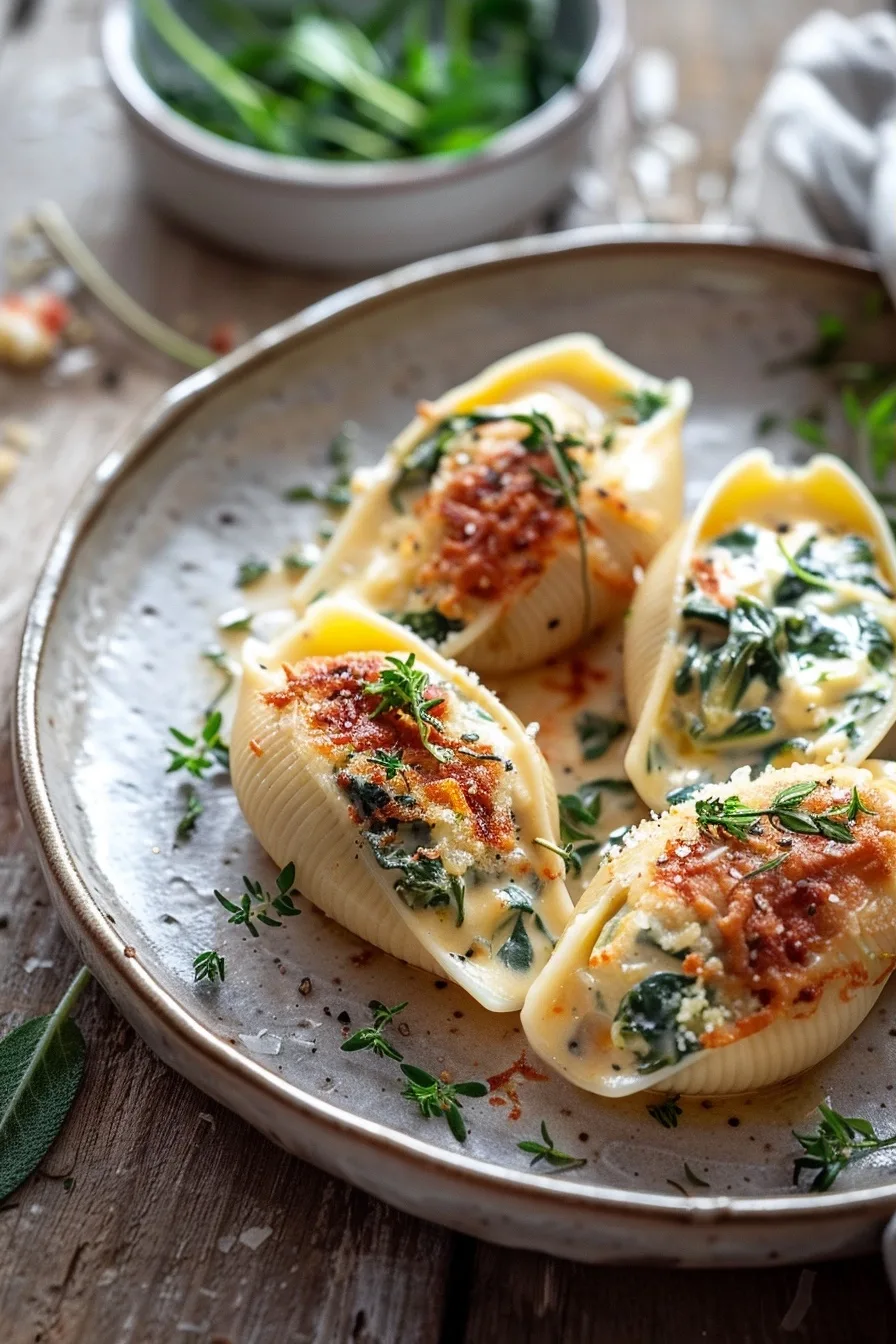
Creamy Rotisserie Chicken and Spinach Stuffed Shells provide a sophisticated yet comforting meal that combines tender poultry with garden-fresh greens and premium cheese. This dish centers on jumbo pasta shells packed with a savory, protein-rich filling. By using high-quality rotisserie chicken and aromatics, you build a restaurant-grade dinner in your home kitchen, ensuring a perfect balance of textures and flavors. This manual guides you through the technical process of mastering this classic comfort food.
| Prep Time | Cook Time | Total Time | Servings | Difficulty | Cuisine |
|---|---|---|---|---|---|
| 15 mins | 25 mins | 40 mins | 4 | Medium | American |
Why This Recipe Works
This dish relies on the principle of moisture management during the baking process. By integrating shredded rotisserie chicken with ricotta and fresh spinach, I ensure the internal filling remains succulent rather than drying out in the oven. The chicken is already cooked, allowing it to act as a sponge for the cheese and herb mixture, which creates a cohesive structure within each pasta shell.
The science of the sauce here involves using a classic marinara base to prevent the pasta from sticking while facilitating even heat distribution. Starchy jumbo pasta shells have enough surface area to hold the filling securely, yet they require precise boiling to reach an al dente state before baking. If the pasta is overcooked initially, it will lose its integrity under the weight of the filling, resulting in a mushy final product.
Temperature control at 375°F (190°C) is ideal for melting the cheese without scorching the edges of the pasta. This heat setting encourages the Maillard reaction on the surface of the exposed parmesan or mozzarella toppings while keeping the internal ingredients at a safe, uniform temperature. The interaction between the acidity of the tomato sauce and the fat from the ricotta creates a balanced gastric experience that satisfies the palate.
Ingredients
| Ingredient | Quantity | Notes |
|---|---|---|
| Jumbo Pasta Shells | 12 shells | Cooked to al dente |
| Rotisserie Chicken | 2 cups | Shredded and skinless |
| Ricotta Cheese | 1 cup | Full fat preferred |
| Fresh Spinach | 1 cup | Finely chopped |
| Marinara Sauce | 1 cup | Premium store-bought or batch |
| Mozzarella Cheese | 0.5 cup | Shredded for topping |
| Parmesan Cheese | 0.25 cup | Grated |
| Garlic Powder | 0.5 tsp | For flavor depth |
Step-by-Step Instructions
Preparation and Filling
- Boil a large pot of salted water and cook the jumbo shells according to the package directions, subtracting two minutes for an al dente finish.
- Drain the pasta thoroughly and set aside immediately to cool, preventing them from sticking together.
- Combine the shredded rotisserie chicken, ricotta cheese, finely chopped spinach, garlic powder, and a pinch of black pepper in a medium mixing bowl.
- Fold the ingredients gently with a silicone spatula to maintain the integrity of the textures without over-processing the chicken fibers.
Assembly and Baking
- Spread a thin, even layer of marinara sauce across the bottom of a 9×13 inch glass baking dish to prevent the pasta from adhering to the glass.
- Fill each cooked shell generously with the chicken and ricotta mixture, using a spoon to pack it securely but gently.
- Arrange the stuffed shells in the prepared baking dish so they sit snugly against each other in the sauce.
- Top the shells with remaining marinara, shredded mozzarella, and grated parmesan cheese before covering loosely with foil.
- Bake at 375°F (190°C) for 20 minutes, removing the foil during the final 5 minutes to allow for optimal cheese browning.
Chef Tips for Perfect Results
- Use a cooling rack for boiled pasta to ensure proper drainage, as excess water will dilute your sauce.
- Always shred chicken while it is slightly warm, as the fibers separate much easier than when cold.
- Ensure the spinach is squeezed of excess moisture if using frozen; fresh leaves should be patted dry after washing.
- Use a pastry bag or a sturdy freezer bag with a corner cut off to pipe the filling into the shells neatly.
- Let the dish rest for at least 5 minutes after removing it from the oven to allow the filling to set.
Common Mistakes to Avoid
- Boiling the pasta too long results in shells that tear during the stuffing process; always pull them at the al dente stage.
- Over-salting the filling often happens because rotisserie chicken is naturally salted during its initial cooking phase.
- Neglecting to cover the dish during the first 15 minutes of baking causes the pasta edges to become tough and dehydrated.
- Skipping the sauce layer at the bottom of the dish will lead to burning, as the heat from the oven hits the glass directly.
Variations and Substitutions
| Ingredient | Substitution | Flavor/Texture Impact |
|---|---|---|
| Spinach | Kale | Adds a robust, earthy chew |
| Ricotta | Cottage Cheese (blended) | Lower in fat with a slightly tangier flavor |
| Chicken | Roasted Turkey | Similar texture with a lighter flavor profile |
Serving Suggestions and Pairings
Serve these shells alongside a crisp garden salad dressed in a bright lemon vinaigrette to cut through the richness of the cheese. A side of roasted asparagus or broccoli adds necessary fiber to the meal. For a complete dining experience, pair this with a glass of chilled sparkling apple cider or a house-made cucumber mint cooler to provide a refreshing contrast.
Storage and Reheating
| Method | Duration | Instructions |
|---|---|---|
| Fridge | 3 days | Store in an airtight container |
| Freezer | 1 month | Freeze before baking then thaw in the fridge overnight |
| Reheat | 15 mins | Bake at 350°F until internal temperature hits 165°F |
Nutritional Information
| Nutrient | Amount per Serving |
|---|---|
| Calories | 380 kcal |
| Protein | 28g |
| Fat | 14g |
| Carbohydrates | 35g |
Frequently Asked Questions
Can I use pre-cooked pasta from the grocery store?
Pre-cooked shelf pasta often lacks the structural integrity required for stuffing and tends to become oversaturated with liquid. For the best results, cook your jumbo shells immediately before assembly to ensure they hold their shape throughout the baking time.
How do I know the internal temperature is safe?
Use an instant-read thermometer to verify the center of a shell reaches 165°F (74°C). This ensures that all components, particularly the chicken and cheese mixture, are heated through to food safety standards as per USDA guidelines.
Why are my shells tearing when I fill them?
Tearing usually occurs if the pasta was boiled for too long or if the shells were allowed to dry out before stuffing. Run them under cool water briefly and fill them as soon as they are safe to handle to maintain the elasticity of the starch.
Can I freeze this dish after it is fully baked?
Freezing after baking can lead to a breakdown in the texture of the ricotta and the pasta. The highest quality results are achieved by freezing the assembled, unbaked tray wrapped tightly in plastic and foil, then baking directly from a thawed state.
What is a good alternative to heavy marinara?
If you prefer a lighter base, utilize a simple roasted garlic and herb olive oil reduction or a light béchamel sauce. Both variations preserve the structural integrity of the shells while offering a distinct shift in the aromatic profile of the meal.
Mastering this dish brings a professional touch to your dinner table by blending high-quality ingredients with precision heat application. The chicken provides a savory foundation, while the spinach adds vital color and freshness, resulting in a harmonious plate. Embrace the process of layering the textures, and you will find this recipe earns its spot in your regular rotation for both weeknight ease and weekend satisfaction.