
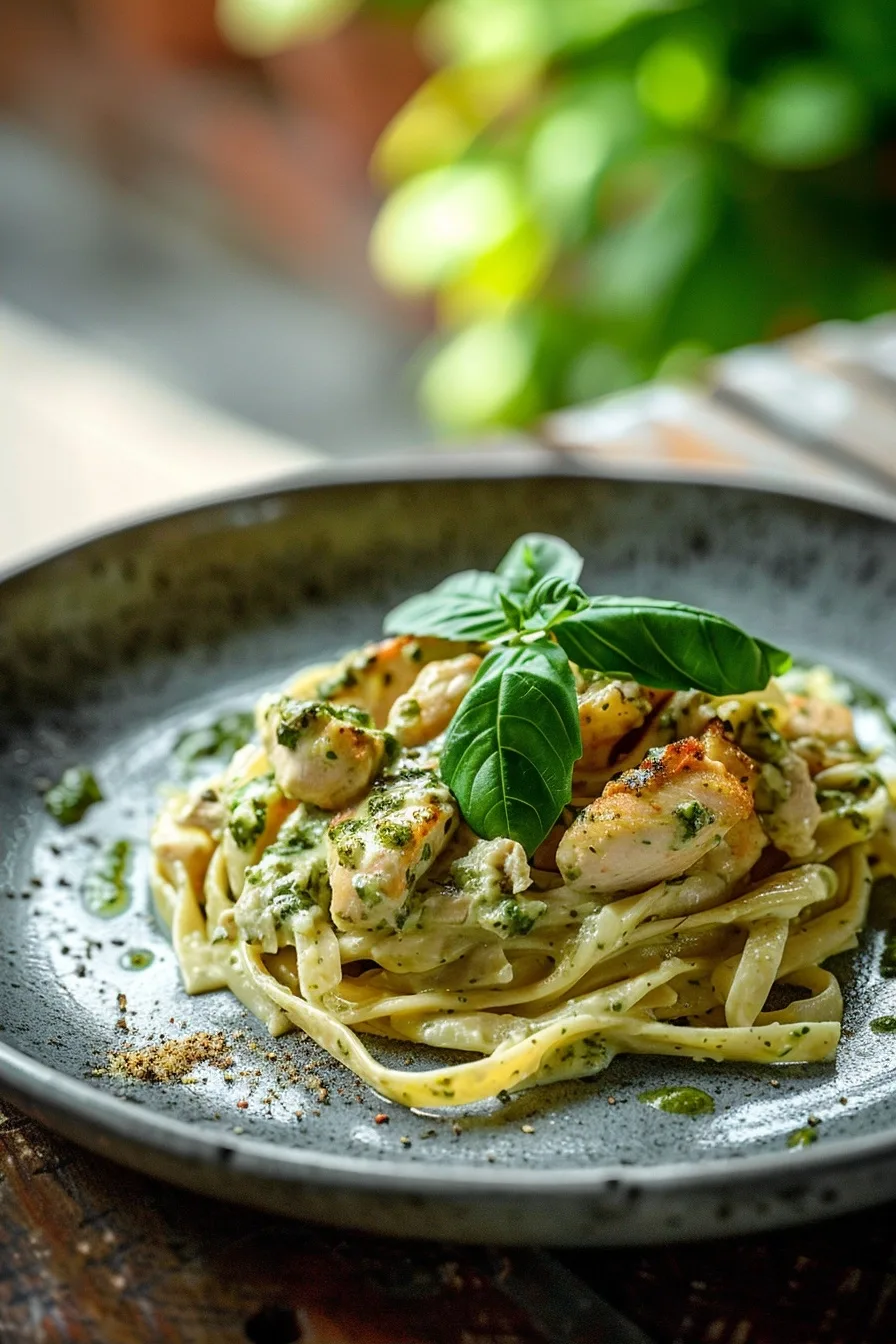
Basil Pesto Chicken Alfredo combines the herbaceous brightness of Italian pesto with the rich, velvety comfort of a traditional cream-based pasta sauce. This dish utilizes high-heat searing techniques for the protein and precise emulsion methods for the sauce to ensure a cohesive, professional-grade pasta dinner. By focusing on ingredient quality and temperature control, you can produce a restaurant-quality meal in your own kitchen.
Recipe Overview
| Prep Time | 15 minutes |
|---|---|
| Cook Time | 20 minutes |
| Total Time | 35 minutes |
| Servings | 4 |
| Difficulty | Easy |
| Cuisine | Italian-American |
Why This Recipe Works
The culinary logic behind this dish relies on the stabilization of dairy fats and the preservation of fresh basil. When you introduce high-temperature seared chicken to the creamy Alfredo base, the Maillard reaction from the crust provides a savory depth that balances the richness of the parmesan and the herbal notes of the basil.
Temperature management is critical when combining the pesto and the cream base. Adding the pesto only after the sauce has reached a stable thickened state prevents the fresh greens from darkening or losing their vibrant aroma. This preserves the organoleptic properties of the basil while allowing the parmesan to properly emulsify with the cream base.
I choose to finish the pasta directly in the sauce to facilitate starch release from the noodles. This starch acts as a natural binder, ensuring that the pesto-alfredo mixture clings perfectly to the fettuccine ribbons. Proper pasta-to-sauce ratios are maintained by reserve cooking water, resulting in a glossy, uniform coating that never breaks or separates.
Ingredients
| Ingredient | Quantity | Notes |
|---|---|---|
| Chicken Breast | 1 lb (450g) | Skinless, boneless, cubed |
| Fettuccine | 8 oz (225g) | Dry or fresh |
| Basil Pesto | 1/4 cup (60ml) | High-quality olive oil base |
| Alfredo Sauce | 1/4 cup (60ml) | Heavy cream and parmesan blend |
| Parmesan Cheese | 2 tbsp | Freshly grated |
| Olive Oil | 2 tbsp | For searing chicken |
Step-by-Step Instructions
Preparation and Searing
-
Cube the chicken breasts into uniform one-inch pieces to ensure consistent protein denaturation.
-
Heat olive oil in a stainless steel skillet over medium-high heat until it shimmers.
-
Sear the chicken until the internal temperature reaches 165°F (74°C) as recommended by the USDA food safety guidelines.
-
Remove the chicken from the pan and set aside, reserving the flavorful fond on the bottom of the skillet.
Sauce Reduction and Assembly
-
Boil a large pot of salted water and cook the fettuccine until it is just shy of al dente.
-
Deglaze the skillet with a splash of pasta water, scraping the bottom to incorporate the browned bits.
-
Reduce heat to low and whisk in the alfredo sauce and the prepared basil pesto until fully emulsified.
-
Toss the cooked pasta directly into the sauce, adding more pasta water as needed to reach a velvety consistency.
-
Fold the seared chicken into the pasta and transfer to warmed service bowls.
-
Top each portion with fresh grated parmesan before serving immediately.
Chef Tips for Perfect Results
-
Use freshly grated parmesan rather than pre-shredded varieties, as the latter contains anti-caking starches that prevent smooth melting.
-
Always reserve a half cup of starchy pasta water to adjust the viscosity of your sauce before plating.
-
Warm your serving bowls in the oven at a low temperature to prevent the cream sauce from firming up too quickly.
-
Pat the chicken completely dry before seasoning to encourage maximum browning during the sear.
-
Keep the heat low during the final assembly so the cream does not curdle or release excess oil.
Common Mistakes to Avoid
Adding the pesto while the sauce is at a rolling boil will cause the basil to lose its freshness and turn a bitter brown hue. Always move the pan off the heat before introducing the pesto.
Overcooking the chicken makes the protein fibers tough and stringy, which contrasts poorly with the smooth sauce. Use a digital probe thermometer to pull the chicken at precisely 165°F.
Failing to salt the pasta water sufficiently results in bland noodles that struggle to carry the flavor of the final dish. Aim for water that tastes like the sea for optimal seasoning absorption.
Adding cold pasta directly from the colander into the pan drops the temperature of the emulsion too quickly, causing the sauce to separate. Drain the pasta briefly and toss it immediately while it is still steaming hot.
Variations and Substitutions
| Ingredient | Substitution | Impact |
|---|---|---|
| Heavy Cream | Full-fat evaporated milk | Reduces fat content while maintaining creaminess |
| Fettuccine | Whole wheat linguine | Increases fiber and adds a slight nutty flavor profile |
| Chicken Breast | Turkey breast | Leaner texture with a milder flavor profile |
Serving Suggestions and Pairings
This dish pairs perfectly with a side of roasted garlic broccolini tossed in lemon zest to provide an acidic brightness that cuts through the cream. For a refreshing beverage, serve a chilled sparkling water infused with fresh cucumber slices and mint. A piece of crusty toasted sourdough is an excellent choice for cleaning the plate at the end of the meal.
Storage and Reheating
| Method | Duration | Reheating Instructions |
|---|---|---|
| Refrigerator | 3 Days | Reheat on the stovetop over low heat with a tablespoon of water to loosen the sauce. |
| Freezer | 1 Month | Not recommended, as cream-based sauces tend to break during the thaw and reheat process. |
Nutritional Information (Approximate values)
| Nutrient | Amount per Serving |
|---|---|
| Calories | 480 kcal |
| Protein | 32g |
| Fat | 22g |
| Carbohydrates | 40g |
| Sodium | 650mg |
Frequently Asked Questions
Can I use pre-cooked rotisserie chicken?
Yes, though you should sear it briefly in butter or olive oil to re-energize the fibers and improve the overall texture. Avoid boiling the rotisserie chicken in the liquid components as it will lack structural integrity.
How do I know when the pasta is perfectly cooked?
The center of the noodle should retain a tiny, firm point of resistance when bitten, known as al dente. This structure is vital for holding the sauce instead of turning mushy on the plate.
Why did my sauce become grainy?
The heat was likely too high when adding the parmesan, causing the proteins to tighten and the fat to separate. Always stir in cheese off the direct heat source to ensure a silky emulsion.
Can I prepare this dish in advance?
Cook the chicken and pasta separately and store them. Prepare the sauce fresh immediately before serving to ensure the best color and texture for the pesto.
What if my sauce is too thick?
Add the reserved starchy pasta water one tablespoon at a time while stirring vigorously. The starch acts as an emulsifier and will return the sauce to its ideal coating consistency.
Conclusion
Achieving a professional Basil Pesto Chicken Alfredo relies on your attention to heat control and the quality of your ingredients. By focusing on the emulsion of fat and starch, you have created a meal that is both comforting and sophisticated. Enjoy the vibrant scent of fresh basil and the savory satisfaction of perfectly seared chicken in every mouthful. This dish is a standard for anyone looking to master the balance of creamy sauces and fresh, herbaceous aromatics in their home kitchen.