
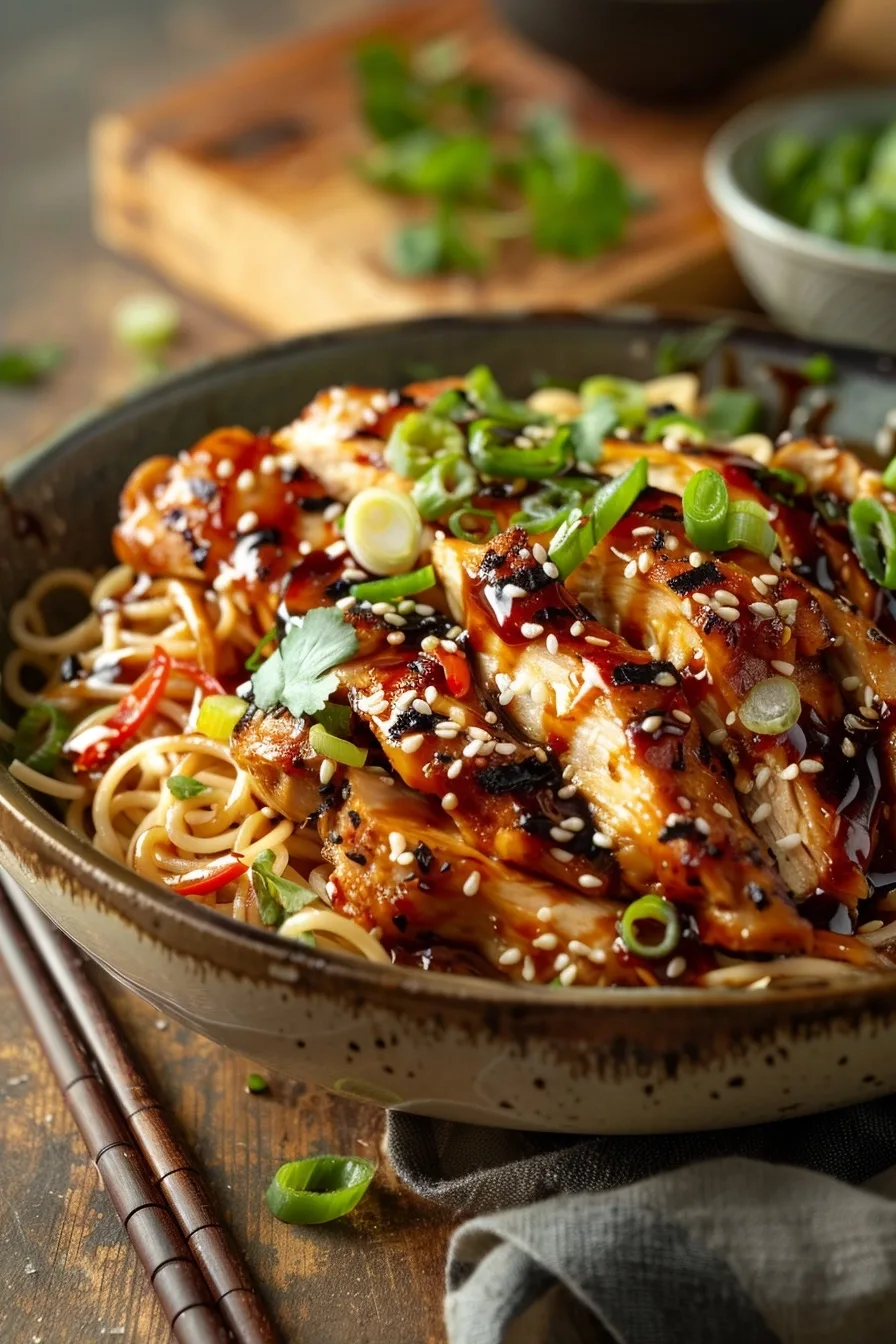
A 25-Min Rotisserie Chicken Teriyaki Noodle Bowl provides a swift, professional result by combining pre-cooked protein with a high-heat stir-fry technique. This dish relies on the structural integrity of thin Asian-style wheat noodles tossed in a balanced, viscous glaze. By utilizing rotisserie poultry, home cooks save significant preparation time while maintaining excellent moisture levels, resulting in a healthy, reliable meal for busy weeknights.
| Prep Time | Cook Time | Total Time | Servings | Difficulty | Cuisine |
|---|---|---|---|---|---|
| 5 mins | 20 mins | 25 mins | 2 | Easy | Asian-Inspired American |
Why This Recipe Works
The culinary logic behind this assembly method centers on thermal efficiency and hydration management. Using rotisserie chicken means the protein has already undergone roasting, which develops a complex, deep flavor profile that raw meat cannot achieve in a short cook time. I prefer this method because it guarantees a tender final product that does not dry out during the brief reheating phase in the skillet.
We address the thermodynamics of the noodle texture by boiling them just to the point of al-dente, then immediately transferring them to the hot pan. This allows the starches on the surface of the noodles to absorb the concentrated teriyaki sauce, creating a silkier mouthfeel than simply pouring sauce over boiled noodles. The residual heat of the sauteed vegetables creates a steam effect that helps the sauce cling to every strand of pasta.
Finally, the chemistry of the sauce is optimized through reduction. By simmering the sauce with the ingredients, we facilitate a slight thickening process that hinges on the sugar concentration and the natural starches found in the noodles. This interaction creates the characteristic glossy finish seen in high-end stir-fry preparations without requiring additional thickening agents like cornstarch slurry, keeping the meal clean and ingredient-focused.
Ingredients
| Ingredient | Quantity | Notes |
|---|---|---|
| Rotisserie Chicken | 2 cups | Shredded; skin removed if desired |
| Asian Noodles | 8 oz (225g) | Ramen or lo mein wheat noodles |
| Teriyaki Sauce | 1/2 cup | Alcohol-free blend |
| Stir-fry Vegetables | 1 cup | Snap peas, carrots, or broccoli |
| Neutral Oil | 1 tbsp | Grapeseed or avocado oil |
| Water/Broth | 2 tbsp | Only if thickening occurs too rapidly |
Step-by-Step Instructions
Phase 1: Preparation of Components
-
Boil a large pot of water and cook your chosen noodles according to package directions until al dente.
-
Drain the noodles thoroughly, reserving a tablespoon of starchy cooking water to use later if the emulsion needs thinning.
-
Shred the rotisserie chicken into bite-sized pieces, ensuring you discard any large cartilage or fat pockets.
Phase 2: Searing and Assembly
-
Heat a large heavy-bottomed wok or skillet over medium-high heat with one tablespoon of neutral oil.
-
Add the stir-fry vegetables to the skillet, tossing constantly for three to four minutes until they reach a vibrant, tender-crisp state.
-
Incorporate the shredded chicken into the vegetable mix, allowing the poultry to warm through for about sixty seconds.
Phase 3: Reduction and Plating
-
Add the cooked noodles to the pan, immediately pouring the teriyaki sauce over the entire mixture.
-
Toss the ingredients using long tongs for two minutes to encourage the sauce to coat the noodles and thicken from the heat.
-
Serve immediately in deep bowls while the residual steam keeps the noodles succulent and the sauce glossy.
Chef Tips for Perfect Results
-
Use cold noodles if you are preparing this for a picnic or lunch box, as they hold their shape better than warm ones when reheated.
-
Maintain high heat throughout the process to prevent the vegetables from releasing too much water, which would dilute the sauce.
-
Select a heavy-duty stainless steel or cast iron skillet to retain heat, which helps the teriyaki sauce caramelize slightly.
-
For increased aromatic depth, grate one-half inch of fresh ginger directly into the pan before adding the chicken.
-
Check the internal temperature of the chicken if using leftover poultry; keep it above 165°F (74°C) for food safety standards as per the USDA.
Common Mistakes to Avoid
Adding too much sauce at once is a frequent error that results in a soggy, overly saline noodle dish instead of a coated one. Always start with half the recommended amount and adjust based on visual coverage. If the sauce becomes too thick, adding a teaspoon of hot water or broth effectively resets the viscosity.
Overcooking the noodles in the initial boiling stage creates a gummy texture later in the pan. Pull the noodles out of the boiling water exactly 30 seconds before they are fully soft. The heat of the wok will complete the cooking process without sacrificing the structural integrity of the starch chains.
Variations and Substitutions
| Ingredient | Substitution | Impact |
|---|---|---|
| Wheat Noodles | Rice Vermicelli | Gluten-free option, lighter texture |
| Snap Peas | Sliced Bell Peppers | Sweeter profile, increased water content |
| Teriyaki Sauce | Soy Sauce + Honey + Ginger | Customizable flavor, cleaner ingredient list |
Storage and Reheating
| Method | Duration | Technical Note |
|---|---|---|
| Refrigerator | 3 Days | Store in an airtight glass container to prevent odor absorption. |
| Reheating | Stovetop | Add 1 tbsp of water to the pan and use medium heat to steam the noodles back to life. |
Frequently Asked Questions
Can I make this dish without wheat-based noodles?
Yes, you can substitute wheat noodles with heartier rice noodles or even spiralized vegetables like zucchini. These alternatives work well but require less time in the pan to maintain their texture.
How do I know when the sauce is properly reduced?
The sauce is ready when it leaves a clear trail behind your spoon while stirring and clings to the noodles without pooling at the bottom of the bowl. This visual cue indicates the sugars have thickened the mixture properly.
Is it possible to freeze this recipe for later?
Freezing is not recommended because the texture of the vegetables and noodles will degrade significantly, becoming mushy upon thawing. Always consume this meal fresh or within three days of refrigerated storage.
What is the best way to keep the chicken from drying out?
Keep the chicken pieces large enough during shredding so they do not overcook when exposed to the high heat of the wok. You only need to warm the chicken through, not sear it, to keep it succulent.
Can I add more vegetables to keep this dish healthy?
You can certainly add more vegetables like bok choy, sliced mushrooms, or water chestnuts. Ensure you add them in batches to maintain the heat of the skillet, preventing the pan from cooling down too quickly.
Achieving a restaurant-quality meal in under half an hour is a skill rooted in preparation and heat management. By layering the chicken, crisp vegetables, and al dente noodles with a perfectly reduced sauce, you create a harmonious bowl that is both satisfying and efficient. Enjoy the contrast between the tender poultry and the savory-sweet glaze, a flavor profile that defines classic, home-cooked comfort food.