
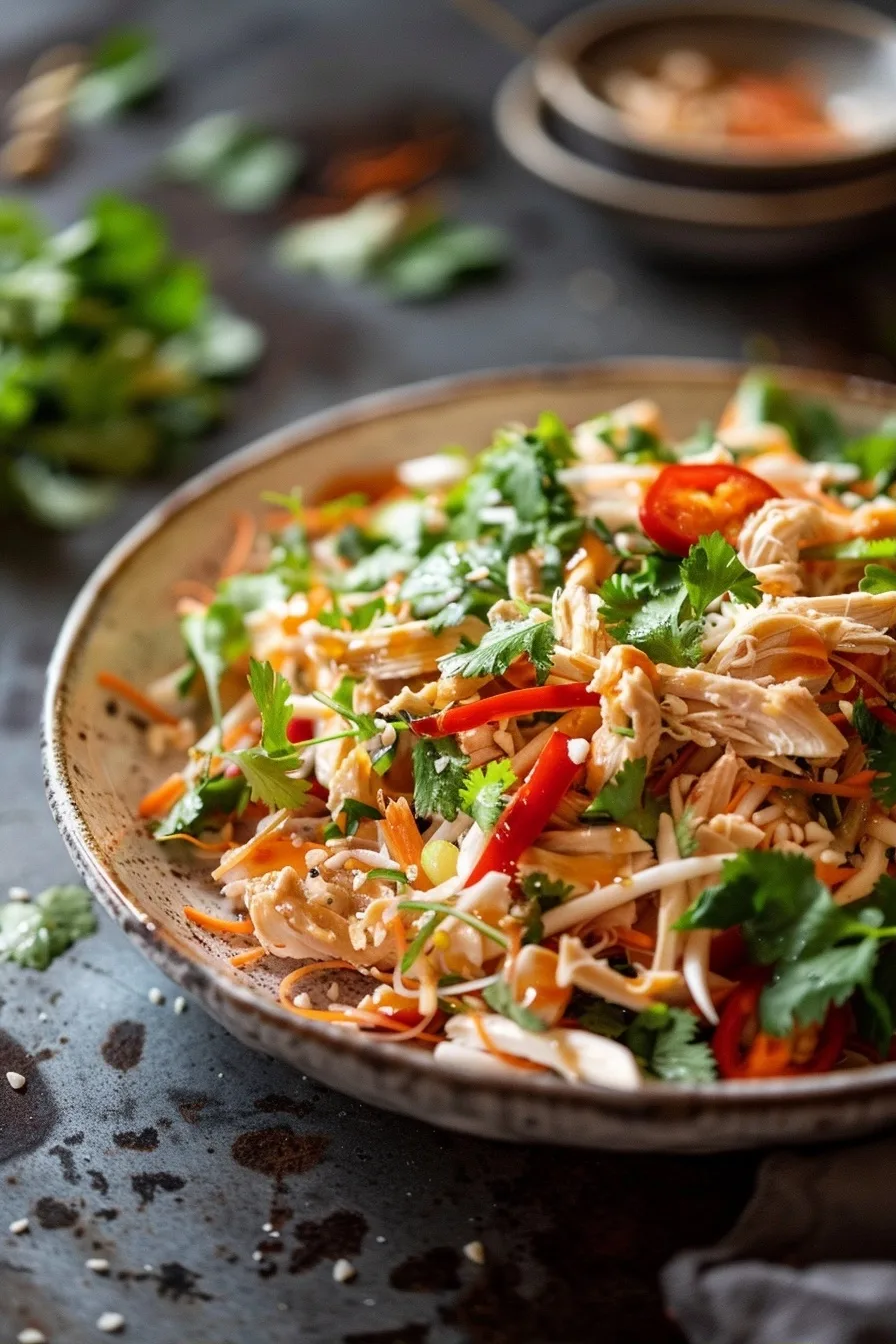
Thai shredded chicken salad is a refreshing, protein-forward dish that relies on the balance of crisp raw vegetables and a savory, umami-rich peanut dressing. This culinary preparation emphasizes fresh textures and bold acidity to create a satisfying meal suitable for any lunch or light dinner service. By utilizing high-quality lean protein and fiber-rich aromatics, this dish delivers a clean, flavor-dense experience without reliance on heavy fats or complex cooking methods.
Recipe Overview
| Metric | Details |
|---|---|
| Prep Time | 15 minutes |
| Cook Time | 0 minutes |
| Total Time | 15 minutes |
| Servings | 4 portions |
| Difficulty | Easy |
| Cuisine | Thai-inspired Fusion |
Why This Recipe Works
I designed this recipe to maximize the Maillard-reaction flavor profile of the chicken while maintaining the structural integrity of the raw produce. By selecting a pre-cooked rotisserie chicken, we capture deep, savory notes immediately. The protein serves as the foundation, allowing the sauce to coat each fiber thoroughly, which ensures consistent flavor in every bite.
Food science tells us that the interaction between the acidity of lime juice and the emulsified fats in peanut butter creates a stable colloidal suspension. This dressing coats the cabbage and carrots efficiently, preventing the water content in the vegetables from diluting the flavor too quickly. This results in a salad that holds its crisp texture for hours, making it ideal for meal preparation.
The specific ratio of shredded ingredients creates an optimal surface area for the dressing to adhere. Cabbage provides the necessary osmotic resistance to stay crunchy, while the carrots offer a subtle sweetness that balances the salinity of the soy sauce. Choosing high-quality, sodium-controlled soy sauce ensures the dish remains refined and balanced.
Ingredients
| Ingredient | Quantity | Notes |
|---|---|---|
| Shredded Chicken | 2 cups | Use breast or thigh meat, skin removed. |
| Shredded Cabbage | 3 cups | Green or Napa cabbage preferred. |
| Shredded Carrots | 1/2 cup | Use a julienne peeler for thin strips. |
| Peanut Butter | 2 tbsp | Natural, unsweetened variety is best. |
| Soy Sauce | 1 tbsp | Low-sodium recommended for control. |
| Lime Juice | 1 tsp | Freshly squeezed provides brighter acidity. |
Step-by-Step Instructions
Preparation
- Shred the rotisserie chicken into bite-sized pieces, ensuring all skin and stray cartilage are discarded.
- Slice the cabbage into thin ribbons to ensure the volume matches the chicken for even ingredient distribution.
- Grate or julienne the carrots into uniform strips to maintain a consistent bite throughout the salad.
Dressing Emulsion
- Whisk the peanut butter, soy sauce, and lime juice in a small glass bowl until the mixture is smooth.
- Adjust the consistency with a teaspoon of warm water if the dressing remains too thick for tossing.
Final Assembly
- Combine the shredded chicken, cabbage, and carrots in a large stainless steel mixing bowl.
- Drizzle the prepared dressing over the mixture in a steady, thin stream.
- Toss the salad thoroughly using tongs, coating every strand of cabbage and chicken with the dressing.
Chef Tips for Perfect Results
- Always bring your chicken to room temperature before tossing to ensure the dressing fats do not solidify upon contact.
- Use a wide bowl to provide enough surface area for proper tossing without crushing the delicate cabbage structure.
- Fresh lime juice is non-negotiable; bottled versions often contain preservatives that alter the clean, vibrant flavor profile.
- If prep time allows, let the salad sit for ten minutes after dressing to allow the flavors to penetrate the chicken fibers.
- For extra texture, incorporate toasted sesame seeds or crushed roasted peanuts as a final topping for sensory contrast.
Common Mistakes to Avoid
- Over-salting occurs when using high-sodium soy sauce without considering the chicken seasoning; always taste the chicken first.
- Using dull knives for cabbage results in bruised produce which releases water prematurely, leading to a soggy final texture.
- Adding too much liquid to the dressing creates a pooling effect that settles at the bottom of the bowl instead of coating the ingredients.
- Incorrectly shredding the chicken against the grain leads to mushy, unappealing bits rather than clean, fibrous shreds.
Variations and Substitutions
| Ingredient | Substitution | Impact |
|---|---|---|
| Peanut Butter | Almond Butter | Milder flavor with a nuttier profile. |
| Soy Sauce | Coconut Aminos | Lower sodium, slightly sweeter finish. |
| Lime Juice | Rice Vinegar | More neutral acidity, lacks citrus complexity. |
Serving Suggestions and Pairings
Serve this salad chilled or at room temperature as a main lunch dish. For a more complete meal, pair it with a side of steamed brown rice or a cup of clear vegetable broth. A chilled hibiscus tea or sparkling water with a fresh mint garnish provides a crisp, alcohol-free beverage choice that complements the savory peanut notes.
Storage and Reheating
| Method | Duration | Handling |
|---|---|---|
| Refrigerator | 2-3 days | Store in an airtight glass container to prevent oxidation. |
| Freezing | Not recommended | Freezing ruins the texture of raw cabbage and fresh herbs. |
Nutritional Information
| Nutrient | Amount per Serving |
|---|---|
| Calories | 210 kcal |
| Protein | 22g |
| Fat | 10g |
| Carbohydrates | 8g |
| Dietary Fiber | 3g |
| Sodium | 450mg |
Approximate values calculated based on standard ingredient data confirmed by USDA food databases.
Frequently Asked Questions
Can I prepare this salad in advance?
Yes, you can hold the dressing separately and combine it right before serving to maintain crispness. This is the best professional method for large-scale prep.
What if the dressing is too thick?
Simply add a small splash of warm water while whisking to thin the emulsion to your desired consistency. You are looking for a pourable, creamy viscosity.
How do I make this more filling?
Add roasted chickpeas or extra shredded chicken to increase the volume of protein and fiber. These additions maintain the culinary integrity of the dish.
Is the chicken shredded properly?
You should see distinct fibers, not a minced paste; use the grain of the meat to guide your fork movements. Proper shredding is essential for uniform sauce absorption.
How can I tell if the cabbage is fresh?
The leaves should appear vibrant, firm, and show no signs of browning or wilting at the stem base. Crispness is the key indicator of vegetable quality.
Culinary Conclusion
Achieving a balanced Thai shredded chicken salad requires attention to the ratio of crunchy vegetables to savory, emulsified protein. By following these technical steps, you have created a dish that offers vibrant textures and a deep, umami-rich finish. This recipe provides a foundational approach to healthy eating while demonstrating the effectiveness of simple, high-quality ingredients. Enjoy the brightness of the lime mixed with the earthiness of the peanut, resulting in a meal that is as satisfying to prepare as it is to consume.