
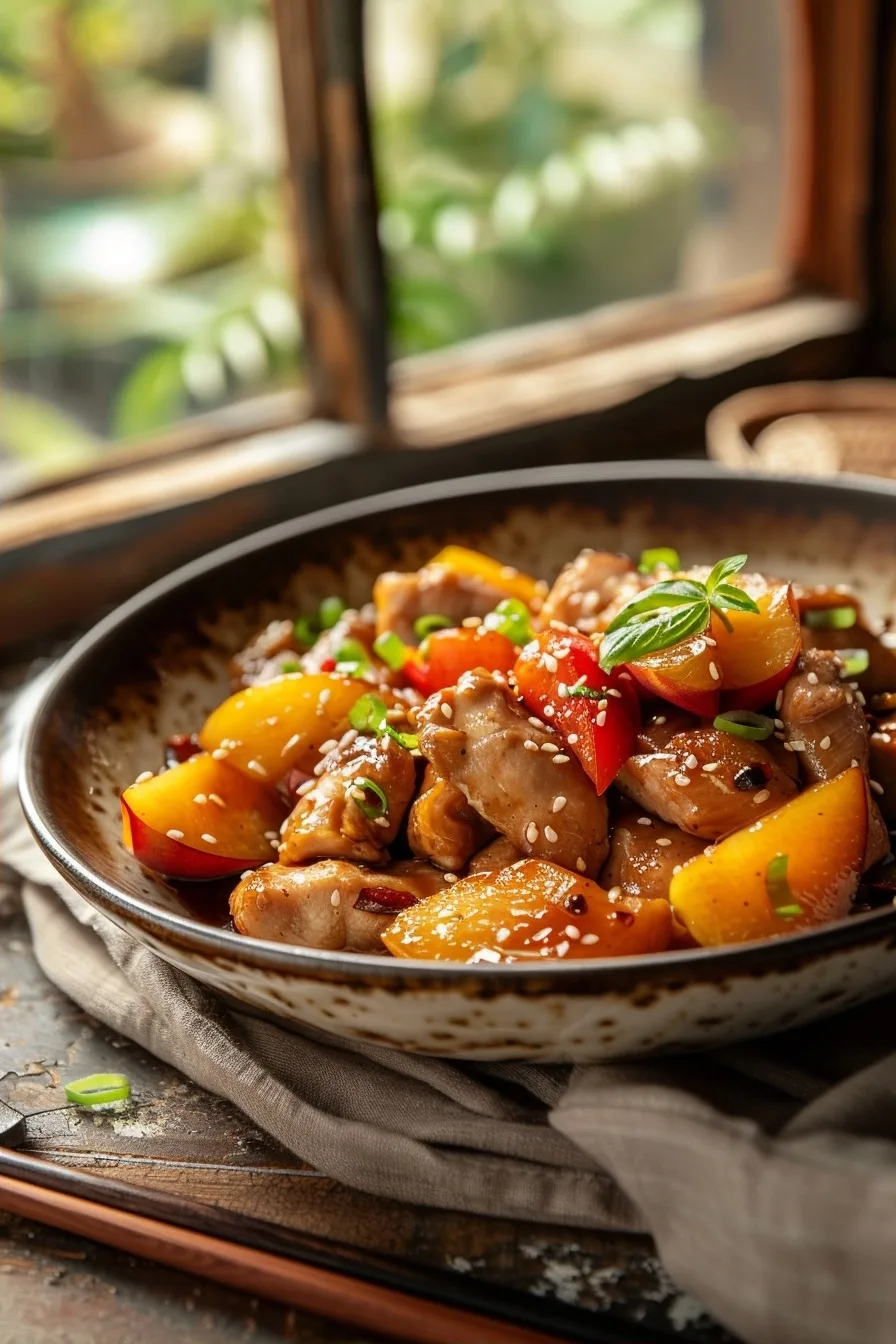
30-Min Rotisserie Chicken & Fresh Peach Stir-Fry provides a sophisticated, protein-rich meal by balancing savory umami depth with the natural caramelization of seasonal stone fruit. This culinary approach transforms convenient supermarket staples into a refined dinner experience focused on rapid heat application and precise ingredient integration. By utilizing pre-cooked poultry and fresh produce, home cooks achieve a professional-level stir-fry texture without the typical hour-long prep period required for complex sauces or raw protein preparation.
| Detail | Information |
|---|---|
| Prep Time | 10 minutes |
| Cook Time | 20 minutes |
| Total Time | 30 minutes |
| Servings | 4 |
| Difficulty | Easy |
| Cuisine | Fusion |
Why This Recipe Works
The success of this dish relies on the rapid Maillard reaction achieved when high heat interacts with the natural sugars in fresh peaches. When sliced thinly, peaches undergo a quick transition where their cellular structure softens while their glucose levels increase in intensity under direct heat. Pairing this sweetness with the salty, umami-rich profile of soy sauce creates a balanced flavor foundation that feels inherently complex despite the short cooking duration.
Using rotisserie chicken adds significant value both for its pre-seasoned tenderized meat and its already developed savory notes. Since the poultry is cooked, the primary goal shifts to temperature regulation; by adding the chicken late in the process, we avoid overcooking the protein while ensuring it absorbs the aromatic notes of ginger and the acidity of the soy reduction. This method prevents the graying or drying out of meat often seen in novice stir-fry attempts.
Finally, the addition of bell peppers provides the necessary crunch to contrast with the tender fruit and soft chicken fibers. By maintaining a high burner temperature and keeping the ingredients in motion, we achieve a uniform sear. This technique preserves the structural integrity of the individual ingredients, ensuring every bite contains a distinct balance of textures rather than a mushy, inconsistent mixture common in slower, low-heat cooking methods.
Ingredients
| Ingredient | Quantity | Notes |
|---|---|---|
| Rotisserie Chicken | 2 cups | Shredded; skin removed if desired. |
| Fresh Peaches | 2 large | Firm-ripe; sliced into half-moons. |
| Bell Pepper | 1 large | Sliced into thin strips; red provides color. |
| Soy Sauce | 2 tbsp | Low-sodium recommended. |
| Fresh Ginger | 1 tsp | Finely minced; provides brightness. |
| Neutral Oil | 1 tbsp | Grapeseed or avocado oil preferred. |
Step-by-Step Instructions
Preparation Phase
- Slice the fresh, firm-ripe peaches into uniform half-moon shapes, ensuring they are thick enough to hold their form during high-heat searing.
- Remove the skin and bones from the rotisserie chicken, then shred the meat into bite-sized strips that mimic the texture of the sliced vegetables.
- Mince the fresh ginger finely to ensure its aromatic oils distribute evenly without large, overpowering chunks.
Searing and Reduction
- Heat a large wok or stainless steel skillet over medium-high heat until the surface is hot but not smoking.
- Add the neutral oil and allow it to shimmer, then toss in the sliced bell peppers and peaches.
- Sauté these ingredients for 4 to 5 minutes until the peppers soften slightly and the peaches show light charring on their edges.
- Add the shredded chicken and the freshly minced ginger to the pan, turning the heat to medium-high.
- Pour the soy sauce over the mixture, stirring constantly for 3 to 5 minutes, allowing the sauce to glaze the ingredients effectively.
- Remove from the heat immediately once the chicken reaches a serving temperature of 165°F (74°C) as noted by USDA safety guidelines.
Chef Tips for Perfect Results
- Always use a high-smoke-point oil like avocado oil to prevent burnt, off-tasting flavors at high temperatures.
- Ensure all ingredients are room temperature before frying to prevent the pan temperature from crashing suddenly.
- Keep the volume of food in your pan low enough to allow for evaporation, which prevents the ingredients from steaming instead of searing.
- Use a stainless steel or carbon steel pan to facilitate better browning compared to standard non-stick surfaces.
- Distribute the soy sauce around the outer edges of the pan rather than directly on the chicken to let it caramelize slightly before hitting the food.
Common Mistakes to Avoid
- Overcrowding the pan causes the moisture released from the peaches to pool, resulting in steamed fruit rather than a crisp-tender texture.
- Using cold chicken from the refrigerator creates a temperature differential that forces the other ingredients to stay in the pan too long.
- Failing to use firm peaches results in a breakdown of the fruit structure, leaving a watery mess at the bottom of your serving bowl.
- Cooking the ginger too early can lead to bitterness; add it in the final stages to preserve its pungent, spicy aromatic top notes.
Variations and Substitutions
| Ingredient | Substitution | Impact |
|---|---|---|
| Rotisserie Chicken | Smoked Turkey Breast | Adds a deeper, wood-fired aromatic profile. |
| Soy Sauce | Coconut Aminos | Provides a sweeter, less salty flavor profile. |
| Bell Pepper | Snap Peas | Adds a sharper crispness and vibrant green color. |
Serving Suggestions and Pairings
Serve this dish atop a bed of steamed jasmine rice or quinoa to capture the pan juices. For a gourmet touch, garnish with toasted sesame seeds and fresh scallion ribbons. A chilled ginger-infused sparkling water or a cold green tea serves as an ideal bridge for the savory, fruit-forward profile of this stir-fry.
Storage and Reheating
| Method | Duration | Technical Instruction |
|---|---|---|
| Refrigerator | 2-3 days | Store in an airtight glass container to prevent oxidation. |
| Reheating | Stovetop | Use a hot pan with a drop of water to revive moisture. |
Nutritional Information (Approximate values)
| Nutrient | Amount per Serving |
|---|---|
| Calories | 285 |
| Protein | 24g |
| Fat | 9g |
| Carbohydrates | 22g |
Frequently Asked Questions
Can I use nectarines instead of peaches?
Yes, nectarines are an excellent substitute due to their similar sugar content and structural density. They provide a slightly more acidic bite which works well against the savory soy sauce reduction.
How do I know when the peaches are perfectly cooked?
The peaches are ready when they turn translucent and develop a slight char, yet retain the ability to keep their shape when prodded with a spatula. Avoid cooking until they turn into a translucent paste.
Why does my stir-fry get watery?
Watery stir-fries are almost always the result of overcrowding your cooking vessel. When the pan is too full, moisture from the produce cannot evaporate, leading to a boiled vegetable result instead of a crisp-sear.
Can I freeze the leftovers?
Freezing is not recommended as the cellular structure of cooked peaches and peppers breaks down upon thawing. The resulting texture becomes unpleasantly soft and watery after reheating.
What is the benefit of adding the ginger at the end?
Adding ginger as a finishing aromatic prevents the volatile oils from burning or dissipating early in the cooking process. This preserves the sharp, spicy bite that characterizes fresh ginger root.
This quick stir-fry captures the essence of summer fruit against a savory, high-protein base. The resulting dish offers a vibrant contrast of sweet charred peaches, tender poultry, and crisp peppers. By focusing on rapid heat and fresh ingredients, the final dish provides a clean, balanced meal that satisfies with minimal time investment. Enjoy the harmony of flavors as the soy sauce glaze ties the sweet and savory notes into a cohesive, restaurant-quality masterpiece on your own table.