
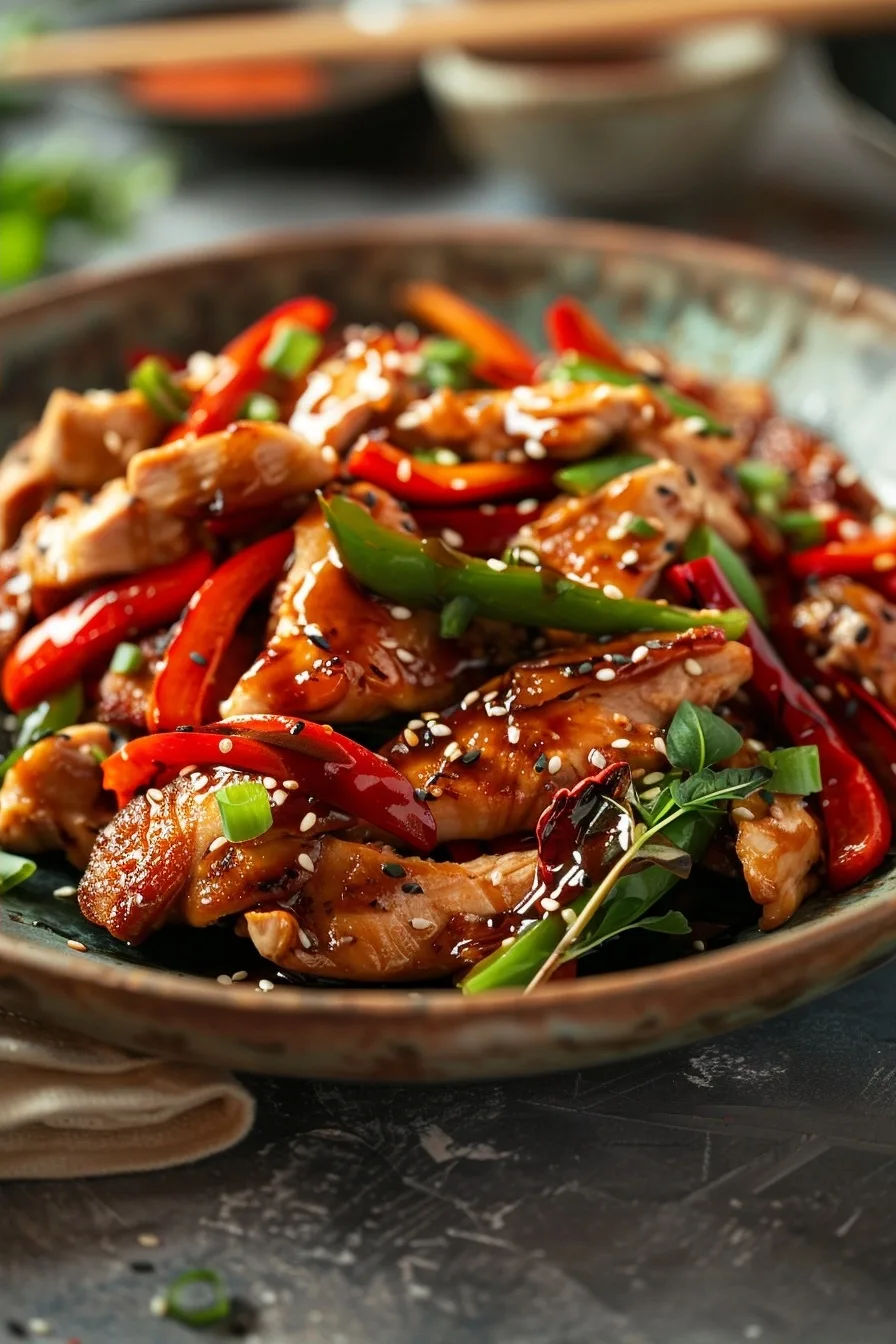
30-Min Rotisserie Chicken Teriyaki Skillet with Peppers provides a rapid, high-protein meal solution that bridges the gap between convenience and gourmet home cooking. By leveraging the pre-cooked structure of rotisserie chicken, this dish achieves a delicate balance of caramelized sapidity and crisp vegetable textures in twenty minutes or less. It represents a practical application of heat-management and flavor-layering techniques designed for the busy professional kitchen.
| Prep Time | Cook Time | Total Time | Servings | Difficulty | Cuisine |
|---|---|---|---|---|---|
| 5 mins | 15 mins | 20 mins | 4 | Easy | American Fusion |
Why This Recipe Works
The culinary logic behind this method relies on the thermal efficiency of using already cooked proteins combined with high-heat vegetable searing. Rotisserie chicken is a marvel of industrial thermal processing; the initial slow-roasting process renders sub-dermal fat and preserves muscle moisture, allowing the meat to remain tender even when reheated in a skillet environment.
By introducing the bell peppers to a smoking-hot skillet before the protein, I ensure that the sugars in the vegetables undergo Maillard browning without boiling in their own released water. This stage creates a structural integrity where the peppers remain crisp-tender rather than mushy, providing the necessary contrast to the glazed, saucy chicken.
Finally, the teriyaki glaze acts as the binding agent for the final flavor profile. By simmering the sauce in the presence of the protein, I encourage starch gelatinization and sugar reduction, which allows the sauce to transition from a thin liquid into a viscous, high-gloss coating that clings to every fiber of the shredded meat for optimal mouthfeel.
Ingredients
| Ingredient | Quantity | Notes |
|---|---|---|
| Rotisserie Chicken | 2 cups (shredded) | Remove skin for lower fat content |
| Bell Peppers | 2 whole (sliced) | Multi-colored for visual variety |
| Teriyaki Sauce | 1/2 cup (alcohol-free) | Ensure label is free of sake or mirin |
| Olive Oil | 1 tbsp | Extra virgin preferred for sautéing |
| Green Onions | 2 stalks (chopped) | Optional garnish for bite |
Step-by-Step Instructions
Phase 1: Preparation of Aromatics
- Wash the bell peppers under cool water and pat completely dry to ensure proper searing heat.
- Slice the peppers into quarter-inch strips using a sharp chef’s knife.
- Shred or hand-pull the rotisserie chicken into bite-sized pieces, ensuring all cartilage is removed.
Phase 2: Searing and Simmering
- Heat one tablespoon of olive oil in a large heavy-bottomed skillet over medium-high heat until shimmering.
- Add the sliced peppers to the skillet and sauté for four to five minutes until the edges appear charred.
- Incorporate the shredded chicken into the skillet, stirring to distribute the heat evenly.
- Pour the teriyaki sauce over the mixture, reducing the heat to a simmer to allow the sauce to thicken slightly.
- Simmer for five to ten minutes, stirring occasionally, until the sauce achieves a syrupy consistency that coats the chicken.
Chef Tips for Perfect Results
- Always use a pan with sufficient surface area to avoid overcrowding, which prevents steaming and promotes proper browning.
- Manage your internal temperature; even though the chicken is pre-cooked, excessive heat for too long will lead to moisture loss and stringy texture.
- Select a high-quality, alcohol-free teriyaki sauce that relies on pineapple juice or ginger for acidity rather than rice wine vinegars associated with alcohol.
- Add a splash of fresh lemon juice at the end to brighten the palate and cut through the natural sweetness of the teriyaki reduction.
- For superior texture, ensure the bell peppers are sliced uniformly so they cook at an identical rate.
Common Mistakes to Avoid
- Overcrowding the skillet leads to the peppers stewing in their own liquids rather than searing, resulting in a dull, limp texture.
- Using a non-stick pan that isn’t hot enough creates uneven browning and prevents the necessary formation of flavor compounds.
- Failing to shake the teriyaki bottle can result in inconsistent viscosity and taste across the dish.
- Introducing the sauce too early can lead to the sugars burning onto the bottom of the pan before the vegetables have finished softening.
Variations and Substitutions
| Ingredient | Substitution | Impact on Flavor/Texture |
|---|---|---|
| Bell Peppers | Snap peas or broccoli | Adds a tighter, more pronounced crunch |
| Olive Oil | Avocado oil | Higher smoke point for cleaner searing |
| Teriyaki Sauce | Soy sauce + honey + ginger | More control over sugar levels and salinity |
Serving Suggestions and Pairings
This skillet pairs beautifully with steamed jasmine rice or quinoa to absorb the residual sauce. For a lower-carb option, serve over a bed of flash-steamed baby bok choy or shredded cabbage. A side of cucumber salad dressed with sesame oil and black seeds complements the savory profile of the dish perfectly.
Storage and Reheating
| Method | Duration | Instructions |
|---|---|---|
| Refrigerator | 3 days | Store in an airtight container to keep chicken from drying out |
| Reheating | Stovetop | Use a teaspoon of water to loosen the glaze during reheating |
Nutritional Information (Approximate values)
| Nutrient | Amount per Serving |
|---|---|
| Calories | 240 kcal |
| Protein | 28g |
| Fat | 9g |
| Carbohydrates | 12g |
| Sodium | 480mg |
Frequently Asked Questions
Can I substitute chicken breast for the rotisserie chicken?
Yes, but you must slice the breast into thin strips and sauté separately until the internal temperature reaches 165 degrees Fahrenheit, then proceed with the recipe.
How do I know when the peppers are at the right texture?
The peppers are perfect when they are slightly softened but still retain enough structural integrity to show a distinct snap when bitten.
Can this dish be frozen for later?
I do not recommend freezing this dish as the bell peppers will lose their cellular integrity and become watery when thawed.
What is the benefit of using a heavy-bottomed skillet?
A heavy-bottomed skillet retains heat better than thin pans, which prevents wide temperature fluctuations when adding cold chicken to the mix.
How can I adjust the sodium content?
You can use a low-sodium teriyaki sauce or dilute your standard sauce with a small amount of low-sodium chicken broth to maintain the volume without the salt.
By following these precise methods, you can achieve a restaurant-quality meal in your own home with minimal effort. The combination of savory protein and caramelized aromatics ensures a satisfying experience every time. The final product should display a brilliant, high-gloss finish on the chicken, with the peppers offering a vibrant splash of color and a crisp, clean finish that balances the rich, umami-forward glaze.
30-Min Rotisserie Chicken Teriyaki Skillet with Peppers
An authoritative, quick, and healthy weeknight meal that maximizes store-bought convenience through professional searing techniques.