
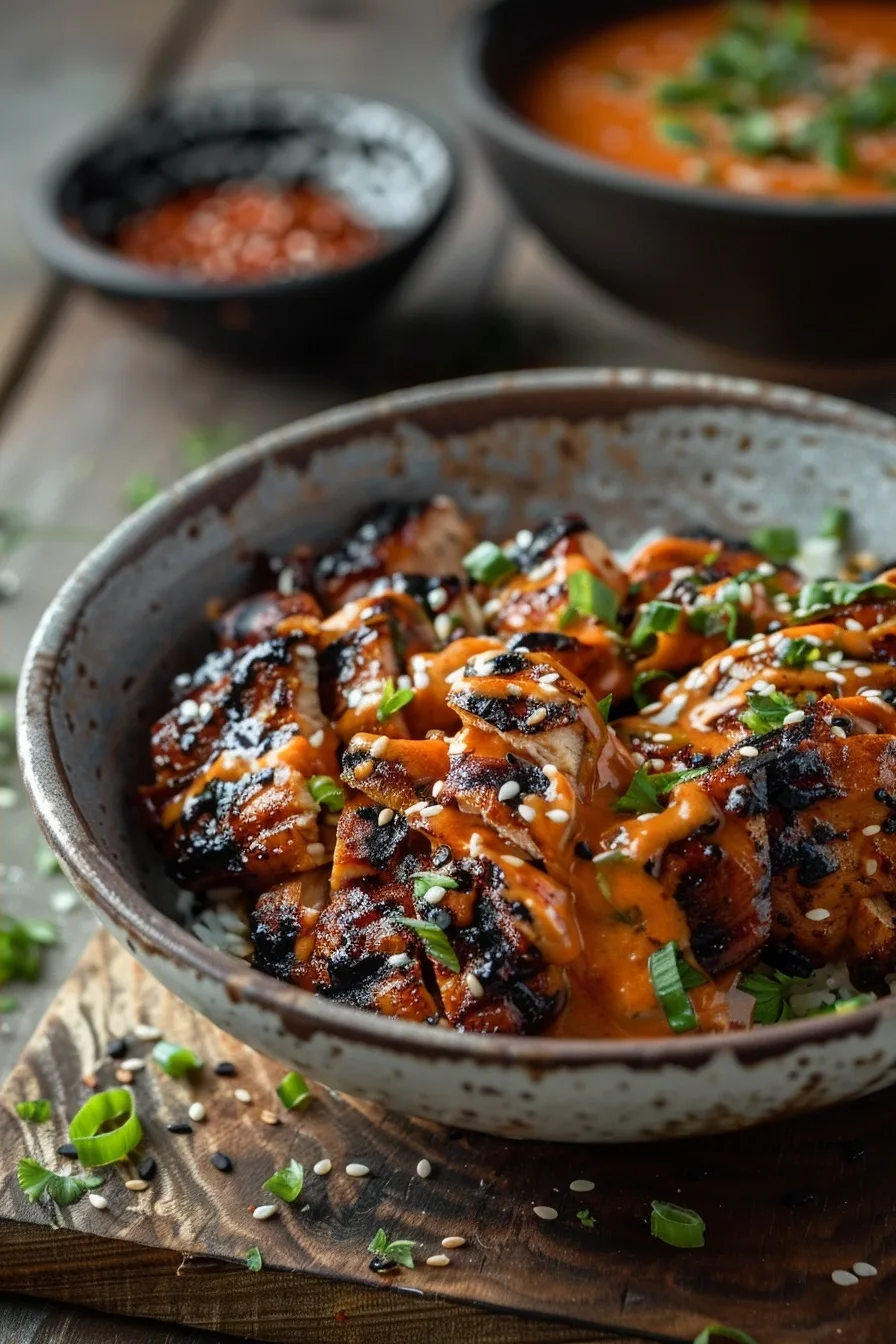
Korean BBQ Chicken Bowls with Spicy Gochujang Cream Sauce offer a streamlined culinary experience that balances savory depth with vibrant, creamy heat. This efficient meal utilizes pre-cooked poultry to provide a protein-rich base, anchored by the pungent, fermented complexity of Korean chili paste and the silky, emulsified profile of a rich mayonnaise dressing. Designed for both professional kitchen reliability and home culinary execution, this dish emphasizes bold flavors through precise ingredient ratios and efficient thermal management.
Recipe Overview
| Attribute | Measurement |
|---|---|
| Prep Time | 10 minutes |
| Cook Time | 5 minutes |
| Total Time | 15 minutes |
| Servings | 2 portions |
| Difficulty | Easy |
| Cuisine | Fusion |
Why This Recipe Works
The success of these bowls lies in the specific interaction between heat and fat. When you blend gochujang, a fermented Korean chili paste, into a neutral mayonnaise base, the capsaicinoids in the chili become encapsulated by the fat droplets in the mayonnaise. This creates a luxurious texture that mitigates the intense sharp bite of the raw paste, resulting in a sauce that coats the palate rather than stinging it.
Using shredded rotisserie chicken provides a neutral canvas that readily absorbs the savory notes of the sauce. By folding the protein into the dressing, I ensure every fiber is coated, which prevents the meat from drying out during the assembly process. This technique effectively utilizes residual heat to slightly loosen the emulsion, making it more adhesive to the grains of rice.
Temperature regulation is critical for the rice base. I recommend utilizing short-grain rice to maximize starch content, which provides a tacky structural integrity for the bowl. The contrast between the warm rice, cool, crisp vegetables, and the creamy, piquant chicken creates a textural profile that satisfies the basic principles of sensory-driven culinary design.
Ingredients
| Ingredient | Quantity | Notes |
|---|---|---|
| Shredded Rotisserie Chicken | 2 cups (approx. 300g) | Remove all skin for cleaner texture |
| Jasmine or Sushi Rice | 2 cups (cooked) | Freshly steamed for best temperature contrast |
| Gochujang Paste | 1 tbsp | Source high-quality fermented paste |
| Mayonnaise | 2 tbsp | Use avocado or high-quality egg-based mayo |
| Sesame Oil | 1 tsp | Toasted variety for maximum aroma |
| Green Onions | 2 stalks | Thinly sliced for garnish |
Step-by-Step Instructions
Preparation
-
Cook the rice according to your preferred method, ensuring the grains remain distinct and fluffy.
-
Shred the rotisserie chicken into bite-sized strips using two forks, discarding any cartilage or dense fat deposits.
Sauce Composition
-
Combine the gochujang, mayonnaise, and toasted sesame oil in a small stainless steel mixing bowl.
-
Whisk the mixture vigorously using a small balloon whisk until the color is uniform and the texture is smooth.
Assembly
-
Fold the prepared chicken directly into the sauce bowl, ensuring total coverage of the protein.
-
Portion the hot rice into individual serving bowls.
-
Layer the sauced chicken atop the rice beds.
-
Garnish with freshly sliced green onions for a sharp, clean finish.
Chef Tips for Perfect Results
-
Always use toasted sesame oil, as its nutty, Maillard-derived flavor profile is essential for authentic fusion depth.
-
Adjust the mayo-to-gochujang ratio based on the specific spice level of your gochujang brand.
-
If the sauce appears too thick, incorporate one teaspoon of warm water to achieve a thinner, pourable consistency.
-
Ensure the chicken is room temperature or slightly warm to prevent rapid thermal shock when joining with the mayo-based sauce.
-
Layer your bowls in deep-bottomed vessels to maintain heat retention for the rice.
Common Mistakes to Avoid
One frequent error involves overheating the sauce. If you place the dressing in a pan over high heat, the mayonnaise will break, causing the oil to separate into an unappealing slick. Maintain the sauce at room temperature and rely on the residual heat of the chicken and rice to warm it.
Neglecting the quality of rice can undermine the texture of the dish. Hard, overcooked rice grains clash with the creamy mouthfeel of the sauce. Always aim for a softer, slightly sticky grain profile to achieve the specific sensory balance required for this recipe.
Variations and Substitutions
| Ingredient | Substitution | Impact |
|---|---|---|
| Mayonnaise | Plain Greek Yogurt | Adds tangy acidity and lowers fat content |
| Chicken Breast | Smoked Turkey Bacon | Provides intense smokiness but requires reduction of sesame oil |
| Sesame Oil | Toasted Sesame Seeds | Provides crunch without as much oily mouthfeel |
Serving Suggestions and Pairings
This dish pairs perfectly with a crisp side of quick-pickled cucumbers and radishes to cut through the richness of the mayo-based sauce. For beverages, I highly recommend a cold sparkling water infused with fresh ginger and lime to cleanse the palate between bites. The dish is ideal for a fast-paced weekday lunch where time is constrained but quality is essential.
Storage and Reheating
| Method | Duration | Technical Instruction |
|---|---|---|
| Refrigerated | 2 Days | Store chicken and rice separately to maintain grain integrity |
| Reheating | 1-2 Minutes | Microwave briefly on medium power to avoid curdling the mayo |
Nutritional Information (Approximate values)
| Nutrient | Amount per Serving |
|---|---|
| Calories | 420 kcal |
| Protein | 28g |
| Fat | 18g |
| Carbohydrates | 35g |
Frequently Asked Questions
Can I make the sauce ahead of time?
Yes, the sauce can be prepared up to 24 hours in advance and stored in an airtight glass container. The flavors will deepen as the capsaicin from the gochujang infuses into the oils of the mayonnaise.
How do I know if the chicken is properly sauced?
The chicken should appear uniformly coated with a vibrant red hue and possess a slight sheen. If dry spots are visible, add a small splash of rice vinegar to loosen the mixture.
Can this be served cold?
This dish is highly palatable when served at room temperature, making it suitable for portable bento boxes. Ensure the chicken reaches an internal temperature of 165°F (74°C) before storage to adhere to standard food safety protocols, such as those recommended by the USDA.
What if I find the dish too spicy?
Increase the ratio of mayonnaise, which contains emulsifiers that effectively neutralize the pungency of the chili paste. You may also add a drizzle of honey to balance the structural heat.
Is this recipe freezer-friendly?
Freezing this dish is not recommended because the emulsified nature of the mayonnaise will break upon thawing. Store components separately and assemble only when ready to consume.
This recipe demonstrates how a limited set of high-quality ingredients can produce a result that defies the simplicity of its preparation. By mastering the emulsification of the spicy cream sauce and respecting the textural requirements of the base, you achieve a balanced, satisfying meal. The final profile is one of savory, creamy intensity, punctuated by the bright, aromatic notes of toasted sesame and fresh scallions.