
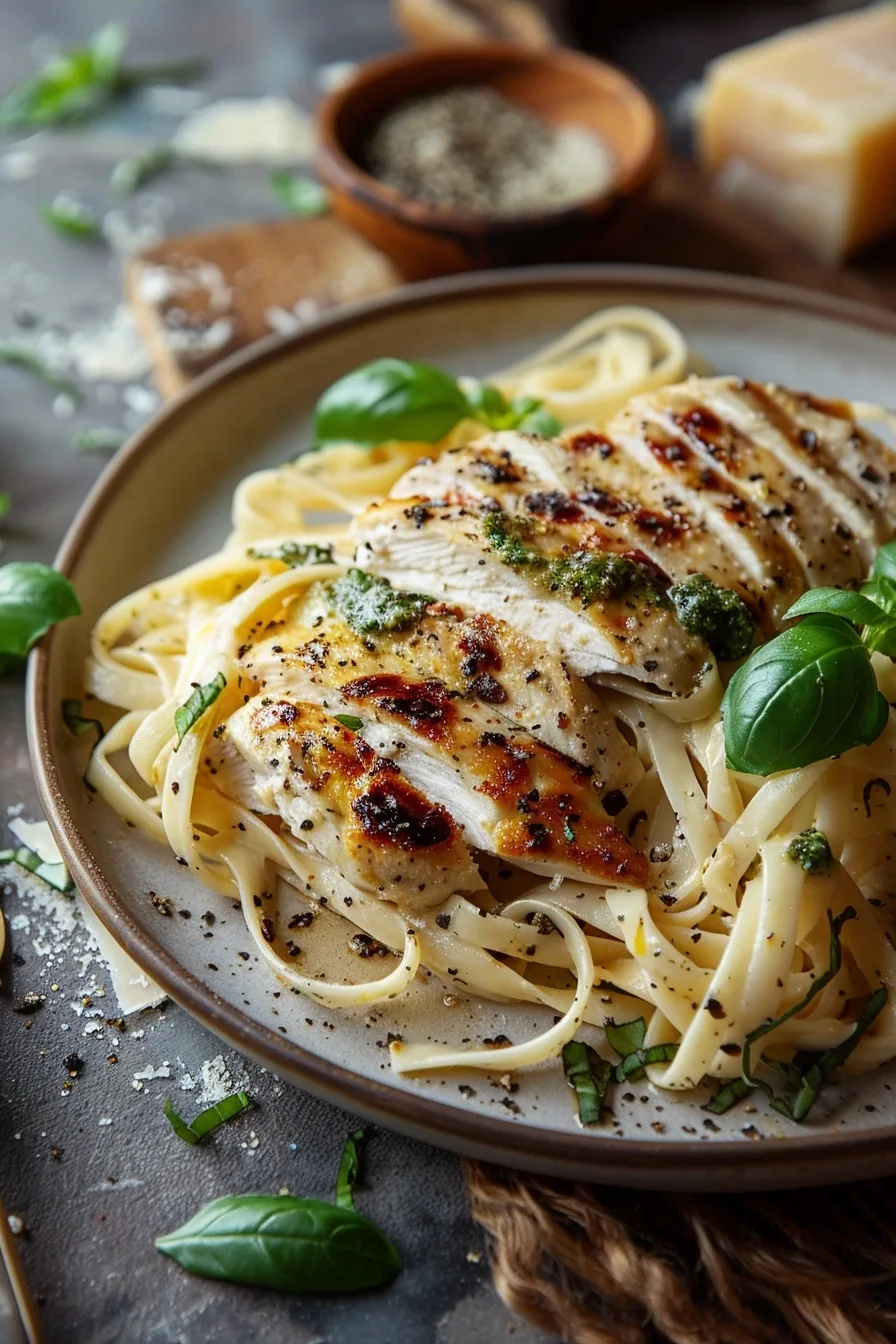
Basil Pesto Chicken Alfredo is a refined weeknight meal featuring tender rotisserie chicken tossed in a vibrant emulsion of herbaceous pesto and creamy, garlic-infused alfredo sauce. This dish relies on the structural integrity of fettuccine to carry the rich, velvet-like sauce, creating an immediate and satisfying experience for anyone seeking a premium meal without the long kitchen hours. By leveraging pre-cooked proteins and high-quality jarred or house-made aromatics, this preparation ensures consistent texture and flavor profiles every time.
| Prep Time | Cook Time | Total Time | Servings | Difficulty | Cuisine |
|---|---|---|---|---|---|
| 5 min | 15 min | 20 min | 4 | Easy | Italian-American |
Why This Recipe Works
The beauty of this dish lies in the precision of the sauce emulsification. I choose a combination of basil pesto and alfredo sauce because it balances the high fat content of the cream with the sharp, bright notes of fresh herbs and garlic. Basil contains aromatic compounds that are fat-soluble, meaning they integrate seamlessly into the heavier alfredo base, preventing the sauce from feeling greasy on the palate.
Using shredded rotisserie chicken provides a superior texture compared to pan-seared breasts which can often dry out. The chicken fibres act as a sponge-like matrix, absorbing the pesto and cream mixture during the final toss. This process ensures each bite carries a consistent distribution of both the creamy dairy elements and the earthy, verdant notes of the basil.
Temperature control during the final mixing phase is critical to success. I always temper the sauce slightly before adding the pasta to ensure it coats the noodles evenly without splitting. If the heat is too high, the fat in the alfredo can break, leading to a thin, watery consistency rather than the desired coating that adheres to each strand of fettuccine.
Ingredients
| Ingredient | Quantity | Notes |
|---|---|---|
| Fettuccine pasta | 8 oz (225g) | Standard semolina works best |
| Shredded rotisserie chicken | 2 cups | Remove skin for better texture |
| Basil pesto | 1/4 cup | Ensure it is free of alcohol-based add-ins |
| Alfredo sauce | 1/4 cup | Use a full-fat version for stability |
| Parmesan cheese | 2 tbsp | Grated finely |
Step-by-Step Instructions
Preparation and Pasta Boiling
- Bring a large pot of heavily salted water to a rolling boil over medium-high heat.
- Add 8 ounces of fettuccine and cook according to the package directions until al dente, which usually takes about 9 to 11 minutes.
- Reserve 1/4 cup of the starchy pasta water before draining the noodles to help loosen the sauce consistency later.
Sauce Integration and Finishing
- Return the drained, steaming pasta to the warm pot over very low heat to retain temperature.
- Fold in the shredded rotisserie chicken, 1/4 cup of basil pesto, and 1/4 cup of alfredo sauce until the noodles are fully coated.
- Incorporate the reserved pasta water only if necessary to achieve a glossy finish that clings to the fettuccine.
- Transfer the pasta to warm serving bowls and top with fresh grated parmesan cheese.
Chef Tips for Perfect Results
- Salt your pasta water to the salinity of ocean water to ensure the noodle has flavor internally.
- Always reserve a small amount of liquid starch; the flour from the pasta helps the oil in the pesto bond with the cream.
- Use a wide-mouthed pot or a large skillet to toss the noodles, as this prevents breakage and ensures even distribution.
- Grate your own parmesan cheese from a wedge rather than using pre-grated bags to avoid anti-caking agents that disrupt sauce texture.
- Never boil the sauce once the pesto is added, as the heat degrades the vibrant green color and the delicate basil aromatics.
Common Mistakes to Avoid
Many home cooks overheat the sauce, causing the emulsion of oil and dairy to break into an oily residue. Maintain a low, gentle heat to keep the sauce silky. Another common failure is forgetting to salt the pasta, which leaves the dish tasting bland despite the rich sauces used. Avoid overcooking the fettuccine; if the noodles become mushy, they will absorb the sauce too quickly and lose their structural integrity. Finally, avoid using low-fat cream alternatives, as they lack the protein content required to sustain a stable sauce structure.
Variations and Substitutions
| Ingredient | Substitution | Impact |
|---|---|---|
| Fettuccine | Whole wheat pasta | Adds nuttiness, firmer bite |
| Shredded chicken | Smoked turkey breast | Provides a deeper, savory smoke profile |
| Alfredo sauce | Bechamel with parmesan | Lower calorie, lighter mouthfeel |
Serving Suggestions and Pairings
Pair this dish with a crisp garden salad dressed in a lemon-vinaigrette to cut through the richness of the cream. Roasted asparagus or steamed broccoli drizzled with just a touch of extra virgin olive oil and garlic makes for an excellent nutritional balance. For a beverage pairing, choose a sparkling mineral water rimmed with a sprig of fresh basil and a squeeze of lime to echo the refreshing herbal notes of the pesto.
Storage and Reheating
| Method | Duration | Technical Instructions |
|---|---|---|
| Refrigeration | 2-3 Days | Store in an airtight container to prevent moisture loss |
| Reheating | Stovetop | Add 1 tablespoon of water and heat on low, stirring constantly |
Nutritional Information
Approximate values per serving based on 4 servings.
| Nutrient | Amount |
|---|---|
| Calories | 480 kcal |
| Protein | 28g |
| Fat | 22g |
| Carbohydrates | 42g |
Frequently Asked Questions
Can I use dried basil instead of fresh pesto?
Dried basil does not provide the same emulsifying oils as fresh pesto and will result in a grainy sauce. Use high-quality refrigerated pesto for the best sensory results.
How do I prevent the chicken from becoming rubbery?
Add the pre-cooked chicken only after the pasta is removed from the boiling water to prevent over-densification of the proteins. The ambient heat is sufficient to warm the meat without toughening the fibers.
Why did my sauce turn clumpy?
The cheese proteins may have seized due to excessive heat or lack of emulsifying liquid. Always add a splash of reserved pasta water to soften the cheese and provide a smoother finish.
Can this dish be frozen?
Freezing is not recommended because the dairy in the alfredo sauce will separate upon thawing, changing the texture permanently. Enjoy this dish fresh for the best culinary experience.
What is the best way to adjust the creaminess?
Add more alfredo sauce one teaspoon at a time if the pasta appears dry. Keep in mind that as the pasta cools, it will naturally absorb more of the sauce.
This Basil Pesto Chicken Alfredo achieves a sophisticated balance between traditional creamy comfort and the vibrant, fresh lift of Italian herbs. By focusing on temperature control and high-quality base ingredients, you transform simple staples into a restaurant-quality meal. The final taste profile is one of deep, savory satisfaction, brightened by the garden freshness of basil and the salty bite of aged parmesan. With this method, you can consistently reproduce this dish with confidence, knowing every component is handled to maximize its inherent potential for a perfect dinner.