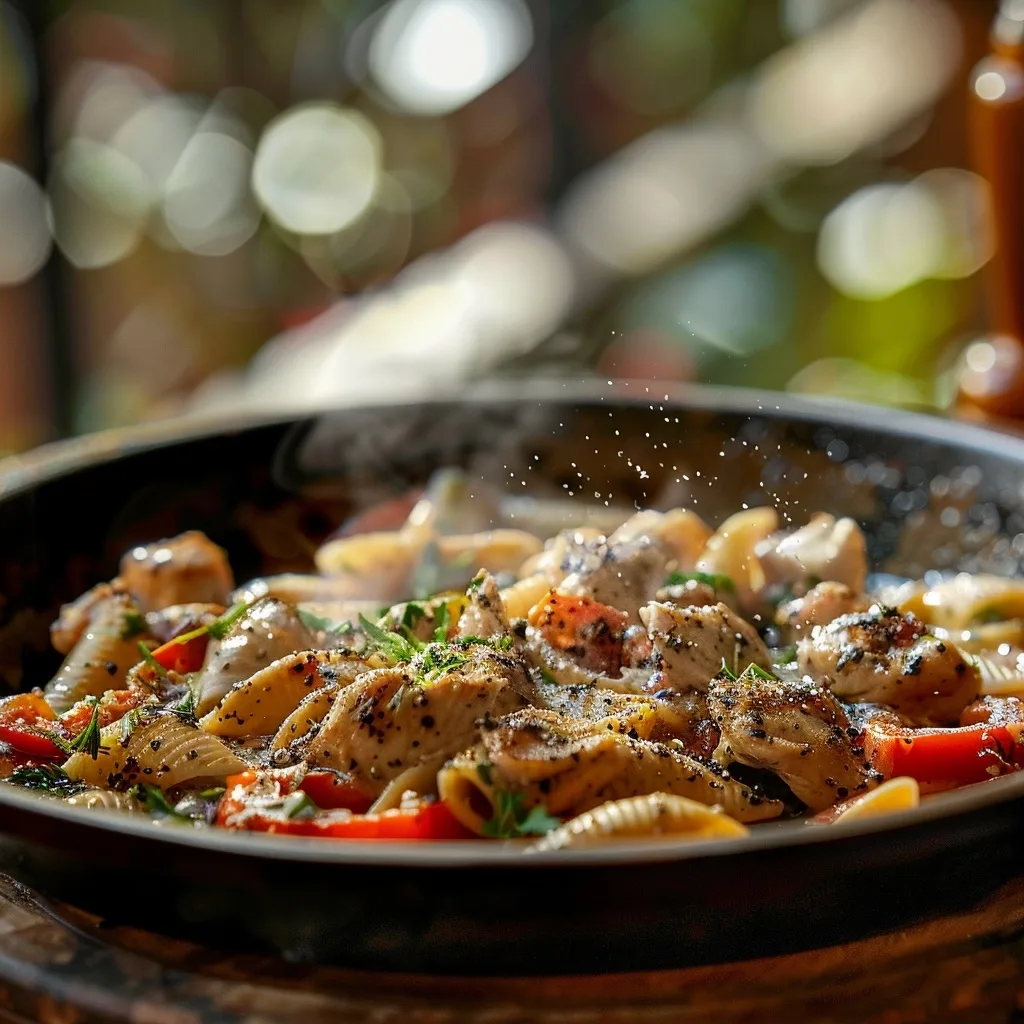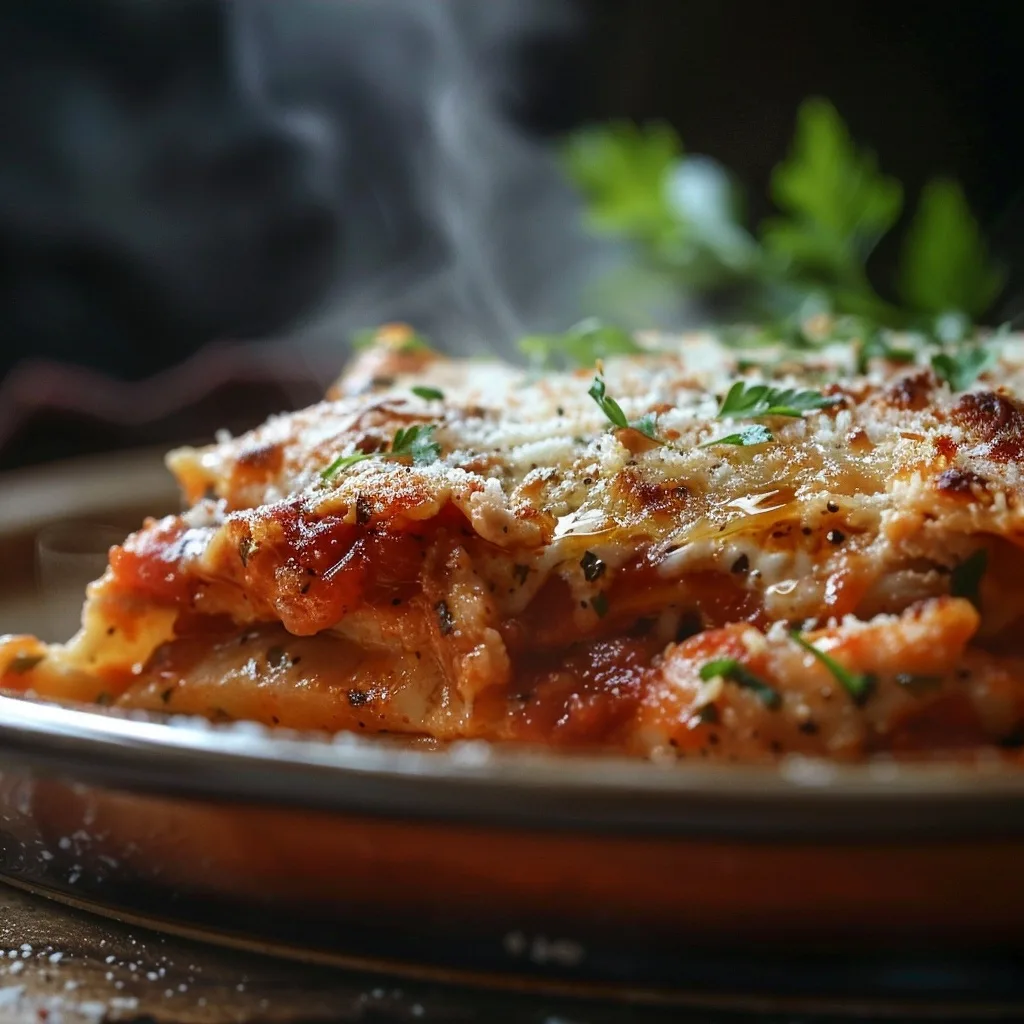

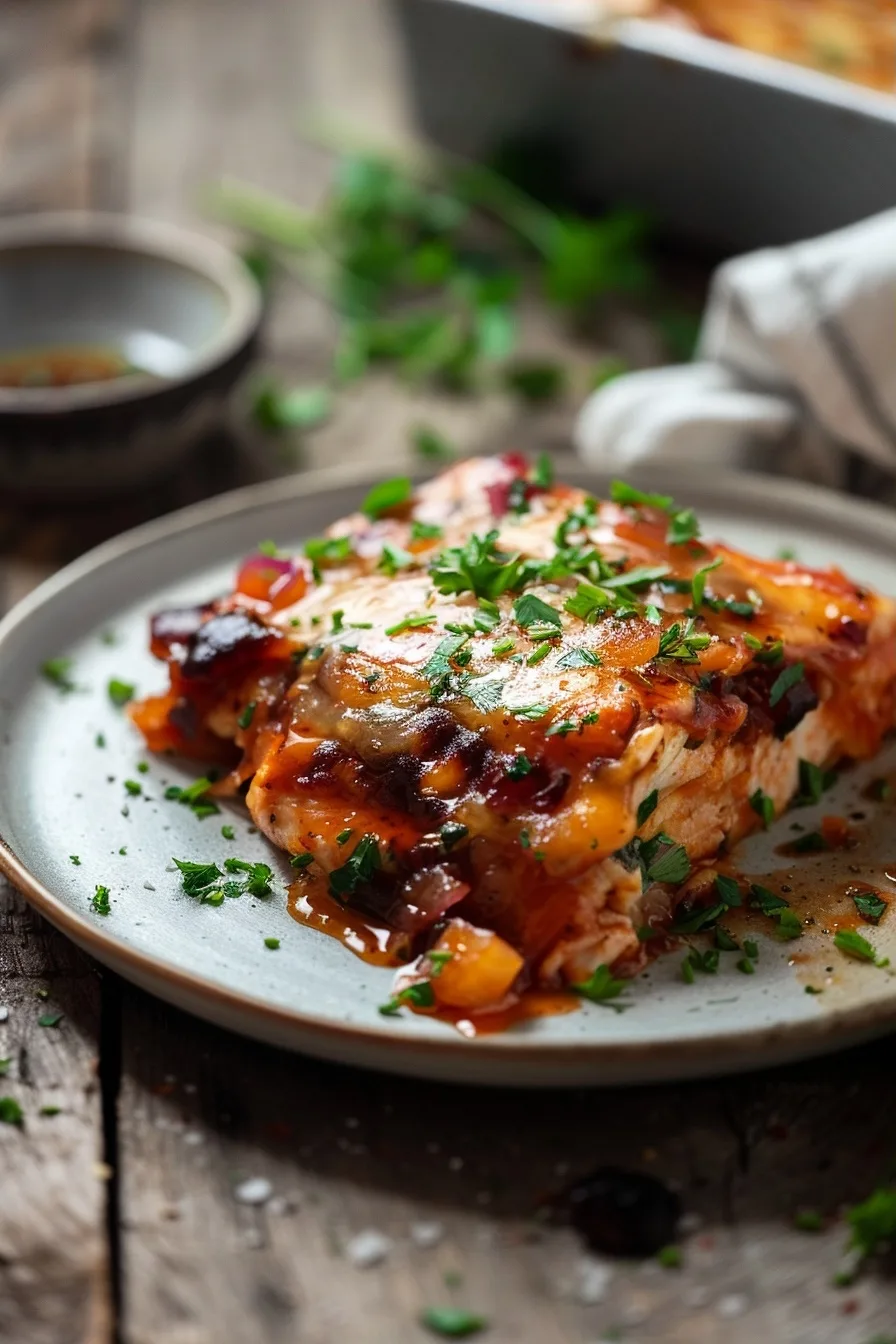
This BBQ Ranch Chicken Casserole is a hearty one-dish meal that layers smoky, tangy, and creamy flavors into tender chicken and pasta. It’s perfect for weeknight dinners or family gatherings, combining the best of campfire classics and modern comfort food. Let’s break down how to build this flavor-forward casserole step by step.
Recipe Overview
| Prep Time | 15 minutes |
|---|---|
| Cook Time | 20 minutes |
| Total Time | 35 minutes |
| Servings | 4 |
| Difficulty | Beginner |
| Cuisine | American |
Why This Recipe Works
The beauty of this casserole lies in its structural interplay. By coating the chicken in a tangy BBQ base before baking, we trigger two key reactions: the smoky paprika in the sauce activates Maillard browning on the protein (a chemical process that caramelizes natural sugars and browns the chicken), while the ranch dressing’s emulsified fats (typically buttermilk and herbs) balance acidity and add moisture. These components work in harmony to prevent the chicken from drying out during the 20-minute bake.
The pasta serves as more than a filler—it acts as a starch matrix that absorbs the free moisture from the chicken mixture when baked. This creates a stable, non-saucy base that supports the cheese topping, which undergoes its own perfect transformation through controlled heat (see cheese science). The result is a dish with three distinct textures: juicy chicken, al dente pasta, and golden-brown, slightly crisp cheese.
I’ve tested this recipe using both white and whole-wheat pasta, and both yield different but satisfying outcomes. White pasta absorbs sauces faster but requires precise baking temps to avoid becoming gluey. Whole-wheat alternatives offer a nutty backbone that complements the BBQ base but need a slightly higher fat ratio in the chicken mixture to prevent a dry finish. The key is understanding how moisture levels interact with starch hydration during baking.
Ingredients
| Ingredient | Quantity | Notes |
|---|---|---|
| Shredded Chicken | 2 cups | Rotisserie chicken saves time; substitute cooked turkey or extra lean beef |
| Pasta | 1 cup (uncooked) | Use elbow macaroni or mini shells; gluten-free versions work for dietary needs |
| BBQ Sauce | 1/2 cup | Look for all-natural, no artificial preservatives; homemade smoky blend optional (see variations) |
| Ranch Dressing | 1/4 cup | Commercial or homemade (buttermilk + herbs) both function equally well |
| Shredded Cheese | 1 cup | Melting cheeses like mozzarella or cheddar are crucial; non-dairy vegan options available |
| Salt and Pepper | To taste | Always use Kosher salt and cracked black pepper for optimal flavor balance |
| Garlic Powder | 1/2 tsp | Enhances the savory depth without raw garlic’s bite |
| Dried Parsley | 1/4 tsp | Herb brightness keeps the dish from feeling overly heavy |
Step-by-Step Instructions
Prep
-
Preheat oven to 375°F (190°C) while you cook pasta. For uniform doneness, add salt to the water first (0.5 tsp per quart) to ensure even flavor absorption.
-
Boil 1 cup uncooked pasta until al dente—7 minutes for small shapes, 8-9 for medium. Drain immediately to avoid overcooking.
-
In a large bowl, combine shredded chicken, cooled pasta, BBQ sauce, and ranch dressing. Mix gently with a spatula to avoid compacting the starch structure.
Final Assembly and Baking
-
Transfer mixture to an 8×8-inch glass or ceramic baking dish with oven-safe handles (non-stick metal alternatives risk uneven browning).
-
Evenly distribute cooked chicken mix, using a flat-edged utensil to spread instead of clumping (see common mistake 1).
-
Sprinkle cheese over the surface, pressing it lightly to form an even layer. Add a pinch of salt to the cheese to enhance its savory pull and moisture retention.
-
Bake for 15 minutes initially, then reduce oven temperature to 350°F (175°C) for final 5 minutes to prevent surface burning while ensuring internal warmth.
-
Cheese should reach 160°F (71°C) center to melt safely while maintaining a gooey texture. Avoid overcooking past 40 minutes total to preserve moisture.
Chef Tips for Perfect Results
-
Use a glass or ceramic baking dish: These materials retain heat better than steel pans, allowing for gradual cheese browning that prevents overcooking the chicken layer below.
-
Resist overmixing the chicken-pasta combo: Starches in pasta become gummy when overworked. Gently fold instead of vigorous stirring to maintain texture.
-
Monitor cheese layer temperature: Insert a probe thermometer at the dish’s edge and cheese center. Aim for 160°F (71°C) final doneness to avoid rubbery protein or undercooked starches.
-
Choose the right cheese: Mild cheeses (mozzarella, pepper jack) absorb flavors better. Sharp cheeses (aged cheddar) can overpower the ranch balance. Test substitutions for flavor profile adjustments.
-
Don’t skip the salt: Salt is the unsung hero. It draws moisture from cheese to redistribute into the chicken layer, creating a self-basting effect during baking.
Common Mistakes to Avoid
-
Undercooked or overcooked pasta: Boiling times are critical. Overcooked pasta becomes a sticky base that can’t hold the chicken layer; undercooked pasta remains raw. Use a pot large enough to avoid crowding the noodles.
-
Clumping ingredients in the dish: A layered mix forces moisture migration. The heavier cheese sits unevenly, leading to dry spots. Always distribute chicken evenly before adding cheese.
-
Using dry cheese without moisture: Dry shredded cheese lacks surface fats needed for Maillard browning. For a crisp top, use fresh mozzarella or add 1 tbsp melted butter before sprinkling.
-
Overmixing after cheese addition: Once cheese is applied, avoid stirring as it breaks apart the layer and introduces air, which dries out the mix during baking.
Variations and Substitutions
| Ingredient | Substitution | Impact on Flavor/Texture |
|---|---|---|
| BBQ Sauce | Smoked tomato paste 1/4 cup paste + 2 tbsp BBQ seasoning + 1/2 tbsp water | Adds concentrated smokiness with less sweetness; may require additional moisture to bind ingredients |
| Ranch dressing | Greek yogurt blended with herbs 1/4 cup plain yogurt + 1 tsp dried dill + 1 tbsp lime juice | Thicker texture with probiotic brightness; works best with acidic cheeses like feta |
| Shredded chicken | Shredded beef or tofu Use pre-shredded lean beef or pressed, marinated tofu | Beef offers deeper umami; tofu requires additional seasoning to mimic protein depth |
Serving Suggestions and Pairings
Pair this casserole with acidic, high-roughage sides to balance richness: a cucumber-radish salad with rice vinegar (2% acidity for bright contrast) and garlic-basted green beans (retains crispness to offset the soft casserole layers). Non-alcoholic beverages like cucumber-lime seltzer or roasted root beer enhance the tangy notes without overwhelming the palate. For a festive touch, top with a dollop of plain Greek yogurt to mimic sour cream’s cooling effect.
Storage and Reheating
| Method | Duration | Instructions |
|---|---|---|
| Refrigerator | 3 days | Store in airtight glass container. Reheat at 325°F (160°C) on foil-covered oven dish until cheese re-bubbles, ~10-12 minutes. |
| Freezer | 2 months | Cool completely before freezing. Bake thawed dish in preheated oven at 375°F for 25 mins. Avoid freezing pasta with dairy sauces directly—cheese breaks down texture. |
| Stovetop | 2 hours | Use non-stick pan over medium heat. Stir constantly to reintegrate broken cheese sauce, adding water (1 tsp at a time) if mixture becomes too dry. |
Nutritional Information
| Nutrient | Amount per Serving |
|---|---|
| Calories | 450 kcal |
| Protein | 35 g |
| Fat | 14 g |
| Carbohydrates | 48 g |
| Fiber | 2 g |
| Sugar | 10 g |
| Sodium | 1200 mg (based on USDA’s sodium calculator) |
Frequently Asked Questions
Can I use dairy-free cheese?
Yes, choose nut-based cheeses (cashew/vegan options) for similar melting properties. Avoid sliceable hard cheeses—they won’t distribute properly. For a non-dairy ranch, use Greek yogurt blend (see above).
How do I know it’s fully cooked?
Use a food thermometer. At 375°F, the dish will stabilize at 160°F internally after 18-20 minutes of baking. Visual cues: golden-brown cheese and steaming edges from starch hydration.
The cheese was too dry. Why?
You likely overcooked the dish (bake time >20 mins) or used a low-moisture cheese. To fix this: cut parchment foil peaks over dry spots and reheat at 300°F for 5 minutes to redistribute trapped steam.
Can I freeze this casserole after baking?
Freeze before baking only. Baked versions recrystallize moisture, leading to a soggy texture. Freeze at 0°F for 2 months, then defrost and bake fresh. Add a splash of olive oil before rebaking to restore golden crustiness.
What’s the best cheese to use?
Mozzarella (28% moisture) achieves the ideal balance of gooey center and crispy edges. For bold flavor, try pepper jack (30% moisture) but reduce baking time by 2 minutes to prevent overbrowning.
Serving Suggestions and Pairings
For make-ahead plans, pre-mix the chicken and pasta then refrigerate for 1-2 days. Top with fresh cheese just before baking. This dish works well for potlucks—portion into individual ramekins for even cooking and aesthetic appeal. On Sundays, serve it with apple butter-thick bread and roasted beets to create a rustic, flavor-rich platter.
Conclusion
This casserole proves how simple ingredient combinations can create profound comfort food. The interplay of starch absorption, cheese emulsification, and BBQ smoke is a textbook example of culinary layering. After the oven finishes baking, you’ll smell the toasted cheese mingling with caramelized chicken oils—a perfect finish, golden-crisped and deeply savory, that’s ready to serve hot with a warm fork in hand.