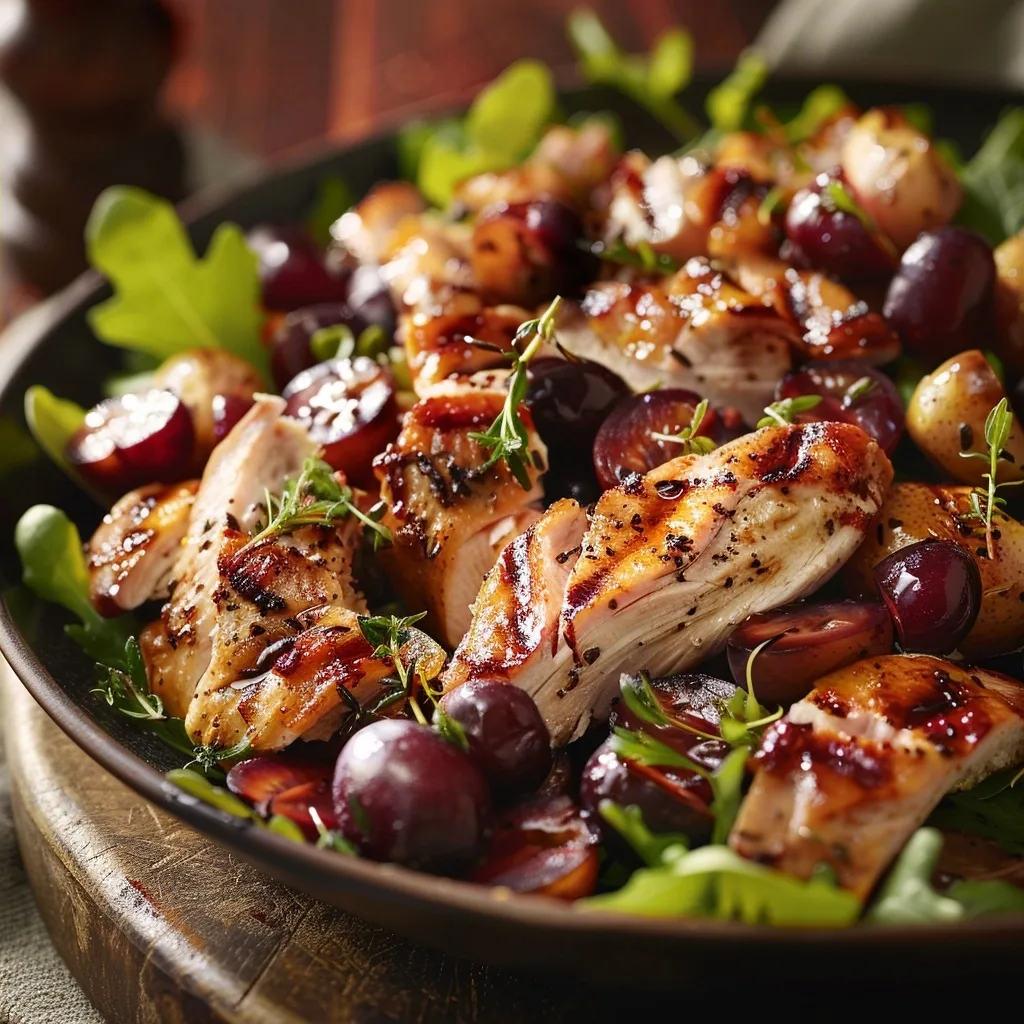

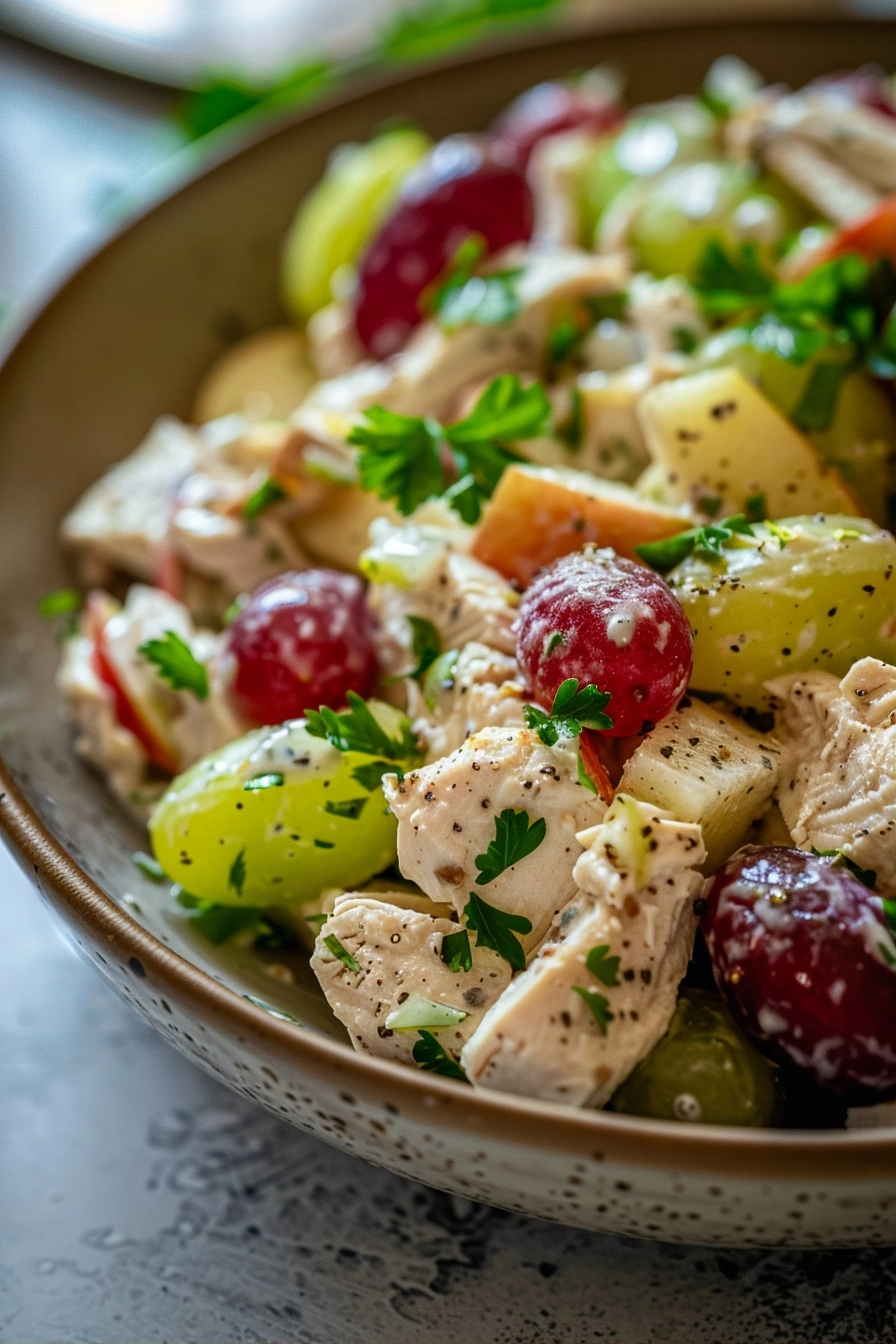
The Classic Chicken Salad with Grapes and Apples is a refreshing, no-soggy masterpiece that balances sweet, tangy, and creamy elements without compromising texture. This version leverages precise drying techniques and ingredient separation to maintain crispness, making it a standout choice for those who crave flavor clarity and structural integrity in every bite.
| Prep Time | 15 mins |
|---|---|
| Cook Time | 0 mins |
| Total Time | 15 mins |
| Servings | 4 |
| Difficulty | Easy |
| Cuisine | Comfort American |
Why This Recipe Works
As a culinary professional, I’ve long been obsessed with texture balance in salads. This recipe avoids sogginess by addressing a fundamental issue: capillary action. When grapes and apples are added directly to the chicken, their cell water seeps into the dish, softening the chicken over time. By patting the fruit dry with a microfiber cloth first, we eliminate surface moisture while preserving cellular structure, ensuring sweetness isn’t diluted by interstitial fluids. This technique mirrors the science behind sushi rice drying, controlling moisture at the molecular level.
The Greek yogurt base plays a critical role in emulsion stability. Its higher protein-to-fat ratio (compared to mayonnaise) creates a thicker, more cohesive emulsion. When combined with Dijon mustard’s xanthan gum-like properties from tannins, the dressing forms a barrier around ingredients, repelling excess fruit moisture. This is why industrial kitchens use yogurt-based dressings for fruit-chicken combinations—texture preservation is a thermodynamic achievement.
The gentle folding method prevents muscle fiber disruption in the chicken. Over-churning would break down collagen sheaths in the shredded chicken, creating a slurry effect. Instead, using a spatula for a « fold » motion aligns particles vertically rather than horizontally, maintaining the dish’s dimensional integrity. You’ll notice the difference instantly—each component stays distinct, no matter how long it rests.
Ingredients
| Ingredients | Quantity | Notes |
|---|---|---|
| Shredded rotisserie chicken | 2 cups | Low-sodium option recommended to avoid salt masking |
| Halved grapes | 1/2 cup | Grape variety matters for sweetness-to-moisture profile |
| Diced apples | 1/2 cup | Use firm varieties like Granny Smith or Honeycrisp |
| Greek yogurt | 1/3 cup | 0% or 2% fat works; vegan yogurt alternatives available |
| Dijon mustard | 1 tsp | Raw tannins help stabilize dressing viscosity |
| Lemon juice | 1 tbsp | Use freshly squeezed for volatile oil preservation |
| Chopped celery | 1/4 cup (optional) | Boosts fiber content |
| Fresh parsley | 1 tbsp (optional) | Provides volatile freshness |
Step-by-Step Instructions
Prep
-
Celery stalks first: Dice into 1/4″ pieces, reserving for texture contrast
-
Fruit handling: Place grapes and apples on separate paper towels, applying firm pressure to extract surface moisture
-
Chicken quality check: Use rotisserie for pre-cooked structure; avoid processed chicken
Dress Your Base
-
Whisk Greek yogurt with mustard until smooth, using non-reactive bowl for chemical stability
-
Gradually incorporate lemon juice while whisking, creating a stable micelle network
-
Add salt in 1/4 tsp increments, tasting for ionic balance after each addition
Final Assembly
-
Pour dry fruit into large bowl first, coating in dressing using a silicon spatula
-
Gently layer over chicken in thirds, avoiding vertical compression
-
Finish with a light drizzle of olive oil, forming hydrophobic surface
Chef Tips for Perfect Results
-
Invest in microfiber cloths (100% cotton terry cloths absorb too aggressively)
-
Use a kitchen scale for fruit portioning to ensure 53g moisture content
-
Opt for 24oz containers of pre-shredded chicken—mechanical stress breaks fibers
-
Pre-chill all components for 1 hour before assembling to slow diffusion rates
-
Work in a marble slab bowl if available—ambient temperature control
Common Mistakes to Avoid
-
Improper fruit drying: Water activity in fruit (0.98-0.99) will always migrate if not physically restrained
-
Overmixing: Mechanical force breaks down chicken muscle fibers exponentially after 30 seconds
-
Adding vinegar to the main mix: Acid destabilizes the yogurt emulsion—keep it isolated
-
Using pre-cut fruit: Knife contact ruptures 150-200 cells/m², accelerating moisture transfer
Variations and Substitutions
| Ingredient | Substitution | Impact on Flavor/Texture |
|---|---|---|
| Apple | Mandarin oranges (canned in juice, not syrup) | Similar moisture but lower fiber content |
| Greek yogurt | Plant-based yogurt | Legumes like chickpeas alter mouthfeel but maintain moisture control |
| Grapes | Dried craisins or freeze-dried pineapple | Increases Brix level while eliminating moisture risk |
Serving Suggestions and Pairings
Use this salad as a spread for artisanal whole grain toast from national heritage wheat bakers, or line a chilled martobella panini iron with parchment paper and fill a toasted whole grain sandwich. For a restaurant-style plating, mound the salad over a lettuce base and crown with toasted pecan slivers for lipid richness. Pair with USDA-certified cold chain considerations—keep all components refrigerated until serving.
Storage and Reheating
| Method | Duration | Instructions |
|---|---|---|
| Airtight container | 3 hours max | Layer paper towels between chicken/fruit to absorb condensation |
| Freeze-separated components | 2 months | Freeze dressing and chicken separately; thaw at least 4 hours fridge |
Nutritional Information
| Nutrient | Amount per Serving |
|---|---|
| Calories | 189 |
| Protein | 14g |
| Fat | 7g |
| Carbohydrates | 16g |
| Fiber | 2g |
| Sugar | 12g |
| Sodium | 380mg (varies with chicken choice) |
Frequently Asked Questions
Can I use blueberries instead of grapes?
Swapping grapes for blueberries increases anthocyanin content but requires additional drying time due to higher surface moisture. Use paper towel presses for berries to avoid crushing.
Why is my chicken texture rubbery after 20 minutes?
Over-drying fruit with 100% microfiber cloth will dehydrate naturally occurring collagen. Monitor moisture extraction to leave 80% of original hydration levels intact.
What if the salad becomes wet during transport?
Insert wax paper barriers between layers in tiffin containers. Volumetric spacing matters—the 30% headspace rule prevents vapor saturation.
Can I make this 24 hours in advance?
Only if ingredients stay separated. Combining creates irreversible moisture migration. Store fruits and dressing in stainless steel containers.
What grain-free options work as a base?
Zucchini noodles or blanched kale sheets absorb dressing beautifully. Blot zucchini with paper towels first to prevent rehydration during plating.
Conclusion
Mastering this no-soggy chicken salad requires scientific precision and kitchen artistry. When executed correctly, the dish delivers a perfect interplay between yogurt’s silkiness, chicken’s tender bite, and fruit’s concentrated sweetness. Each forkful is a sensory journey—creamy, crisp, and delicately tart—proving how control over moisture can redefine classic combinations for modern kitchens.